


You Don't Need to Be Amazon to Ship Like Amazon
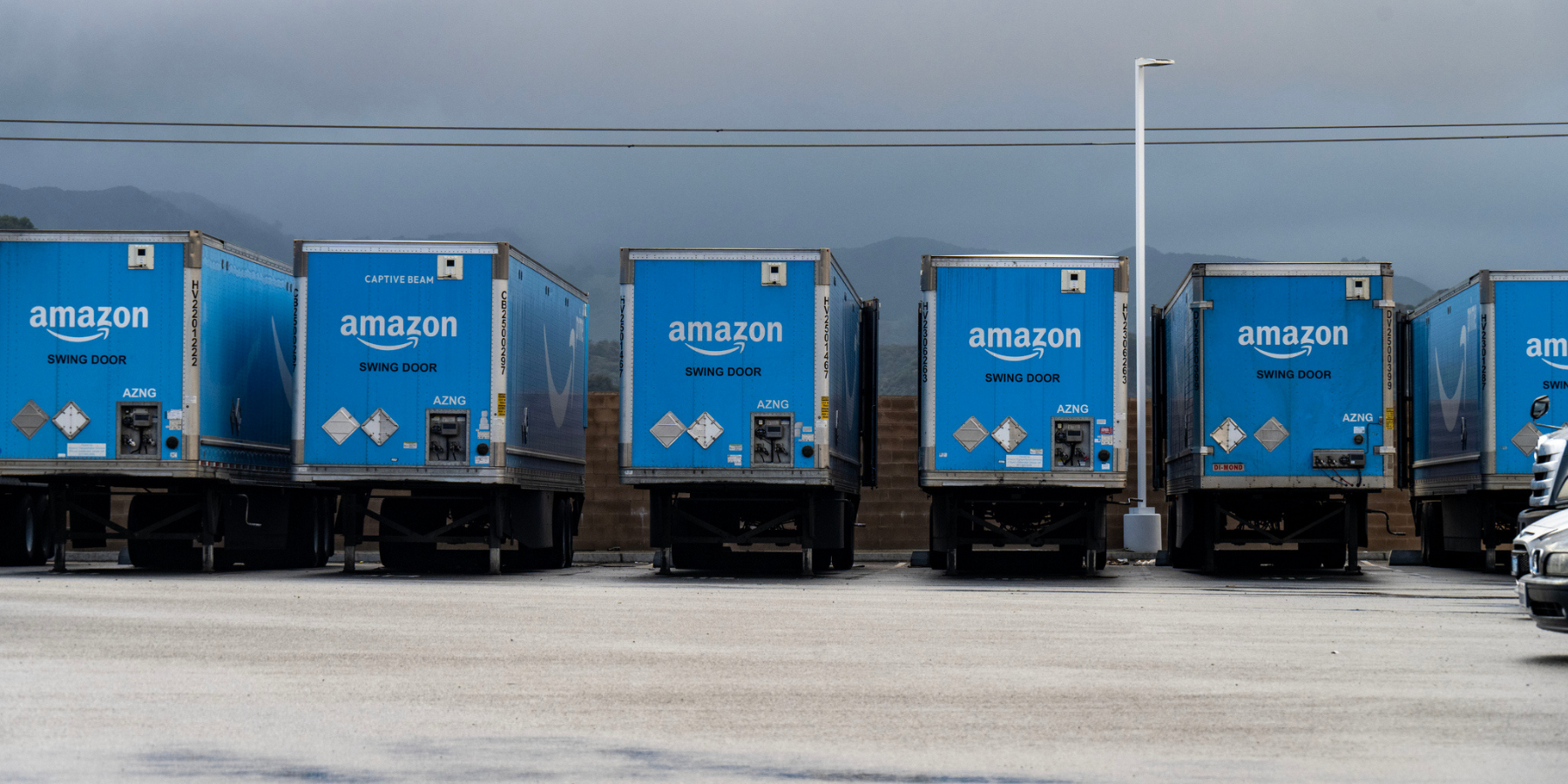
You've probably heard the story before: back in the early '90s, a man turned the garage of his rental house into a makeshift office and wrote up a business plan to start a store…not on the street, not in the mall, but on a new thing called the internet.
This may not seem like a big deal to you reading it today, in 2026, but back when the internet was a random array of green-and-black pixelated pages and the occasional clip-art image, this was something most people wouldn't have dreamed of.
Anyway, back to that store. That man decided to sell books. Not because books were necessarily something he was passionate about, or because he had a huge collection sitting in their house. Instead, he sold books because they were cheap to source, light to ship, didn't spoil, and rarely got returned.
Lots of people said it was a terrible idea.
They claimed that people want to touch and see things before buying.
That no one would wait weeks for an order to arrive.
That people would never actually buy things on the internet.
But he theorized that people would buy online as long as getting the item was easier than driving to a store to buy it.
And in Seattle-area traffic, that's not a high bar to clear.
And so, Amazon was born.
He sold $12,000 worth of books in week one.
Within a month, he had employees sitting on their garage floor packing boxes of books to send to 50 states and 45 countries.
That's the part of the story everyone talks about. The strike-it-rich story where someone had a creative vision, it worked, and they made millions billions off the deal.
But here's the truth: Jeff Bezos wasn't the only person who had the idea to sell stuff online. He wasn't even the first to come up with the idea to sell books online.
We're sure you've heard of Book Stacks Unlimited, right? No? Well, they launched before Amazon with the same idea. Same product. Same business model. Same internet. They were mildly successful, but there's a reason you've never heard of Book Stacks Unlimited.
Here it is: Jeff Bezos's brilliant, billion-dollar idea wasn't selling books on the internet. It was something else entirely.
Shipping is the Billion-Dollar Idea
The part that usually gets left out of the Amazon-started-in-a-garage story is that Bezos's brilliance wasn't in figuring out that people would want to shop online — it was figuring out that shipping was the one thing that would set his business apart from everyone else's.
His strategy was simple: invest in low prices and free shipping, use the resulting volume to drive costs down, then pour those savings back into shipping. Round and round. For years, that meant losing money on purpose. Amazon's own SEC filings show shipping running at a loss quarter after quarter through the early 2000s, and at one point, Bezos lost $7 billion in a single year on shipping.
But over time, they began to figure it out. His idea began to work.
Amazon grew. People kept buying. Their product line expanded. And as volume grew, so did profits.
By the 2010s, fast, affordable, and transparent shipping became the expectation.
Looking back, Bezos's great idea was to figure out how to get those books to people's doors quickly and inexpensively, so they'd place another order.
It Wasn't Luck. It Was Shipping.
It's easy to assume Amazon's success was a right-place-right-time anomaly, that Bezos just happened to catch the start of eCommerce with a smart product, and rode luck and timing to billions.
But here's another take: Amazon's success came largely from figuring out shipping.
Here's the proof. Plenty of people got into eCommerce early. Pets.com launched a couple of years after Amazon, sold heavy, low-margin products like bags of dog food and cat litter, and offered free shipping without the infrastructure (or the runway) to make it work. They didn't account for the real cost of shipping large, heavy orders, and customers weren't willing to pay as much to ship a bag of dog food as the bag itself cost. Pets.com shut down in November 2000, about nine months after its IPO.
It wasn't the only one. Webvan, an online grocery delivery company that burned through nearly $800 million, collapsed shortly after its founding too. For them, the cost of getting the product (in this case, perishables) to the door was never built into the business model.
Neither of these business failures had much, if anything, to do with the products. Yes, they had tricky-to-ship products that were big, bulky, or perishable, but that's not an automatic no-go for eCommerce. After all, Amazon has seen a steady gain in shipping hard-to-ship products over the last decade.
These businesses failed because they didn't get their shipping infrastructure right.
So How Do You Get Your Shipping Infrastructure Right?
Remember when we said people have come to expect fast, affordable, and transparent shipping?
Just like people no longer thumb through a catalog and call a 1-800 number to order new shoes, people expect that their online orders will come with:
- Fast shipping
- Transparent delivery dates and times, shown before they hit "buy"
- Duties and taxes calculated up front, with no surprise charges at the door
- Easy, no-argument returns
- The option to buy online and pick up in-store
- Free shipping on the orders where it makes sense
- The ability to order and get big, awkward things (a couch, a rug, a grill) as easily as a paperback
They expect it from Amazon — and from every single online store they shop at.
Here's where ShipperHQ comes in.
Back in 2008 (yes, when Amazon was still deep in its lose-money-on-shipping-every-year phase), our founder, Jo Baker, founded ShipperHQ.
She admits she never wanted to start a company, but she's a problem solver, and while supporting her husband's small eCommerce business, she realized that shipping infrastructure could make an outsized impact on a store's success.
An engineer by trade, Jo realized that if she could give her husband's customers that same Amazon-style shipping experience that they had come to expect, his business would grow. So she built ShipperHQ and then launched it into the world for every online retailer to use.
So now the candle maker shipping a dozen jars a week, the furniture shop down the road shipping a couch across three states, and the fresh food delivery service can all give their customers the same checkout and shipping experience they expect from the big stores.
To be fair, shipping is not the exciting part of any online store. That's kind of the point. Nobody puts "great shipping rules engine" in their marketing copy. But when those shipping rules work, it's a differentiator that drives growth.
So Here's What You Can Do to Improve Revenue Today
We don't want to be cheesy (which is why we scrapped the original title of this post, "Continue with Amazon's Shipping Revolution"), but we do think this is about as close to easy money as it gets. You can increase your margins, cut cart abandonment, and grow revenue, starting today.
In the flip of a switch. Turn on any of these, and see what changes:
- Shipping Rules. Create rules for free or discounted shipping based on specific products, order sizes, zones, or customer groups.
- Dimensional Packing. Automatically determine the right box and rate for what's actually in the cart, so you don't send a phone case in a box big enough to fit a monitor. (Amazon can't even do this, it seems!)
- Product Page Shipping Calculator. When shoppers land straight on product pages (increasingly thanks to AI) display shipping dates and costs right there on the page.
- Duties & Taxes Calculator. Show real cost with the latest tariffs right at checkout, so there's no customs surprise waiting on the doorstep two weeks later.
- LTL Shipping. Ship rugs, furniture, appliances (anything too big for a parcel truck) with the same flexibility and transparency as a paperback.
We could go on and on. But the truth is, you just need to try it. Most of our customers find that they more than make up for the expense in just a few weeks through decreased cart abandonment, lower shipping costs, and more.
Sign up for a free trial, get into the tool, and see how much of an edge it gives your business this Peak Season.
Bezos had a hunch, a garage, and years of red ink he was willing to sit through.
You don't need any of that. The infrastructure he built the hard way is already here for you. You just need to start your trial and build the shipping setup Bezos would build if he were starting today, minus the garage.

Share this article
Related Articles
The Auto Parts Shopify Stack: 5 Apps That Handle What the Platform Doesn't
Shopify is a good place to sell auto parts. It is not, out of the box, a good place to sell a 90-pound driveshaft next ...
The Big-Ticket Online Shopper Is Here. Is Your Checkout Ready?
There's a particular kind of confidence it takes to buy a couch without sitting on it first. A kayak without paddling ...
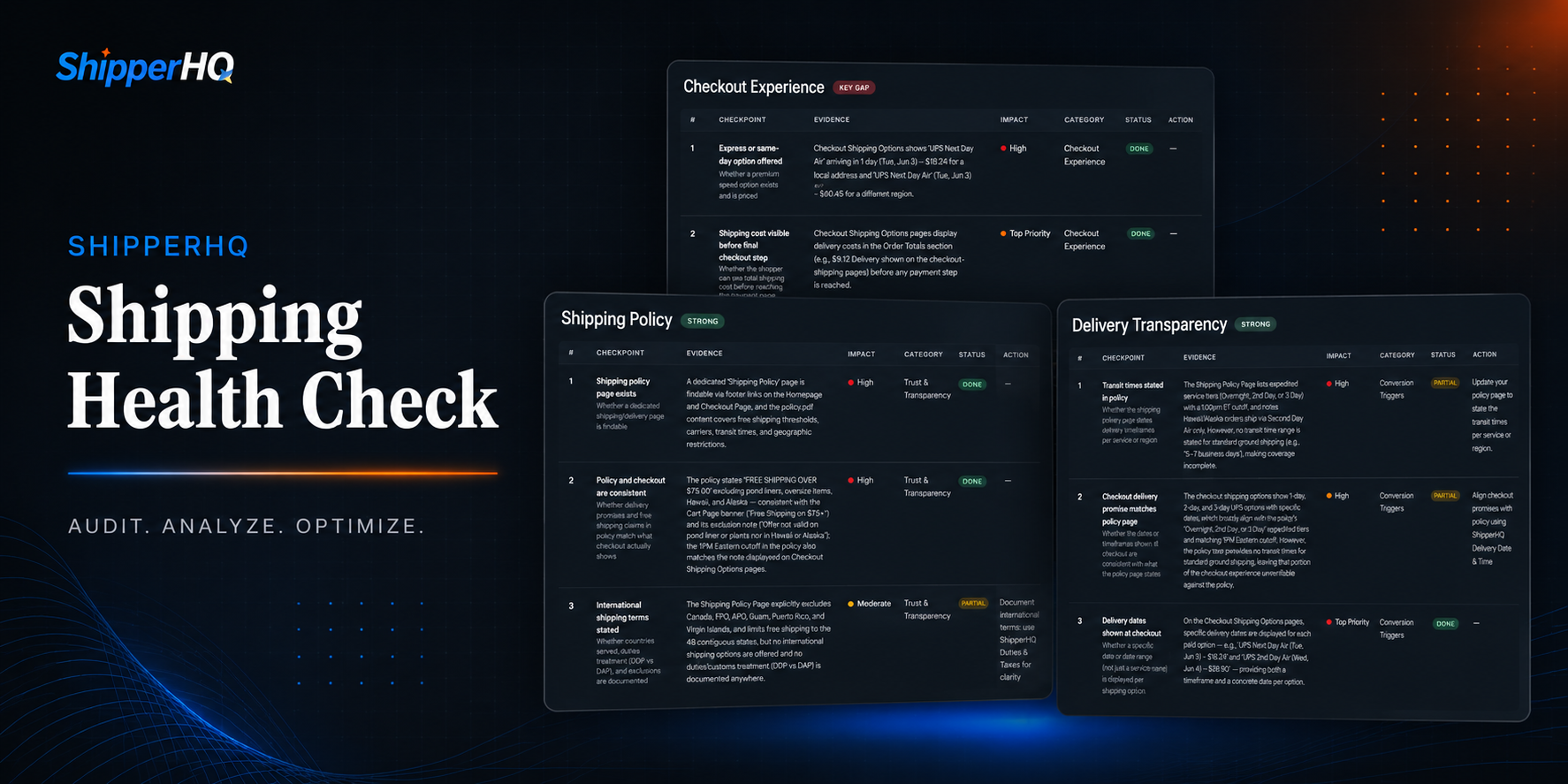
What Your Checkout Is Costing You
Ask most merchants how their shipping setup and checkout are doing, and you'll get the same answer: fine.