


The Auto Parts Shopify Stack: 5 Apps That Handle What the Platform Doesn't
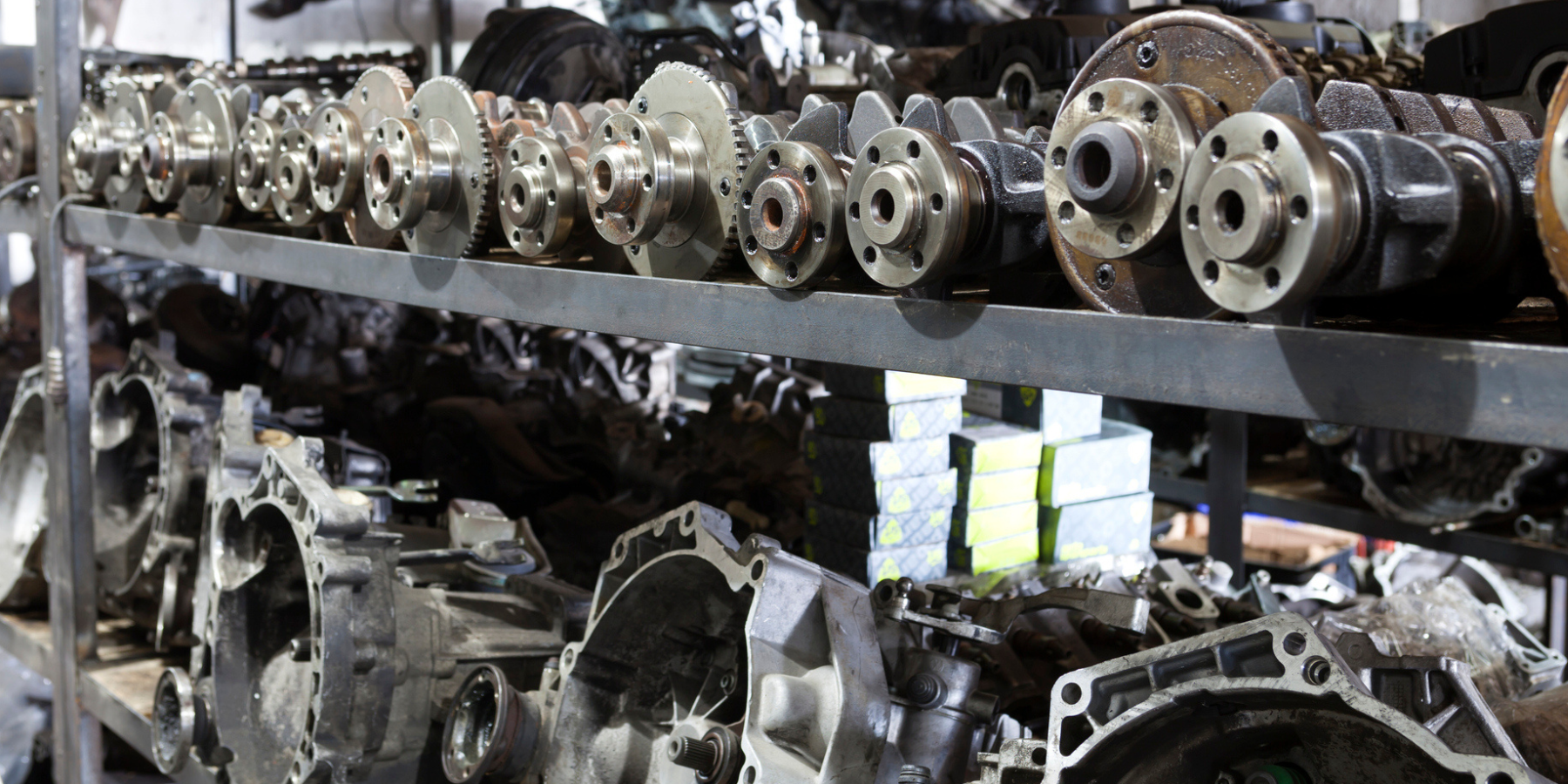
Shopify is a good place to sell auto parts. It is not, out of the box, a good place to sell a 90-pound driveshaft next to a set of wiper blades in the same cart, to a shopper who needs to know whether either one fits a 2014 Silverado.
That gap is not a knock on the platform. It is the nature of the category. Automotive carries more physical variance and more data variance than almost anything else in ecommerce. Parts range from a $6 clip to a palletized bumper assembly. Catalogs run into the hundreds of thousands of SKUs. And the single most important piece of information in the entire transaction — does this part fit my vehicle? — is not something a standard product page knows how to answer.
Five apps close that gap. None of them compete with each other. Each one owns a different failure point.
Quick answer: The five Shopify apps most auto parts sellers need are ShipperHQ for shipping rules, dimensional packing, and LTL freight at checkout, Uncap Garage for Year Make Model fitment built on ACES and PIES data, Klaviyo for email and SMS driven by order and vehicle data, Gorgias for unified support with an AI agent, and Tapcart for a branded mobile app that keeps repeat buyers coming back.
Quick picks: ShipperHQ is best for pricing freight and oversized parts correctly. Uncap Garage is best for Year Make Model fitment. Klaviyo is best for lifecycle email and SMS. Gorgias is best for high-volume, fitment-heavy support. Tapcart is best for retaining maintenance buyers on mobile.
1. ShipperHQ: shipping rates that reflect what is actually in the box
Shipping is usually the first thing that breaks in an automotive store, and it breaks quietly. Nobody files a ticket saying "your rate was wrong." They just abandon the cart, or they check out at a rate that costs you money on every order.
Shopify's native shipping settings assume a world of predictable parcels. Automotive is not that world. A store that rates on weight alone undercharges on every large, light item it ships, because carriers bill on dimensional weight. A store that sets a flat rate to protect itself overcharges on small parts and loses the sale. And once a product crosses into freight territory (a bumper, a hood, a set of wheels, an engine block) parcel rates stop being an option at all.
ShipperHQ handles all three. Dimensional packing uses your real box sizes and a best-fit algorithm to return a rate that matches what the carrier will actually charge. Shipping rules let you set logic by product, cart value, zone, customer group, or fulfillment origin, so freight-only items never show a parcel rate and hazardous or restricted parts route the way they have to. And live LTL freight rates from more than 30 carriers mean a palletized order gets a real number at checkout instead of a "call for a quote" dead end.
Three things matter more in automotive than in most categories: multi-origin support, because parts businesses commonly ship from several warehouses or a mix of warehouse and drop-ship supplier; freight class assignment by product type, so rating stays accurate as the catalog grows; and customer group rules, so a wholesale account with negotiated carrier rates sees its rates while retail buyers see standard rates at the same checkout.
Best for: Auto parts sellers whose catalog spans small parcels and freight-class items, especially those shipping from more than one location or serving retail and wholesale buyers from the same store.
Case study: See how Hoosier Tire saved thousands by optimizing shipping with ShipperHQ.
2. Uncap Garage: Year Make Model fitment that runs across the whole store
Shipping determines whether the order is profitable. Fitment determines whether the right order gets placed at all.
Uncap Garage is a Year Make Model fitment app for Shopify, built on ACES (Aftermarket Catalog Exchange Standard) and PIES (Product Information Exchange Standard), the two data formats the aftermarket parts industry already uses to describe which part fits which vehicle. A shopper selects year, make, and model once. From that point on, product pages, search, and collections show only what fits. The vehicle saves to their garage, so the next visit starts where the last one ended, and wrong fitment gets caught before it reaches the cart rather than after it reaches a return label.
The reason to treat fitment as infrastructure rather than as a search widget is what it does downstream. Returns on wrong parts are the most expensive kind of return in this category, because the part usually ships back at freight rates. Support volume drops when the store answers "will this fit" before anyone asks. And for stores selling to repair shops and installers on wholesale accounts, fitment data and account pricing can travel together, so a shop logged into its company account sees its negotiated price on parts already confirmed for the vehicle in front of it.
Uncap Garage is built by Uncap, a Shopify Platinum Partner and Shopify Expert since 2013 that builds and migrates B2B and automotive operations onto Shopify. Alongside fitment, Uncap handles the two things that usually sit behind an automotive replatform: the migration itself, moving a large catalog off a legacy platform without losing revenue or SEO, and ERP integration with the systems parts businesses actually run, including Epicor, Infor, Microsoft Dynamics, NetSuite, and Acumatica. For a parts distributor, that combination matters. Fitment data, pricing, inventory, and orders all have to stay in sync across the storefront and the back office, or the fitment layer is only as accurate as the last manual export.
Uncap's work with Kooks Headers, a performance exhaust manufacturer, produced a 38% lower total cost of ownership and 22% higher conversion after moving to Shopify. On a separate distribution build, Uncap architected a Shopify catalog for one million SKUs with an Epicor ERP integration, launched in under nine months, and the merchant grew online sales sixfold.
Best for: Auto parts and accessories sellers who need fitment working as structured data across the entire storefront, and who are also weighing a migration or an ERP connection behind it.
3. Klaviyo: marketing that knows what the customer drives
Most automotive stores are sitting on the best marketing data in ecommerce and doing very little with it. A customer bought brake pads for a 2016 Tacoma eight months ago. That is a specific person, with a specific vehicle, on a specific maintenance interval, and it is more actionable than almost any demographic segment a general retailer could build.
Klaviyo turns that into messaging. It syncs Shopify order and behavioral data in real time and gives you segmentation that runs on actual purchase history rather than tags, so you can build an audience like "bought a filter more than five months ago, has a saved vehicle, opened an email in the last 30 days" and have it update itself. Flows fire off browse behavior, cart abandonment, and post-purchase timing, across email and SMS in the same automation.
For automotive specifically, the highest-value plays are the ones that use vehicle data: replenishment reminders timed to a maintenance interval instead of a generic 60-day window; cross-sells that only go to owners of the vehicles a part fits; and seasonal campaigns (winter tires, cooling system parts before summer) segmented by region and vehicle type rather than blasted to the full list. Klaviyo also handles review requests and can feed ratings back into segments, which keeps the post-purchase loop in one system.
The honest tradeoff is cost. Klaviyo prices on active profiles and compounds when SMS is added, so it rewards list hygiene and punishes hoarding inactive contacts.
Best for: Automotive brands with real repeat purchase behavior and saved vehicle data who want it driving automated campaigns rather than sitting in the database.
4. Gorgias: one inbox for a thousand versions of the same question
Automotive support has a shape to it. A large share of tickets are the same three questions asked in different ways: does this fit my vehicle, where is my order, and how do I return this? They arrive across email, chat, SMS, and social at the same time, and each one costs an agent a context switch.
Gorgias pulls all of those channels into a single helpdesk with Shopify order and customer data loaded directly into the ticket, so agents view and update orders, process refunds, and check history without leaving the window. Its AI Agent resolves the routine tier autonomously — order status, return policy, and fitment questions where the answer already exists in the store's product data — and hands anything more complex to a human with the full thread attached.
Two notes worth having up front. The AI Agent's accuracy depends entirely on the quality of the data underneath it, which is a good argument for getting fitment into structured ACES and PIES data before expecting an agent to answer fitment questions correctly. And Gorgias bills by ticket volume with AI resolutions charged separately, so the math works best when a meaningful share of tickets require real Shopify actions rather than plain answers.
Best for: Auto parts stores fielding high-volume repetitive support across more than one channel, with clean product data behind it.
5. Tapcart: a mobile home for the customer who keeps coming back
Vehicle owners are one of the most naturally repeating customer bases in ecommerce. Oil, filters, wipers, brakes, fluids, belts — the list of things a vehicle needs on a schedule is long, and the customer buying them is doing so for years.
Tapcart turns a Shopify storefront into a native iOS and Android app without a development team, syncing products, pricing, and inventory from Shopify in real time through a drag-and-drop editor. The value is not the app itself. It is the push notification, which lands on a home screen instead of competing with everything else in an inbox, and which works for restock alerts, order updates, and maintenance reminders.
It pairs well with the rest of this list. A saved vehicle from a fitment app means the app opens to parts that fit. A Klaviyo segment can trigger a push instead of an email when that channel performs better. And for a store with an installer or enthusiast base that reorders monthly, the app becomes the default place they start rather than a search result they have to find again.
Best for: Automotive brands with a proven repeat purchase base who want a retention channel that does not depend on inbox placement or ad spend.
Five jobs, not five versions of the same tool
Skip one of these and the others end up compensating for it, usually badly.
A store with excellent fitment data and a broken shipping setup still loses margin on every oversized order. A store with perfect freight rates and no fitment layer still eats returns on parts that never fit. Support cannot talk a customer out of a rate that was already wrong at checkout. Marketing cannot retain a buyer who got the wrong part. And a mobile app is just another surface for the same problems if the four underneath it are not solved.
The order matters too. Shipping and fitment are foundational, and they are the two most expensive things to get wrong early, because both fail as real money rather than as a soft metric. Support, lifecycle marketing, and mobile are what you add once the foundation holds.
Frequently Asked Questions
Can Shopify handle LTL freight without an app like ShipperHQ?
Not on its own. Shopify's native shipping settings price against standard parcel carrier rates, which works for most retail categories but breaks down for anything oversized, heavy, or freight class. Quoting live LTL rates at checkout, applying freight classes by product, and passing through accessorial charges like liftgate or residential delivery require a dedicated shipping app on top of the platform.
What are ACES and PIES, and why do they matter for an auto parts store?
ACES (Aftermarket Catalog Exchange Standard) is the industry format for vehicle fitment data, describing which parts fit which year, make, and model. PIES (Product Information Exchange Standard) is the companion format for product attributes and content. Together they are how the aftermarket parts industry exchanges catalog data. Using them means fitment stays accurate as vehicles and parts are added, instead of living in a spreadsheet someone maintains by hand.
What is the first app an auto parts store on Shopify should add?
Shipping logic and fitment, in that order or together. Both fail expensively and both fail silently. Incorrect shipping rates cost margin on every order that goes out. Missing fitment data costs a return, and in automotive the return often ships back at freight rates. Support, marketing, and mobile apps deliver more once those two are stable.
Do these apps work with an ERP like Epicor or NetSuite?
The storefront apps sit on top of Shopify, so the integration question is really about Shopify and the ERP. Most parts distributors need pricing, inventory, customer records, and orders syncing both ways in real time between Shopify and systems like Epicor, Infor, Microsoft Dynamics, NetSuite, or Acumatica. That is a separate layer from any of the five apps here, and it is usually the piece that determines whether the fitment and pricing shown on the storefront is actually current.
Do I need a fitment app if I only sell universal parts?
Probably not for filtering, but the question is worth checking against the catalog rather than assuming. Most stores that describe themselves as universal still carry some vehicle-specific SKUs, and those are the ones that generate returns. If fitment applies to even a portion of the catalog, structured fitment data is cheaper than the returns it prevents.
Denis Dyli is the Founder and CEO of Uncap, a Chicago based Shopify Platinum Partner and Shopify Expert since 2013. Uncap builds, migrates, and integrates Shopify operations for manufacturers, distributors, and wholesalers, and builds Shopify apps including Uncap Garage, a Year Make Model fitment app for auto parts sellers.
Share this article
Related Articles

You Don't Need to Be Amazon to Ship Like Amazon
You've probably heard the story before: back in the early '90s, a man turned the garage of his rental house into a ...

The Big-Ticket Online Shopper Is Here. Is Your Checkout Ready?
There's a particular kind of confidence it takes to buy a couch without sitting on it first. A kayak without paddling ...
What Your Checkout Is Costing You
Ask most merchants how their shipping setup and checkout are doing, and you'll get the same answer: fine.