

Shipping restricted items can turn a straightforward ecommerce operation into a compliance challenge fast. Products like hazardous materials, alcohol, tobacco, firearms, perishables, and lithium batteries may be shippable in some cases, but only when the right carrier, packaging, documentation, destination, and delivery requirements are all met.
The hard part isn't just knowing which products are restricted. It's enforcing those restrictions automatically at checkout, before a problem order gets placed.
Quick answer: Restricted item shipping rules help ecommerce stores control which products can ship, where they can ship, and which carrier methods are available at checkout. These rules can hide non-compliant shipping options, require specific services, show restriction messages, or block checkout when a product cannot legally or safely ship to the customer's destination.
What Are Restricted Items in Ecommerce Shipping?
Restricted items are products that carriers will ship only under specific conditions. Those conditions can include compliant packaging, special labels, a valid shipper's license, adult signature at delivery, ground-only transport, or limits on where the product can ship.
Restricted vs. Prohibited: What's the Difference?
A prohibited item cannot be shipped through a given carrier or service under any circumstances. A restricted item can ship, but only when specific requirements are met.
USPS doesn't accept alcohol shipments at all, for example. Other carriers may allow alcohol shipments, but only for licensed shippers with adult signature at delivery. Alcohol is prohibited with some carriers and restricted with others.
For ecommerce retailers, this creates a checkout problem. Carrier rules tell you what's allowed. They don't stop a customer from placing an order you can't legally or practically ship.
How to Ship Restricted Products
When you're shipping restricted items, compliance and accuracy are critical. You need to know exactly what you're shipping, where it's going, which carrier services are allowed, and what conditions must be met. Here are the most common categories that require special handling.
Common Products That Require Special Shipping Consideration
Hazardous Materials
Hazardous materials include corrosive liquids, gases, flammable solids, and other items that may pose a risk to people or property during shipping.
Hazmat items fall into nine classes, from Class 1 (explosives) to Class 9 (miscellaneous, like dry ice). Some can't be shipped at all. Others require approved packaging, labels, documentation, and carrier approval, and will generally come with additional surcharges.
Before selling hazmat products online, confirm the item's hazmat class, whether it can ship with your selected carrier, whether it's restricted to ground only, and what packaging and labeling standards apply.
- FedEx: How to Ship Hazardous Materials
- UPS Guide for Transporting Hazardous Materials
- USPS Publication 52: Hazardous, Restricted, and Perishable Mail
- DHL Guide to Shipping Dangerous Goods
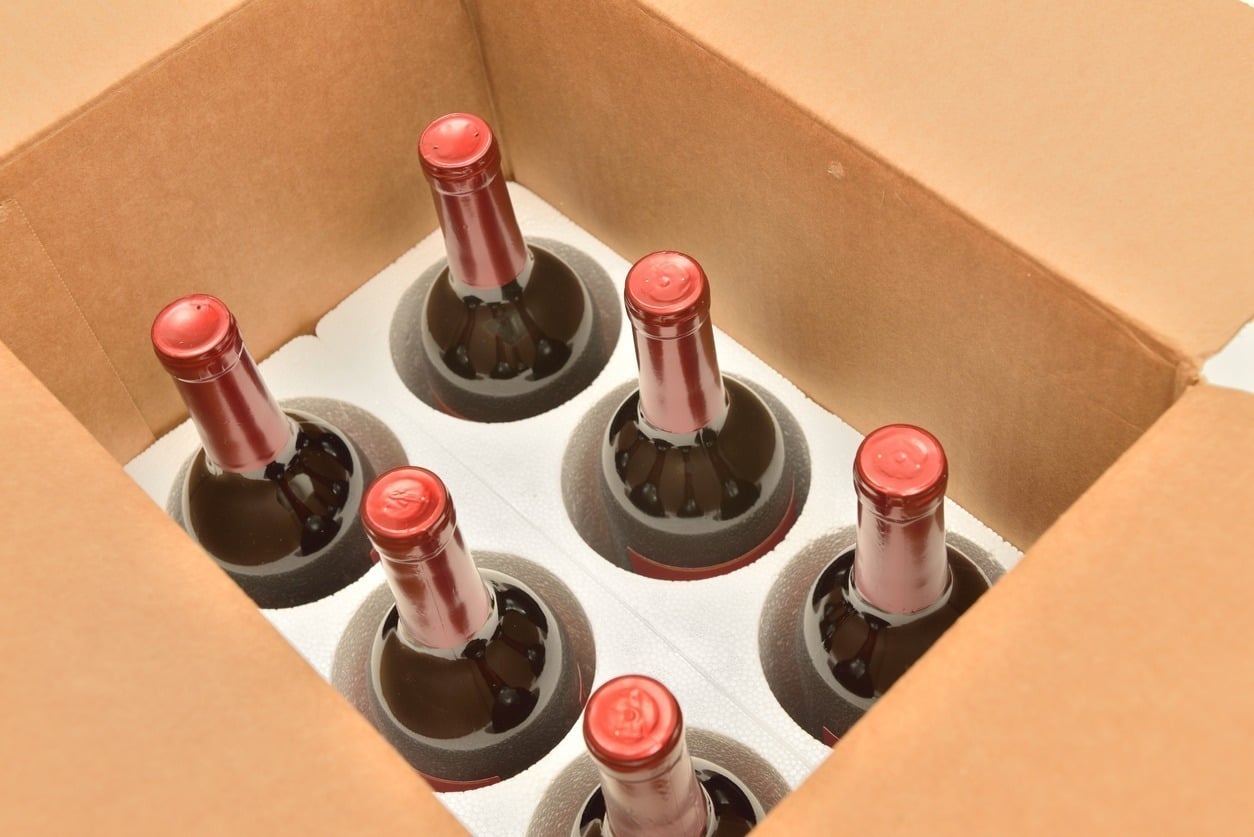
Alcohol
Complex compliance laws govern alcohol shipments. USPS does not accept alcohol shipments at all. Other carriers may allow them for licensed shippers, but requirements are strict: adult signature (21+) at delivery is required, and regulations differ by state, product type, and license type.
Checkout logic matters here. If alcohol can't ship to a customer's location, that should surface before the order is placed, not after.
Tobacco Products
Tobacco shipping is heavily restricted across all major carriers. Under the amended PACT Act (2021), USPS generally treats cigarettes, smokeless tobacco, and electronic nicotine delivery systems as nonmailable, with limited exceptions. UPS ships traditional tobacco products only for shippers who have signed and comply with a UPS tobacco agreement; vaping products are completely banned from UPS service. FedEx prohibits tobacco and tobacco products.
Because rules are carrier-specific and product-specific, ecommerce merchants selling tobacco should not rely on default shipping settings. Checkout logic should reflect which products can ship, to which destinations, and via which carrier.
Firearms
Firearms are highly regulated and can usually be shipped only under specific licensing, carrier, and destination requirements. Each carrier has its own rules, and merchants should confirm current federal, state, local, and carrier requirements before offering firearm-related products at checkout.
- USPS ships long guns under specific conditions, but packaging must not reveal the contents. Small, concealable firearms are only mailable between licensed parties.
- UPS and FedEx ship firearms only between licensed parties as Special Care items.
Perishables
Perishable items, including food, plants, and temperature-sensitive goods, require special packaging, handling, and realistic transit windows. Most need expedited or overnight shipping to arrive in acceptable condition. Items must not emit disturbing odors during transit, and dry ice shipments require specific markings.
The key checkout problem for merchants is method control. A perishable product may ship safely with overnight or two-day delivery, but not with slower ground service to a distant zone. Shipping rules can enforce that automatically.
Lithium Batteries
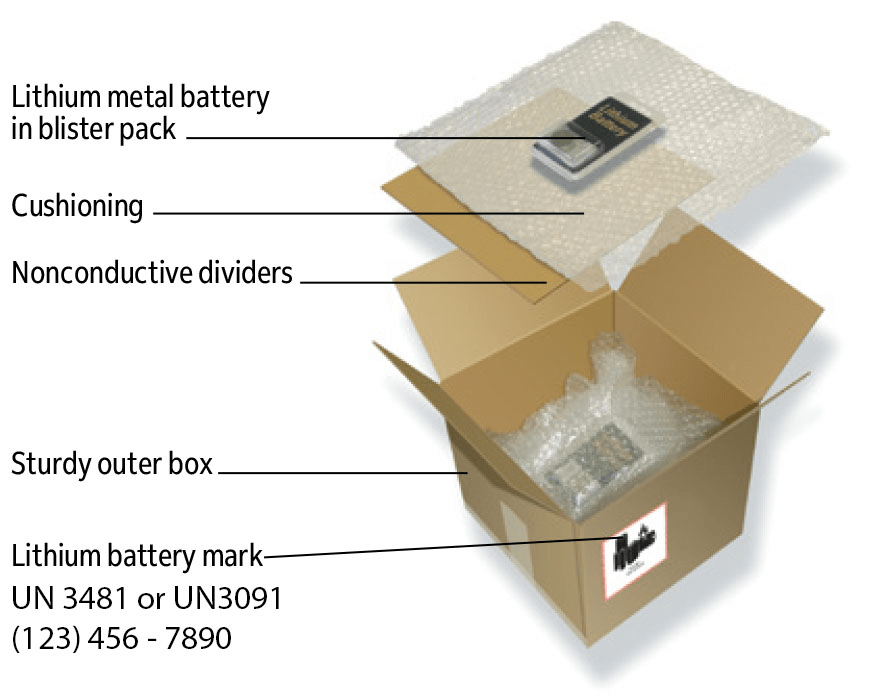
Smartphones, laptops, cameras, GPS devices, and many other electronics contain lithium batteries. Every carrier places restrictions on how they ship.
Air shipments of lithium batteries require special labels, quantity limits per shipment, and packaging that accounts for pressure and temperature changes. Rules vary depending on whether the battery is installed in a device, packed alongside a device, or shipped separately.
For ecommerce stores, this usually comes down to method control: certain services can be available while others are hidden, depending on the product and destination.
Live Animals
For the most part, you cannot ship live animals through postal or courier services. There are a few carrier-specific exceptions worth knowing.
USPS allows only: honeybees, day-old poultry, adult birds, scorpions, and selected reptiles and fish.
UPS ships select animals via next-day services only: amphibians and cephalopods, crustaceans and fish, and selected insects, mollusks, and lizards.
FedEx may accept certain live-animal shipments only through special arrangements or approved services. Always confirm current FedEx requirements before offering live-animal shipping at checkout.
If you ship live animals, plan for next-day services and check carrier-specific rules for your species before offering shipping at checkout.
Fragile Items
Most breakable items are shippable without carrier restriction, depending on their materials. However, retailers shipping fragile or one-of-a-kind items typically insure, package, and ship them separately for good measure. If the item is irreplaceable, treat it that way before it leaves your warehouse.
Expensive Goods
Highly valuable goods carry more risk in transit. Retailers should properly insure any items worth over $100. Several carriers offer services designed for high-value shipments. FedEx's Declared Value program and UPS's Parcel Pro both offer protection up to $100,000 for valuables like jewelry.
Fireworks
USPS does not accept firework shipments at all, though they do allow some similar items like sparklers. Other carriers accept fireworks in some situations, but only via ground services. To ship fireworks, you'll need a HAZMAT certification and must follow standard hazmat protocols from there.
Other Things to Consider When Shipping Restricted Items
Product category is only part of the picture. Where the shipment is going can matter just as much.
Location-Based Shipping Restrictions
Many restricted item rules depend on destination. A product may be legal to sell and ship in one state but restricted in another. It may be fine for domestic shipment but heavily restricted internationally. Some goods require different handling based on address type, customer type, or delivery service.
For ecommerce merchants, this is where native shipping settings often fall short. You need rules that evaluate both the product in the cart and where it's going.
Countries with Border Restrictions
International shipping adds another layer. Some countries restrict certain product imports entirely. Others require licenses, customs documentation, or carrier agreements.
Before offering restricted items for international shipping, confirm whether the product can legally be exported from the origin country, whether it can be imported into the destination, whether any license or customs documentation is required, and whether the customer should be blocked from ordering in the first place.
Some destinations may involve sanctions or embargoes. Check current guidance from the Bureau of Industry and Security (BIS) and the Office of Foreign Assets Control (OFAC), your carrier, and qualified legal counsel.
Package Size Restrictions
Carrier size and weight limits vary by service, destination, and package type. Before quoting rates for oversized or heavy products, confirm the current limits for the exact carrier service you plan to offer. For products that exceed parcel limits, use freight or LTL shipping rules instead of standard parcel methods.
Why Carrier Rules Aren't Enough for Ecommerce
Carriers tell you what you can't ship. They don't prevent a customer from placing the order.
A carrier policy page doesn't stop someone from adding a restricted product to their cart, selecting a shipping method, paying, and creating an order your team can't fulfill. That creates cancelled orders, manual review, customer service load, refunds, and compliance risk.
The Gap Between Compliance Knowledge and Checkout Control
Knowing a restriction exists is step one. Enforcing it at checkout is the real solution.
If a product can't ship to a customer's location, the store should hide the unavailable methods and show a clear message, not let the order go through and catch the problem later.
Where Manual Processes Break Down
At low volume, reviewing restricted orders by hand is manageable. When restricted products make up even a fraction of your order volume, manual review creates delays and liability. Post-purchase cancellations are bad for customers and bad for the business. Enforcement should happen before checkout is completed, not after fulfillment starts.
How Conditional Shipping Rules Work
Conditional shipping rules evaluate order details at checkout and determine which shipping methods to show, hide, change, or block.
The logic works like this: if this product is in the cart and the destination matches this condition, then show, hide, or modify these shipping options.
Conditions can be based on products, destination, origin, carrier, cart value, weight, quantity, time in transit, or combinations of all of these.
Condition Types That Matter for Restricted Items
Product-based: The rule fires when a specific product or product group is in the cart. Items tagged as Alcohol, Perishable, Firearm, Hazmat, or Lithium Battery each inherit the rules for their group.
Destination-based: The rule fires based on country, state, region, or zip code. Useful for state-level restrictions, cross-border product rules, and sanctioned destinations.
Combined (AND logic): The most precise approach. The rule fires only when both product and destination conditions match. This is what makes compliant automation possible without over-restricting customers in allowed locations.
Transit-time rules: The rule fires based on estimated delivery time. Useful for perishables or products with maximum allowable transit windows.
Cart-level rules: The rule fires based on cart value, weight, or quantity. Useful for hazmat quantity limits, high-value shipments requiring declared value coverage, or freight thresholds.
Examples of Restricted Shipping Rules
| Scenario | Example Rule |
|---|---|
| Alcohol | If Alcohol group product is in cart AND destination is a restricted state, hide all shipping methods and show a restriction message |
| Perishables | If Perishable group product is in cart AND transit time exceeds two days, hide Ground and show only expedited methods |
| Lithium batteries | If Lithium Battery product is in cart AND method is an air-restricted service, hide that method |
| Firearms | If Firearm product is in cart AND destination is outside an allowed region, block checkout or show approved methods only |
| High-value goods | If cart value exceeds threshold, require signature, declared value coverage, or approved carriers only |
| Oversized items | If product group is Oversized, show LTL freight and hide standard parcel methods |
What Happens When a Rule Matches
A matched rule can hide specific shipping methods, show only compliant options, add or remove surcharges, require a specific service, display a custom message explaining why certain options aren't available, or block checkout entirely for non-shippable product and destination combinations.
In most cases, hiding non-compliant methods is better than blocking checkout. It keeps the customer in the purchase flow and gives them a clear path forward.
Native Ecommerce Platform Limits
Most platforms include basic shipping settings, but restricted item compliance usually requires more control than native tools can provide.
Shopify Native Shipping Limitations
Shopify supports shipping profiles, zones, weight-based rates, price-based rates, and carrier-calculated rates. Those tools are useful for standard shipping setups. But they don't support conditional logic that evaluates both product and destination simultaneously.
Shopify merchants selling restricted products often hit the limits of native profiles when they need rules like: "hide all shipping methods if this product group ships to this state."
WooCommerce Native Shipping Limitations
WooCommerce shipping zones and classes offer more granularity than Shopify, but AND/OR logic across product and destination conditions typically requires a plugin or custom development. The same issue can show up on BigCommerce and Magento/Adobe Commerce when merchants need advanced product, destination, origin, or transit-time logic that goes beyond standard shipping settings.
When a Third-Party Shipping Rules App Makes Sense
A shipping rules app makes sense when customers can place orders for items you can't legally ship, your team manually reviews restricted orders, you need to hide methods for specific products going to specific locations, or you need custom checkout messaging that explains restrictions clearly.
How ShipperHQ Handles Complex Shipping Rules for Restricted Items
ShipperHQ's rules engine lets ecommerce merchants control shipping options at checkout using conditional logic based on products, destinations, carriers, origins, cart details, and transit time. Rules are configured once and enforced automatically across Shopify, WooCommerce, BigCommerce, and Magento/Adobe Commerce.
Shipping Groups: Restriction Logic at the Product Level
ShipperHQ uses Shipping Groups to assign products to restriction categories. Any product tagged as Alcohol, Firearms, Perishable, Hazmat, or Lithium Battery inherits the rules for that group. A store with hundreds of products in a restricted category manages one set of rules, not individual configurations per SKU.
Location-Based Rules: State, Country, and Zip Code
Destination conditions work at the country, state, or zip code level. For example: if any Alcohol group product is in the cart and the destination is a restricted state, hide all shipping methods and display "This item cannot ship to your location." No fulfillment error. No customer service ticket. No order to cancel.
Rule Stacking: Multiple Conditions, One Rule
ShipperHQ supports AND logic across product, destination, weight, and transit time in a single rule. For perishables: "if any Perishable product is in the cart AND transit time to the destination exceeds two days, hide Standard Ground and show only expedited methods." The restriction is enforced before the order is placed.
Checkout Messaging for Restricted Items
When a shipping method disappears without explanation, shoppers assume checkout is broken. Custom messages give them context: "This item requires adult signature — select an eligible method to continue." Clear, specific messaging reduces cart abandonment and keeps customers from contacting support over restrictions they don't understand.
Restricted Shipping Success Stories
International Military Antiques
International Military Antiques has been in business for over fifty years and specializes in military weapons and artifacts. Some items, like deactivated machine guns, cannot be exported without a license from the Department of State. Before ShipperHQ, those complications regularly held up operations.
By using Shipping Groups in ShipperHQ, IMA prevents customers outside the U.S. from ordering restricted items at checkout. Clear messaging explains the rules, so shoppers understand what can and can't ship to their location.
"ShipperHQ has saved us man-hours," said IMA Founder Alex Cranmer. "We no longer have to cancel orders when we can't legally ship an item, or contact customers after they've ordered because we need to update their shipping quote. ShipperHQ keeps us legally compliant. I rest easier at night knowing they have our back."
Cox + Cox

Online furniture and home goods retailer Cox & Cox sells unique pieces across multiple markets. Some products, including sofas and children's items, can't be imported into certain EU countries. Before ShipperHQ, that created regular cross-border fulfillment challenges.
ShipperHQ let Cox + Cox build rules based on what customers were buying and where they wanted it shipped. Restrictions are enforced at checkout, and compliant customers see accurate, useful options instead of post-purchase cancellations.
"Thanks to ShipperHQ, we can give our customers better shipping options. And rates that make sense for what they are buying," said Aynsley Peet, Ecommerce Director at Cox & Cox.

FAQs
What is restricted shipping?
Restricted shipping refers to shipping products that carriers will only transport under specific conditions. Those conditions can include carrier approval, licensed shippers, compliant packaging, adult signature, destination limits, or specific service requirements.
What's the difference between restricted and prohibited items in shipping?
Prohibited items cannot be shipped through a given carrier or service under any circumstances. Restricted items may be shipped, but only when specific requirements are met. Most regulated goods — alcohol, firearms, tobacco, lithium batteries — are restricted, not prohibited.
What products commonly require special shipping rules?
Common restricted product categories include hazardous materials, alcohol, tobacco products, firearms, perishables, and lithium batteries. Products with destination-specific restrictions, high-value items requiring declared value coverage, and oversized items requiring freight carriers also benefit from shipping rules.
Can Shopify restrict shipping by product and destination?
Not with native settings alone. Shopify doesn't support conditional logic that evaluates both product and destination at the same time. A third-party shipping rules app like ShipperHQ adds that capability, letting you hide methods or block checkout for specific product and destination combinations.
How does ShipperHQ help with restricted item shipping?
ShipperHQ lets ecommerce merchants automate restricted shipping rules at checkout using conditional logic based on product, destination, origin, carrier, cart value, weight, quantity, and transit time. Only compliant shipping options appear. Non-compliant orders don't get through checkout.
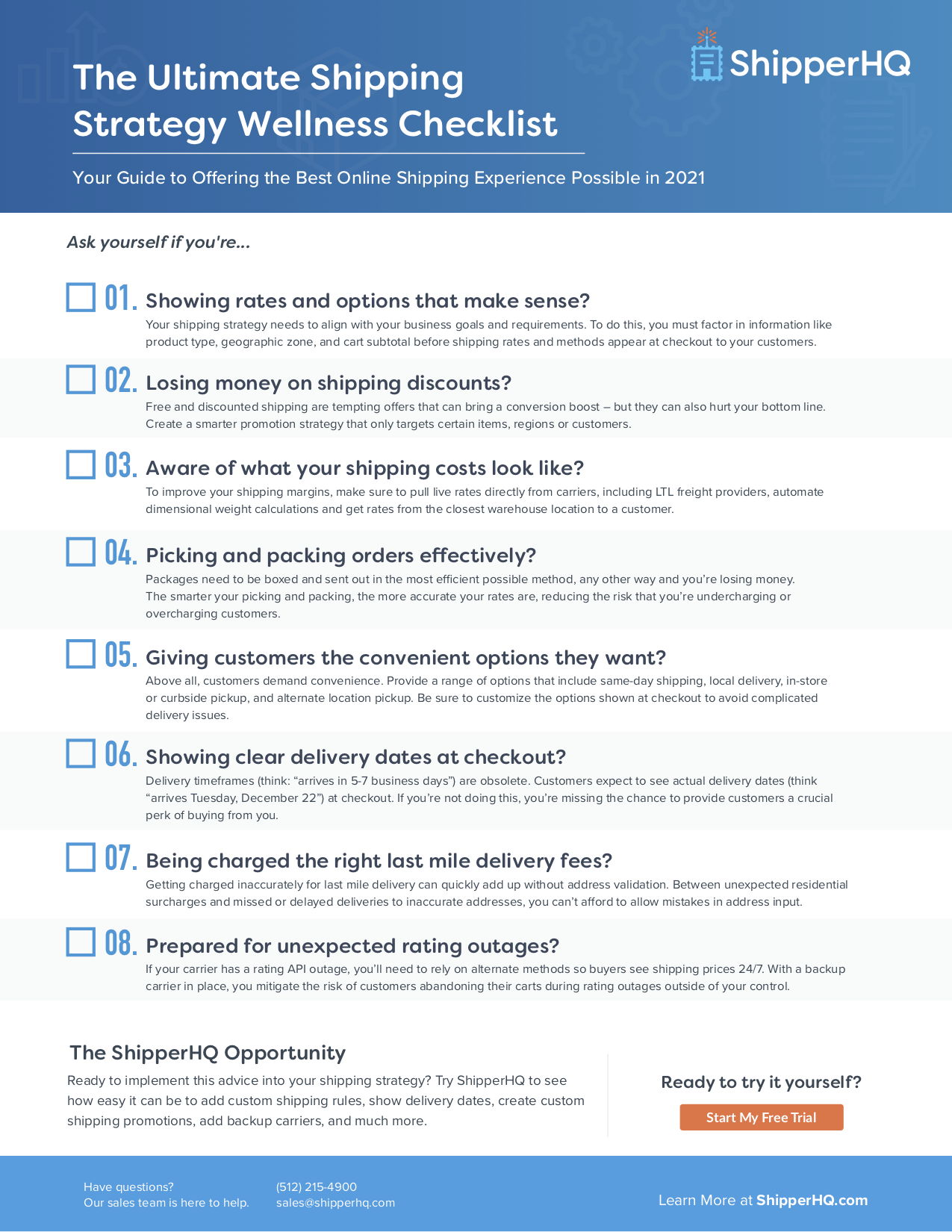
Download our Free Shipping Strategy
Checklist for More Tips: