


As an ecommerce business owner, you've put a lot of work into your website experience. You've invested in photography, SEO driven copy, and product pricing. But one thing can still make or break your business: your ecommerce shipping strategy.
Your customers' expectations around shipping haven't softened. They want it fast, affordable, and free if possible. If your checkout shows vague delivery dates, surprise fees, or only one shipping option, shoppers have a reason to pause or leave. Statista reports that 41% of online shoppers have abandoned a cart because delivery fees felt too high.
Ecommerce shipping can feel intimidating when you're starting out. It's the moment a customer finally gets to hold what they ordered, and it's often one of the biggest expenses in your business, depending on where you're located, the carriers you use, and the products you sell.
The good news is that proper planning goes a long way. This guide breaks down the basics for building your ecommerce shipping strategy, including key terms, carrier options, delivery methods, and practical tips for balancing shipping cost against customer experience.
At a glance. Ecommerce shipping is the process of getting a purchased product from your warehouse or fulfillment center to the customer's address. It covers carrier selection, packaging, labeling, transit, tracking, and returns. Shipping is also one of the top reasons shoppers abandon checkout, and the biggest levers you control are carrier choice, pricing model, checkout delivery options, and delivery date accuracy.
What Is eCommerce Shipping?
Ecommerce shipping is the process of getting your products from your warehouse, store, vendor, or fulfillment center to your customer. It includes carrier selection, packaging, label creation, carrier handoff, transit, delivery, tracking, and returns.
Shipping and fulfillment aren't the same thing, even though people often use the terms interchangeably. Fulfillment covers the work inside the warehouse: receiving inventory, storing products, picking items, packing boxes, and preparing orders. Shipping starts once the package moves to the carrier and continues until the customer receives it.
You might handle fulfillment yourself and hand packages to carriers like UPS, FedEx, USPS, DHL, or a regional carrier. Or you might use a 3PL that manages both fulfillment and shipping for you.
Either way, your checkout experience is tied to both. Shoppers who don't see a delivery timeline they trust often leave without buying, so the decisions you make around rates, options, and delivery date display directly affect whether the sale happens at all.
eCommerce Shipping Terms You Need to Know
These terms come up often once you start working with carriers, platforms, and shipping tools. Here are the ones worth knowing before you go further.
-
Shipping rate. The amount you charge the customer for shipping at checkout. This is the price that shows up in the cart.
-
Shipping method. The shipping option a shopper sees at checkout, such as ground, standard, expedited, 2 day, overnight, local delivery, or pickup.
-
Shipping carrier. The company that transports your package. Common carriers include UPS, FedEx, USPS, DHL, regional carriers, and LTL freight carriers.
-
Shipping origin. The location a package ships from, such as a warehouse, retail store, vendor, or dropshipper.
-
Shipping zone. A distance based pricing band between the shipping origin and the delivery address. Farther zones usually cost more. US zones run 1 through 8.
-
Shipping regulations. Restrictions a country's government places on what can and cannot be shipped domestically or internationally.
-
Dimensional weight (DIM weight). A carrier pricing method based on package size. If a package is large but light, the carrier may charge based on the space it takes up instead of its actual weight. The formula is L x W x H / 139 for most domestic US shipments.
-
Fulfillment. The full process of receiving, storing, picking, packing, and preparing orders for shipping. This usually happens at a warehouse, fulfillment center, or through a dropshipper.
-
Small package shipping. Parcel shipping for boxes, mailers, and envelopes under 150 lbs that move through carriers like UPS, FedEx, and USPS.
-
LTL freight. Less than truckload freight, used for large, heavy, or oversized orders that don't need a full truck.
-
Residential surcharge. An added carrier fee for home delivery. All major carriers charge this.
-
Delivered Duty Paid (DDP). The seller collects duties, taxes, and customs fees before delivery, so the customer pays nothing extra at the door.
-
Delivered Duty Unpaid (DDU). The customer pays duties and taxes when the order arrives, which can create a bad experience if they didn't expect the extra cost.
eCommerce Shipping Methods and Delivery Speeds
The shipping methods you show at checkout shape what customers can choose. Most merchants default to whatever their platform enables out of the box, but the stores with better conversion rates make deliberate decisions about which options to show, at what price, and for which order types.
| Shipping method | Typical speed | Best for | Cost level | Carrier examples |
|---|---|---|---|---|
| Ground or standard | 3 to 5 business days | Most domestic shipments | Low | UPS Ground, FedEx Ground, USPS Ground Advantage |
| Expedited | 2 to 3 business days | Faster delivery without overnight pricing | Medium | UPS 3 Day Select, FedEx 2Day, USPS Priority Mail |
| Two day | 2 business days | Gifts, replenishment, competitive checkout | High | UPS 2nd Day Air, FedEx 2Day |
| Overnight | 1 business day | Urgent and high value orders | Highest | UPS Next Day Air, FedEx Priority Overnight |
| Same day or local | Same day | Local customers, perishables, urgent orders | Varies | Regional couriers, local delivery partners |
| Store pickup | Same day or scheduled | Omnichannel retailers, local customers | Low | In store, curbside |
| LTL freight | 2 to 5 business days | Heavy, oversized, or pallet shipments | Varies | FedEx Freight, UPS Freight, R and L Carriers |
| International | Varies by country | Orders outside your home market | Medium to high | DHL Express, FedEx International, UPS Worldwide |
Ground shipping stays the cheapest option for most orders. USPS Ground Advantage usually wins on packages under 1 lb, while UPS and FedEx tend to win on heavier packages and longer zones.
Same day delivery works when you serve customers near a warehouse or store. You need a cutoff time, fast picking and packing, local delivery coverage, and a minimum order value that makes the service worth running.
Don't default to overnight shipping unless your margins support it. Save it for urgent orders and high value products where customers are willing to pay for speed.
You don't have to show every method to every customer, either. ShipperHQ's shipping rules let you show, hide, or adjust methods based on what's in the cart or the item itself, like blocking overnight shipping on oversized furniture or hiding free shipping on clearance items.
Factors That Impact eCommerce Shipping Costs
There's no one size fits all ecommerce shipping strategy, but every business needs to weigh the same core factors to price shipping accurately and protect margin.
Customer Expectations
What do your buyers want to see at checkout? Getting shipping rates right is a balancing act. Charge too much and you lose the sale. Charge too little and you eat the cost. It's not just price that matters either. The options you offer and how long delivery takes both influence cart abandonment. Buyers are used to fast, cheap, and convenient shipping now, so you may need to offer store pickup, curbside pickup, or same day delivery to stay competitive.
Package Size and Dimensional Weight
Carriers don't only look at how much a package weighs. They also look at how much space it takes up, which is where dimensional weight comes in. A large, light box can cost more to ship than a smaller, heavier one because it takes up more room in a truck or plane. A box that measures 14 inches on each side has a dimensional weight of 19.7 lbs. If the product inside weighs 5 lbs, the carrier may still charge for 19.7 lbs. That's why right sized packaging matters so much. Smaller boxes lower your carrier costs and make checkout rates more accurate. ShipperHQ's dimensional packing feature calculates how products fit into boxes before showing rates at checkout.
Shipping Zones
Carriers use zones to price distance. A shipment to a nearby address costs less than the same package crossing the country, and if you ship from one warehouse to customers nationwide, your zone costs can vary a lot. Shipping from multiple warehouses helps, since routing from the closest origin reduces distance, lowers cost, and often improves delivery speed. ShipperHQ's multi origin shipping handles origin selection and rate calculation automatically across multiple locations. It's also worth considering the type of destination. B2C shipments often carry extra last mile costs that don't apply to business deliveries, and cross border orders may need different carriers or logistics partners than your domestic shipments.
Service Level
Faster shipping costs more. Overnight can run 3 to 5 times what ground costs for the same package. If you show several speeds at checkout, each one should reflect its real cost and delivery promise. A single flat fee across every service can hide margin problems fast.
Surcharges
Surcharges can turn a normal shipping bill into a surprise. Watch for residential delivery fees (typically $6 to $7 or more per package), fuel surcharges that fluctuate weekly as a percentage of the base rate, oversized and additional handling fees, peak season charges from UPS and FedEx that run from late September or October through January (with the highest rates in November and December), and remote area delivery fees for low density addresses. If you use live carrier rates at checkout, these surcharges need to show up in the price your customer sees.
Shipping Regulations
As a merchant, you likely have shipping regulations and requirements specific to your industry that affect who you can ship to and how fast you can deliver. If you sell fireworks, for example, certain shipping methods may be off limits entirely. Make sure customers in restricted areas never see a shipping option, rate, or delivery time for a method they aren't allowed to use. Letting a customer complete an order you can't legally fulfill leads to a bad experience, canceled orders, and potentially real fines. Building shipping rules around your regulated products keeps you compliant and keeps checkout smooth.
Unique Challenges
Think through the special conditions around your own products. If you ship dangerous materials, perishable goods, or furniture, you need a carrier that can accommodate those requirements. You also need control over when and where certain shipping options appear. It doesn't make sense to offer free shipping on oversized machinery, or overnight delivery on customized items that need extra production time. Explore alternative methods like same day delivery or in store pickup to round out the options you offer. Even small changes here can pay off in cart conversion, cost control, and customer satisfaction.
eCommerce Shipping Rates and Pricing Models
What the carrier charges you and what you charge the customer aren't always the same thing. Your pricing model decides how much of the shipping cost the customer sees at checkout and how much your business absorbs.
Free Shipping
Free shipping can improve conversion, but the cost comes out of your margin or gets built into product pricing. A free shipping threshold usually works better than free shipping on every order. Read our guide to free shipping strategies for more on setting thresholds that protect margin.
Flat Rate Shipping
Flat rate shipping charges one fixed price regardless of what's in the cart. It works best when your products are similar in size, weight, and shipping cost.
Real Time Carrier Rates
Real time rates pull prices directly from carriers based on the package, destination, and service level. This helps you avoid undercharging on heavy, large, or long distance orders.
Table Rate Shipping
Table rate shipping lets you set rates based on cart value, weight, zone, product group, customer type, or other rules. This works well for B2B sellers and stores with more complex shipping needs.
Most established merchants use more than one model. You might run live rates as your base, offer free shipping above a threshold, and layer in table rates for certain products or customer groups.
Steps to Building Your Online Shipping Strategy
Once you've thought through the factors above, here's how to build out your strategy. For a deeper walkthrough of turning these steps into a plan, see our ecommerce shipping strategies guide.
Choosing Carriers
What providers do you want to work with? Are you focused on domestic sales, or are you expanding internationally?
Picking Delivery Methods
Do you need LTL freight, small package delivery, or both?
Optimizing Your Checkout
What information do you want to show at checkout? Delivery dates? A calendar for pickup or delivery?
Setting Up Shipping Promotions
Does free shipping make sense for your business? Is there a holiday you want to build a promotion around, or a discount you want to test?
The rest of this guide walks through each of these steps in more detail, along with a few additional considerations that will help you build a strategy that fits your business.
Deciding What Carriers to Work With
Understanding what each carrier offers helps you decide which ones make sense for your business. The four major US carriers, UPS, USPS, FedEx, and DHL, each bring different strengths to the table.
UPS
UPS runs its own end to end network and offers negotiable rates, plus an Access Point program that lets retail locations securely hold packages for pickup.
Popular UPS services include UPS Ground, UPS Standard, UPS Worldwide Saver, UPS Worldwide Express, UPS Worldwide Expedited, UPS Next Day Air, UPS 3 Day Select, UPS Access Point, UPS LTL Freight, and UPS Ground Freight.
USPS
USPS costs less and works well for small businesses shipping small, light products. As a government agency, it delivers to every mailbox and PO box in the country, though it offers a narrower range of expedited options than the other carriers.
Popular USPS services include USPS Priority Mail, USPS Priority Mail Flat Rate Envelope, USPS Priority Mail International, and USPS Priority Mail Flat Rate boxes in small, medium, and large sizes.
FedEx
FedEx pioneered overnight shipping, package tracking, and real time location updates, and it runs one of the broadest ranges of service tiers among the major carriers, with pickup, drop off, and shipping available at tens of thousands of US locations, including through its Hold at Location service.
Popular FedEx services include FedEx Ground, FedEx Ground Economy, FedEx Home Delivery, FedEx 2nd Day, FedEx 2nd Day Saturday, FedEx First Overnight, FedEx Overnight Saturday, FedEx Priority, FedEx Priority Overnight, FedEx Freight, FedEx Hold at Location, and FedEx International Ground.
DHL
DHL specializes in international shipping and is one of the largest logistics companies in the world. It's a strong choice for cross border orders, though its domestic US options are more limited than UPS, FedEx, or USPS.
Popular DHL services include DHL SameDay Jetline, DHL SameDay Sprintline, DHL Express 9:00 Domestic, DHL Express 10:30 Domestic, DHL Express 12:00 Domestic, DHL Express Domestic, DHL Express Envelope, DHL Express Worldwide, and DHL Express Easy.
When to Use Multiple Carriers
No single carrier wins every shipment type. A multi carrier strategy connects UPS, FedEx, USPS, and regional carriers so you can rate shop every order. Your customer doesn't need to see every carrier service, just clear choices like Standard, Expedited, Overnight, Freight, Pickup, or Local Delivery. ShipperHQ's rate shopping feature compares connected carrier rates behind the scenes and shows the best option based on the rules you set.
Choosing Your eCommerce Shipping Options
Once you're familiar with these carriers, it's time to figure out which shipping methods and services fit your business. Ask yourself a few questions first. How quickly do you want orders to reach customers? Do your products need assembly, or are they heavy to lift? Do customers want to pick up online orders in person? Do you want to handle local delivery yourself?
Keep your goals in mind and lean on your team as you work through these questions. Some of the most popular shipping methods buyers look for are free shipping, time slot delivery, store pickup, same day delivery, and local delivery. Each comes with its own tradeoffs, and not every method fits every store or every transaction. No approach rules out another, and the most successful online stores combine several options into one flexible strategy. Here's a closer look at each.
Time Slot Delivery or Pickup
Time slot delivery lets customers pick a date and time to receive a delivery or pick up their order. It takes more coordination to run, so don't promise a window your team can't actually hit, but it can be the difference between a happy customer and a frustrated one. This option works well for holiday shipments, perishable goods, in home delivery, high value items, and anything time sensitive like medication.
Curbside or Store Pickup
Curbside, also known as store pickup, lets customers pick up online orders in person. This works well if you run a brick and mortar location with staff available to handle a pickup counter or hand off orders at a customer's car. It's convenient for the buyer, saves them shipping costs, and can get items into their hands faster than delivery would. Make pickup instructions clear so buyers know exactly where to go, and keep your in store inventory synced with your online store. The last thing you want is an order coming through for something that's already sold out in store.
Local Delivery
You can hand local delivery to a regional courier or run it yourself. An outside service gets you up and running faster, but handling it in house is typically more cost effective if you already have a delivery vehicle on the road for call in or in person orders. Factor in fuel charges, insurance costs, and the operational changes it takes to support it. You can keep local delivery affordable by restricting it based on order value, limiting it to certain products, or capping it to customers within a set distance from your store, which also cuts down on vehicle wear and tear.
Same Day Delivery
Same day delivery keeps climbing in demand, with 56% of shoppers age 18 to 34 already expecting this option at checkout. As brick and mortar retail keeps evolving, interest in same day delivery should only grow, especially among small retailers who rely on local customers. Most major US cities have local delivery and courier companies that move goods quickly and at reasonable prices. FedEx SameDay City, for example, covers 34 markets across the country if you'd rather not build and run your own delivery fleet.
Free Shipping as a Checkout Option
Free shipping looks like an easy win from a merchant's perspective. It's simple to explain to customers, gives you a competitive edge, and tends to boost conversion. But free shipping isn't free to you, so you need a strategy that keeps enough margin to cover the real cost. If you're losing money on every sale, more orders won't help your bottom line. To offset the cost, shift some of your budget to treat free shipping as a marketing expense, apply it only above a spending threshold like $50, limit it to high margin items, or add a small surcharge across your catalog if needed.
Additional eCommerce Shipping Considerations
A few more details go a long way toward optimizing the checkout experience for your customers.
Delivery Date Details
Showing a delivery date at checkout builds credibility, and the more information you give customers about your delivery process, the more likely they are to buy. Define clear cutoff times, lead times, and blackout dates for dispatch, especially if production is involved, and lengthen your lead times if delays are a real possibility. Language like "Earliest Possible Delivery" also helps set the right expectations when timelines might shift. ShipperHQ's delivery date and time display handles this automatically based on your cutoff rules.
Shipping Policies
Transparency matters just as much in your shipping and delivery process as anywhere else on your site. Publish a shipping policy or FAQ page that covers returns, lost items, and damaged goods. Be direct about how each delivery option works, including whether a signature is required or who to call for contactless delivery or pickup. Once an order ships, give customers tracking so they know where their package is without needing to call your support team.
B2B eCommerce Shipping Considerations
B2B shipping runs by different rules than consumer shipping. As a B2B seller, matching the offline experience your loyal customers expect takes more thought, and often a shipping solution that can automate rating and rules rather than relying on manual quotes.
Be clear about your shipping costs and options everywhere it matters, including free shipping minimums and flagging products that ship via freight carrier on your product pages. Offer the B2C staples like ground delivery and same day delivery alongside B2B specific options like warehouse pickup and LTL freight. Give buyers real time rating based on their location, product weight, and cart quantity instead of making them call for a quote. And make sure any negotiated rates or shipping agreements stay valid, since the rates and fees customers see should always match those contracts.
Negotiated Rates
Some B2B buyers carry their own carrier contracts, so your checkout may need to show rates based on customer group or account type instead of standard retail rates.
LTL Freight
Large or heavy B2B orders often need LTL freight instead of small package carriers. Real time LTL rates at checkout cut out manual quotes and let buyers place orders without waiting on a shipping estimate.
Customer Type Pricing
Wholesale buyers may need different shipping rates than direct customers. Shipping rules can surface different options by customer group automatically.
Warehouse Pickup
Some B2B buyers want to use their own carrier or pick up directly from your warehouse. A pickup option removes friction for those buyers.
Delivery Date Accuracy
B2B buyers often plan receiving teams, job schedules, or store operations around delivery. Accurate delivery dates that reflect your actual fulfillment schedule, not just carrier transit estimates, help you avoid missed expectations and disputes.
What About International Shipping?
Regulations and service disruptions around international shipping shift constantly. Some countries restrict which shipments can even cross their borders, which complicates things if you're expanding into a new market.
If you're growing cross border, know the forms you'll need, what it will cost, and how customs works before you commit. Our beginner's guide to cross-border shipping can help you answer these questions quickly.
eCommerce Shipping Best Practices
Strong ecommerce shipping setups make cost, speed, and delivery expectations clear before the customer places an order. Use these as a baseline.
Show shipping costs before the final checkout step whenever you can. Display estimated delivery dates instead of vague transit ranges. Offer at least one affordable option and one faster option. Use more than one carrier when your order mix calls for it. Account for package size and dimensional weight before you show rates. Set free shipping thresholds based on margin, not guesswork. Publish a clear shipping and returns policy. Use shipping rules to hide options you can't profitably or reliably fulfill. Track shipping cost, delivery performance, and support tickets over time.
The goal isn't to show every possible shipping method. It's to show the options that make sense for each order and set expectations your team can actually meet.
eCommerce Shipping Software and Tools
Not all shipping software solves the same problem. Some tools print labels. Some help warehouses pick and pack. Some manage tracking and returns after the order ships. ShipperHQ focuses on checkout shipping logic, controlling which rates, methods, carriers, delivery dates, and rules your shoppers see before they buy.
That matters because most shipping problems start before the order is even placed. If your checkout can't handle complex products, multiple warehouses, B2B rules, freight, pickup, local delivery, or delivery dates, your team ends up fixing problems after the fact instead of preventing them.
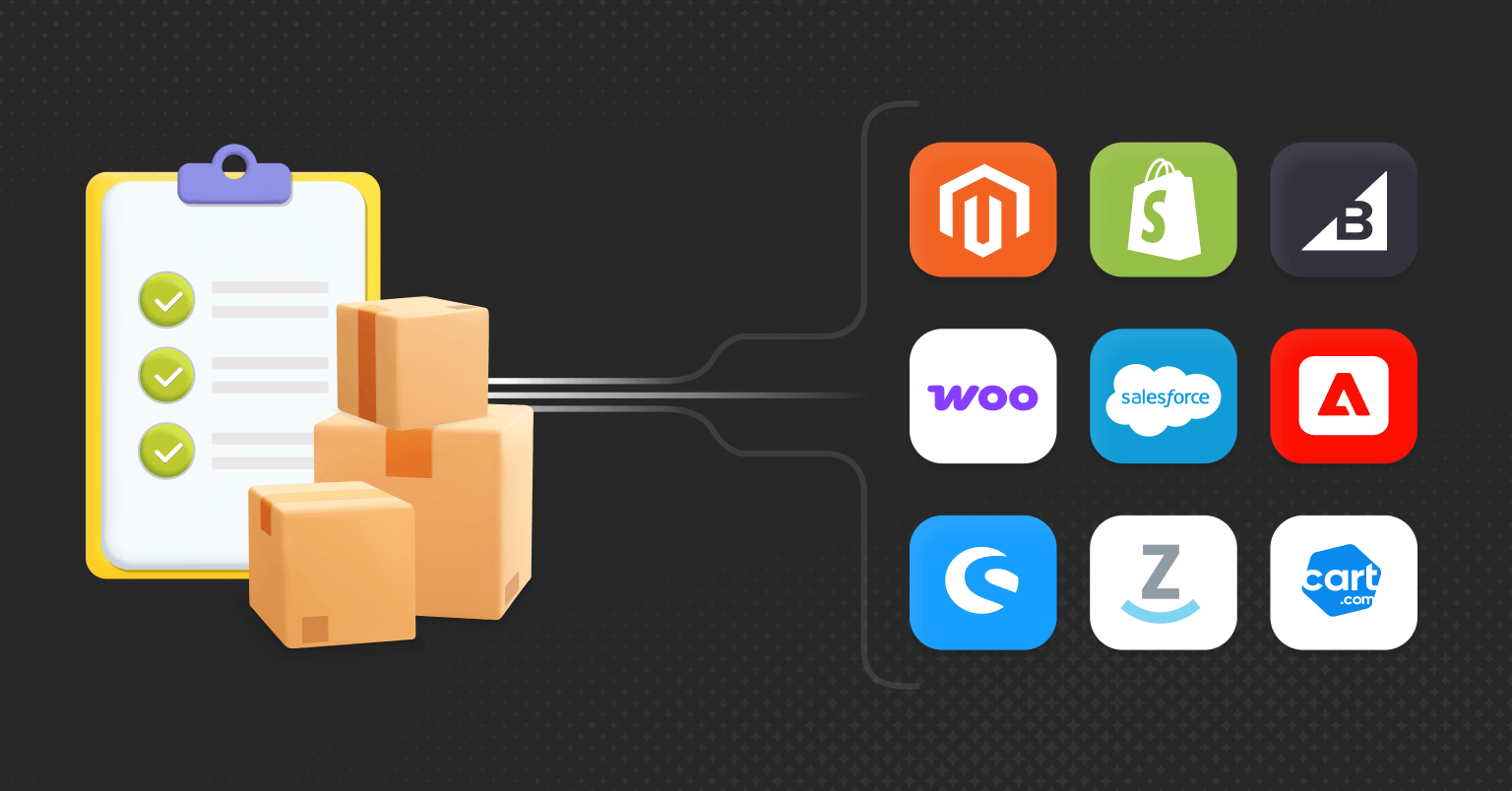
ShipperHQ integrates directly with Shopify, Shopify Plus, BigCommerce, Adobe Commerce, Magento 2, WooCommerce, and Salesforce Commerce Cloud. Key capabilities include:
Multi Carrier Rate Shopping
Connect UPS, FedEx, USPS, DHL, and 100+ carriers, then compare rates for each order and surface the best option.
Shipping Rules Engine
Shipping rules let you show, hide, rename, discount, or surcharge shipping options based on cart contents, product type, customer group, destination, and more, with no custom code required.
Delivery Date Display
Show specific estimated delivery dates based on cutoff times, blackout dates, lead times, and carrier transit data.
Dimensional Packing
Calculate how items fit into boxes so checkout rates better match real carrier charges.
LTL Freight
Get real time LTL rates from 30+ freight carriers at checkout for heavy and oversized items.
Duties and Taxes
Duties and taxes calculation shows accurate landed cost for cross border orders with DDP or DDU options.
Multi Origin Shipping
Rate and route orders from multiple warehouses, stores, vendors, or dropshippers.
Make eCommerce Shipping Your Profit Center
Online retail keeps shifting, and shipping is often the piece most affected by changes in carrier policy and customer expectations. Staying on top of carrier updates and adjusting your strategy to match keeps you ahead of the curve instead of scrambling to catch up.
Transparency matters here too. Give customers a clear place on your site to find updated information about shipping delays, delivery date changes, or shifts in how your operations work.
If the shipping side of your business feels like a moving target, you're not alone, and you don't have to figure it out by trial and error. ShipperHQ is built to help you set up shipping rules for your specific products and customers, pull automatic rates from multiple shipping origins, and offer checkout choices like store pickup and same day delivery so you can handle complex shipping scenarios without the manual work. Our team is here if you need help figuring out the right setup for your business.

FAQs
What is ecommerce shipping?
Ecommerce shipping is the process of getting products purchased online from a merchant's warehouse or fulfillment center to the customer's address. It covers carrier selection, packaging, label creation, carrier handoff, transit, delivery, tracking, and returns. It's different from fulfillment. Fulfillment covers warehouse operations like receiving inventory, storing products, and picking and packing orders. Shipping is specifically the carrier transit leg.
What is the difference between fulfillment and shipping?
Fulfillment covers warehouse operations: receiving inventory, storing products, picking orders, and packing boxes. Shipping is the carrier transit step, from the moment a carrier picks up the package to delivery at the customer's door. Many merchants use "shipping" to mean the full process, but they're technically separate stages.
How much does ecommerce shipping cost?
Ecommerce shipping cost depends on package weight, package size, delivery distance, service speed, address type, and surcharges. Lightweight nearby shipments usually cost less. Large, long-distance, expedited, or residential shipments usually cost more. The most effective ways to control shipping costs are multi-carrier rate shopping and right-sizing packaging to reduce dimensional weight charges.
What shipping carriers should I use for my ecommerce store?
Most ecommerce merchants use USPS for lightweight residential packages, UPS and FedEx for heavier packages and faster services, and DHL for international orders. Many established merchants use more than one carrier so they can compare cost and service by order type, zone, and weight.
Should I offer free shipping?
Free shipping can improve conversion and reduce hesitation at checkout, but the cost comes out of your margin or gets built into product pricing. A free shipping threshold works better than free shipping on every order. It gives shoppers a reason to add more to the cart and helps make the order large enough to cover the shipping cost.
What are ecommerce shipping best practices?
The most important ecommerce shipping best practices are: show shipping costs before the final checkout step, display specific delivery dates instead of vague transit ranges, offer at least one affordable option and one faster option, use right-size packaging to reduce dimensional weight charges, compare rates across multiple carriers on each order, set free shipping thresholds based on actual margin data, publish a returns policy that's easy to find and clear on timing, and use shipping rules to hide options you can't reliably fulfill. Track shipping cost as a percentage of revenue and adjust your setup regularly based on what the data shows.
How do I add shipping to my Shopify or BigCommerce store?
Both Shopify and BigCommerce include basic shipping settings. If you need live carrier rates, custom shipping rules, estimated delivery dates, LTL freight, pickup, local delivery, or options based on cart contents, ShipperHQ integrates directly with Shopify, Shopify Plus, BigCommerce, Adobe Commerce, Magento, WooCommerce, and Salesforce Commerce Cloud.