

Shipping alcohol is possible, but it is not simple.
Beer, wine, and spirits come with a maze of carrier rules, state restrictions, adult signature requirements, packaging standards, and licensing obligations.
For ecommerce retailers, the real challenge is not just asking "can you ship alcohol?" It is knowing where you can ship it, which carrier will accept it, and how to stop restricted orders before they reach checkout.
This quick guide covers the basics of how to ship alcohol, including carrier rules, common restrictions, and how ShipperHQ can help retailers control where alcohol shipping options appear at checkout.
Can You Ship Alcohol?
Yes, but only in specific situations. In the U.S., everyday consumers generally cannot ship alcohol themselves. USPS does not allow alcohol shipments, while UPS and FedEx only accept alcohol shipments from approved, licensed shippers that meet carrier requirements and applicable laws.
That means wineries, breweries, distilleries, retailers, and other licensed sellers may be able to ship beer, wine, or spirits, but only where their licenses, carrier agreements, and destination rules allow it.
Why Alcohol Shipping Rules Are So Complicated
A word of warning: alcohol shipping regulations are complex because rules vary by state, carrier, product type, license type, and destination. That complexity goes back to the end of Prohibition. After the 21st Amendment repealed the national ban, states kept the authority to regulate alcohol sales and distribution.
That is why one state may allow direct-to-consumer wine shipments, another may restrict beer or spirits, and another may require specific permits or prohibit certain residential deliveries entirely. Before shipping alcohol, retailers should confirm requirements with their carrier, legal counsel, and the alcohol beverage authority in both the origin and destination states.
Can You Mail Alcohol?
The short answer is: not through USPS. For private carriers like UPS and FedEx, alcohol shipping is possible only for approved, licensed shippers that meet carrier requirements and applicable laws.
- Everyday consumers generally cannot legally ship alcohol themselves.
- Licensed sellers must follow federal, state, local, and carrier-specific requirements.
- Alcohol shipments usually require approved packaging, clear labeling, and adult signature at delivery.
- Some shipments may also require duties, taxes, or customs documentation, especially for international orders.
Carrier Rules & Regulations
Beyond state and local laws, each carrier has its own requirements for shipping alcohol.
- USPS: Shipping alcohol with USPS is not allowed except in very limited official-use cases. USPS classifies intoxicating liquors as nonmailable.
- UPS: Shipping alcohol with UPS is possible for approved, licensed shippers. UPS requires an approved agreement, proper licensing, approved packaging, required labeling, and adult signature at delivery.
- FedEx: Shipping alcohol with FedEx is possible only for FedEx-approved, licensed alcohol shippers that have entered into a FedEx Alcohol Shipping Agreement. Consumers may not ship alcohol through FedEx.
Where Can You Ship Alcohol?
There is no single U.S. answer. Alcohol shipping rules vary by state, municipality, product type, license type, carrier, and whether the shipment is going to a consumer or another licensee.
Before offering alcohol shipping to a destination, confirm:
- Whether your license allows the shipment
- Whether the destination state allows that type of alcohol shipment
- Whether the carrier accepts that shipment type and destination
- Whether adult signature, labeling, taxes, duties, or reporting rules apply
- Whether local dry counties or municipalities create additional restrictions
Important note: Alcohol shipping laws change frequently. Before shipping to any new destination, check the NCSL direct shipment database, confirm requirements with your carrier, and consult legal counsel or the relevant state alcohol beverage authority.
Municipal, State and Country Rules
- In-State: If your state does not restrict the delivery of alcohol and your license allows it, you may be able to ship alcohol in-state. Always confirm carrier, state, and local requirements first.
- To Another State: Interstate alcohol shipping is where things get tricky. One state may allow you to send alcohol, while the destination state may restrict or prohibit delivery. This can void the shipment, create customer frustration, and lead to lost revenue.
- Overseas: Shipping alcohol internationally varies widely based on where it's going, what product is being shipped, and which licenses, customs documents, taxes, and duties apply. For licensed sellers shipping alcohol to countries that allow alcohol delivery, the process may be straightforward, but the details matter.
Packaging Requirements for Shipping Alcohol
If you are approved to ship alcohol, packaging matters. Bottles are heavy, fragile, and often temperature-sensitive. Carriers may require alcohol shipments to use approved inner packaging, sturdy outer packaging, clear alcohol labels, and adult signature service.
At a minimum, retailers should use packaging designed to prevent leaks, breakage, and movement in transit. For wine, beer, or spirits, that usually means molded pulp, foam inserts, dividers, or other bottle-specific packaging inside a strong corrugated box.

Alcohol Shipping Compliance In Action
When alcohol retailers are looking for ways to manage restrictions at checkout, they can count on ShipperHQ's Shipping Rules. Our rules help retailers design a solution that prevents alcohol from being shipped to restricted locations.
ShipperHQ does not replace legal review or carrier approval. What it does do is help retailers enforce the shipping logic they need at checkout. That means you can hide alcohol shipping options where they are not allowed, apply adult-signature services, restrict by destination, and show only the methods that match your rules.
See how these ShipperHQ retailers have mastered beer, wine, and spirits shipping:
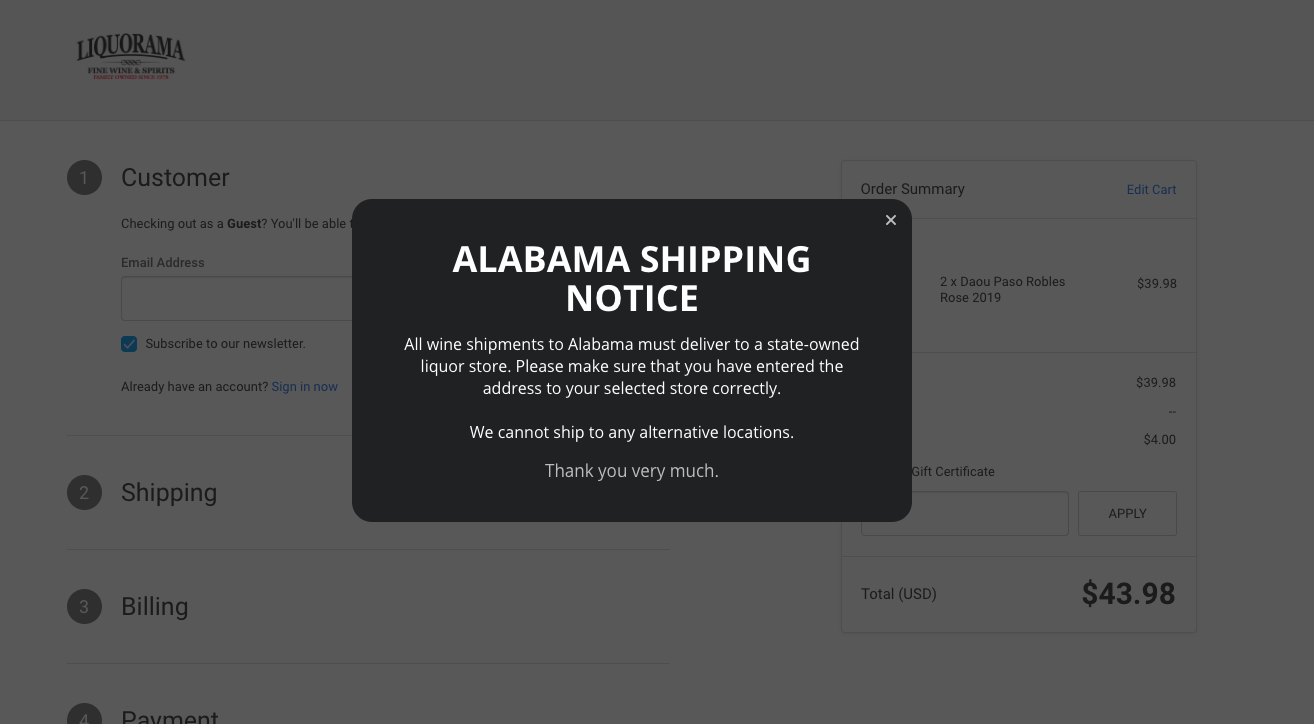
- Liquorama restricts consumers from purchasing alcohol if they live in a location where laws restrict delivery. By enabling a popup like this one, they inform the customer of the process and restrictions, while still offering a workaround that gets products into customers' hands legally.
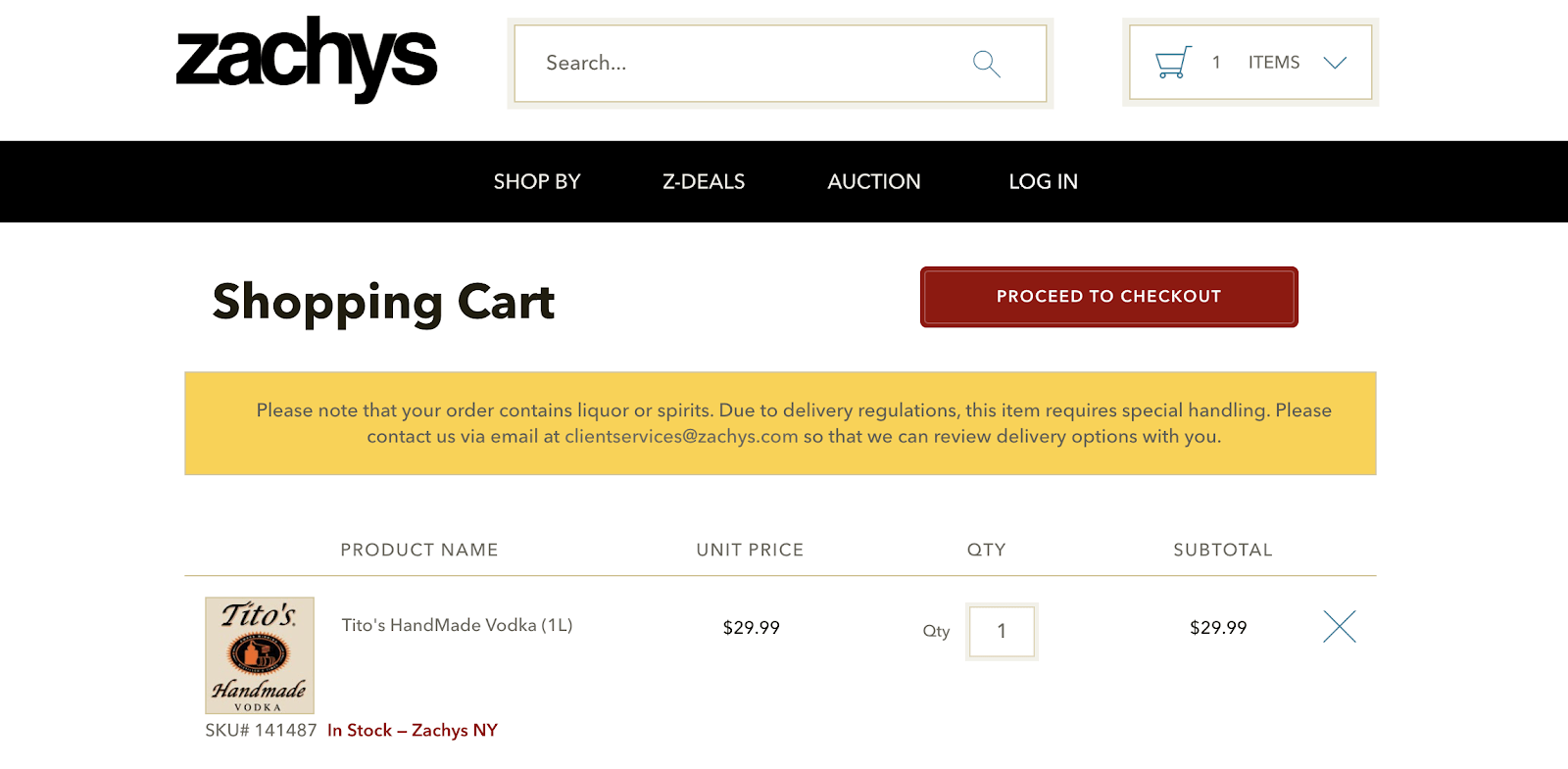
- Zacky's Wine & Liquor informs customers proactively about shipping restrictions that might apply to their area and invites customers to engage with their team to find a solution.
Shipping Alcohol Effectively
To get into the world of online beer, wine, or liquor sales, you'll need a solid shipping partner.
With ShipperHQ's comprehensive shipping rate management platform, you'll have the tools you need to create an effective, efficient shipping strategy for your alcohol business.
With tools like Shipping Rules, Address Validation, and Delivery Date + Time, you'll be able to give your customers the smooth and speedy alcohol delivery they expect, no dev workaround required.
Want to create a cost-efficient shipping strategy? Try ShipperHQ for 15 days, on us.

FAQs
Can you ship alcohol?
Yes, but only in specific situations. In the U.S., alcohol shipping is generally limited to approved, licensed shippers that meet state, local, and carrier requirements. Everyday consumers usually cannot ship alcohol themselves.
Can you ship alcohol through USPS?
No. USPS does not allow alcohol shipments except in very limited official-use cases, such as certain shipments between government agencies.
Can you ship beer, wine, or liquor?
Licensed sellers may be able to ship beer, wine, or liquor through approved carriers like UPS or FedEx, but the rules depend on the seller’s license, carrier agreement, product type, origin, destination, and local laws.
How can ShipperHQ help with alcohol shipping?
ShipperHQ helps retailers apply shipping rules at checkout, such as restricting alcohol shipments by location, showing only approved carrier methods, applying adult-signature services, and preventing restricted orders before checkout is completed.