


The best BigCommerce apps and integrations are the ones that fix a real problem in your store.
BigCommerce tends to attract more established operations than hobby stores, so the problems usually look different. You get more B2B requirements, deeper catalogs, more complex shipping, and more checkout decisions that affect margin.
That is why your app stack needs to stay lean. Every new app adds more code, more updates, more testing, and another possible security risk if it is not maintained well.
We have spent more than 15 years working with ecommerce merchants, so this list focuses on tools that have either stood the test of time or earned strong recommendations from reputable sources we trust.
Here's where to start.
Quick summary: the best BigCommerce apps and integrations by category:
- Payments: Stripe
- Shipping: ShipperHQ
- Subscriptions: PayWhirl
- CRM: HubSpot
- Theme: Cornerstone
- Dropshipping: Spocket
- Email Marketing: Klaviyo
Best Payment Gateway for BigCommerce
BigCommerce already supports a large number of payment gateways natively, so the real decision is not whether your store can take payments. It is which provider gives you room to grow without needing to be replaced later.
Stripe is the safest default. It processes roughly $1.9 trillion a year and carries a $159 billion valuation, making it one of the largest payment infrastructure companies in the world. That scale is exactly what you want from a payments provider: uptime, fraud tooling, and compliance handled by a company already running serious volume.
It also fits how growing BigCommerce stores operate. Stripe supports international selling, local payment methods, multiple currencies, and ACH out of the box. It also gives dev teams room to build custom checkout logic instead of being boxed into a platform default.
BigCommerce lists Stripe directly as one of its core embedded payment options, with no added platform fee for using it.
The practical rule: default to Stripe once international sales, local payment methods, or custom checkout logic start to matter. It is built to handle that growth without forcing another migration later.
Best Shipping App for BigCommerce
ShipperHQ is the best shipping app for BigCommerce stores that need advanced shipping logic at checkout. It is built for merchants that need multi-origin rating, dimensional packing, LTL freight, delivery dates, address type detection, shipping rules, or landed cost logic beyond BigCommerce's native shipping settings.
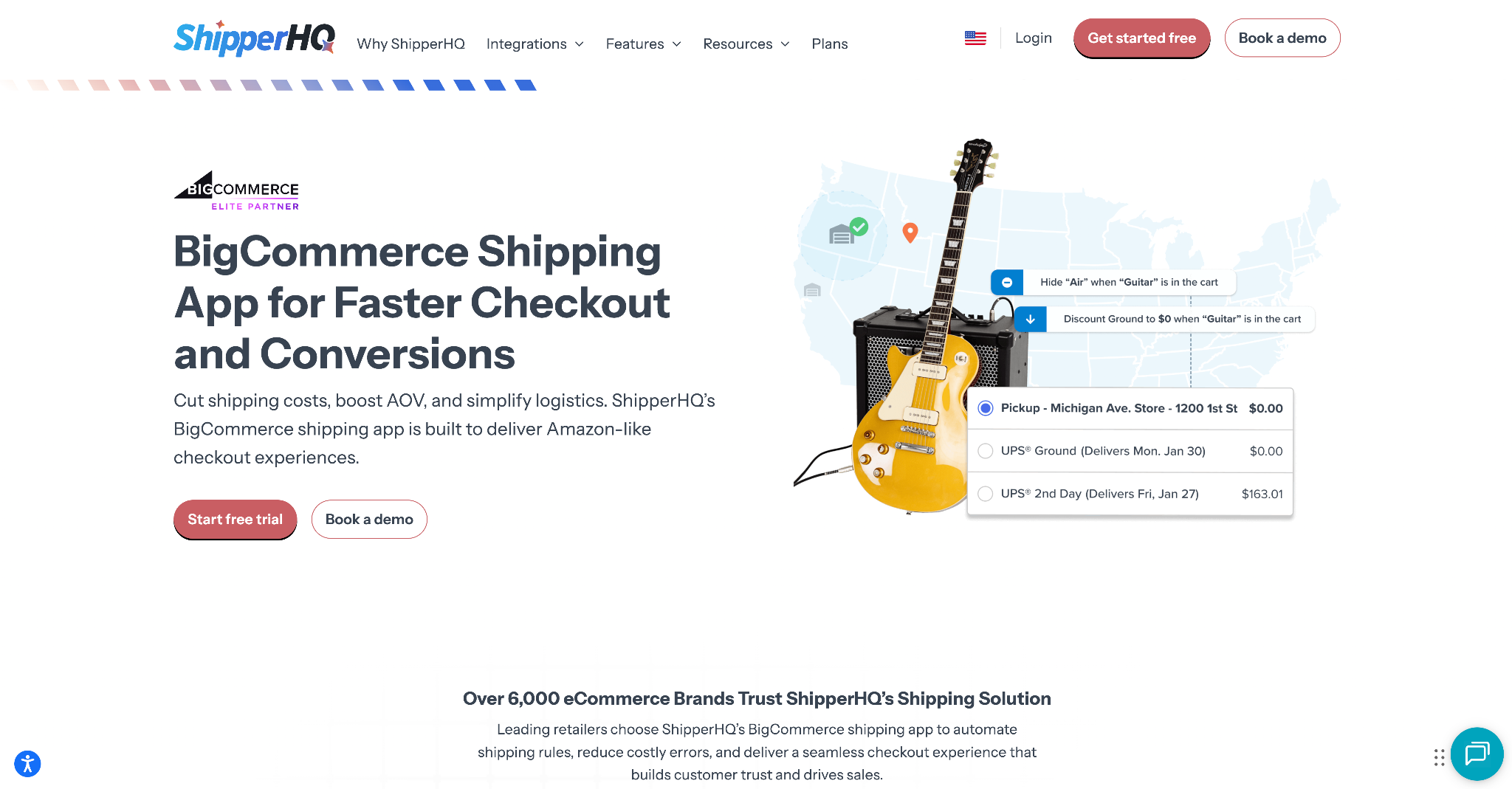
BigCommerce gives merchants a strong native shipping foundation. You can offer real-time carrier rates from major parcel carriers like USPS, UPS, and FedEx right out of the box. For a simple store shipping small parcels from one location, that may be enough.
The problem is that shipping does not stay simple for long.
Once you add more warehouses, larger products, dropship vendors, freight orders, or rules by product or customer group, the rate shown at checkout can drift away from what the shipment actually costs. Sometimes the customer gets overcharged and leaves. Sometimes you undercharge and eat the difference.
Either way, bad shipping logic hits margin.
That is where ShipperHQ fills in the gaps. In plain terms, ShipperHQ helps BigCommerce stores calculate shipping before the order is placed, using the same details that affect the real shipment: origin, package size, carrier rules, address type, cutoff times, and freight requirements.
Here's where those gaps actually live:
| Capability | BigCommerce Native Shipping | ShipperHQ |
| Dimensional packing | Basic package and weight assumptions | Dynamic multi-box packing based on real product dimensions |
| Multi-origin shipping | Multi-location inventory is supported, but rates are not natively routed by origin or warehouse proximity | Proximity-based routing and fulfillment rules across multiple origins |
| Delivery dates | No advanced delivery-date logic natively | Delivery dates with cutoff times and blackout rules |
| Carrier support | Native real-time rates from major parcel carriers like USPS, UPS, and FedEx | 100+ live rate carriers, including 30+ LTL freight carriers |
| Freight shipping | Not supported natively | Built-in LTL freight support, including oversized and liftgate fees |
| Address type detection | Not available | Detects commercial vs. residential addresses to help avoid surprise surcharges |
| Duties and taxes | Native tax settings exist, but landed cost usually needs a dedicated solution | Landed cost calculated across 200+ countries, powered by DHL eCommerce |
| Shipping rules | Zone and weight or value-based table rates | Rules by product, zone, customer segment, address type, and cart value |
ShipperHQ is not a generic shipping tool loosely connected to BigCommerce. It is built into the BigCommerce ecosystem, with support for Enhanced Checkout, ShipperHQ Plus, and BigCommerce B2B Edition. It is also a UPS Ready Premier Partner, FedEx Alliance Partner, and BigCommerce Elite Partner.
That integration depth matters. Shipping logic has to work in the same place the customer makes the decision: checkout. If rates, delivery dates, freight rules, and origin logic do not show up cleanly there, the customer either sees the wrong cost or loses trust before buying.
You can see that platform depth in how merchants use it. EuroOptic, a BigCommerce merchant scaling toward 12,000 orders a month, used ShipperHQ to remove developer bottlenecks and simplify shipping-rule changes.
Best Subscription App for BigCommerce
Subscriptions are one of the cleanest ways to turn a one-time BigCommerce order into repeat revenue.
That only works if the experience feels easy. Customers should be able to subscribe, manage their order, update payment details, and buy one-time items without feeling like they left your store for a separate checkout.
PayWhirl is the strongest fit because it plugs into BigCommerce Native Selling Plans and native checkout. Customers can subscribe through the normal BigCommerce checkout experience instead of being pushed into a separate flow.
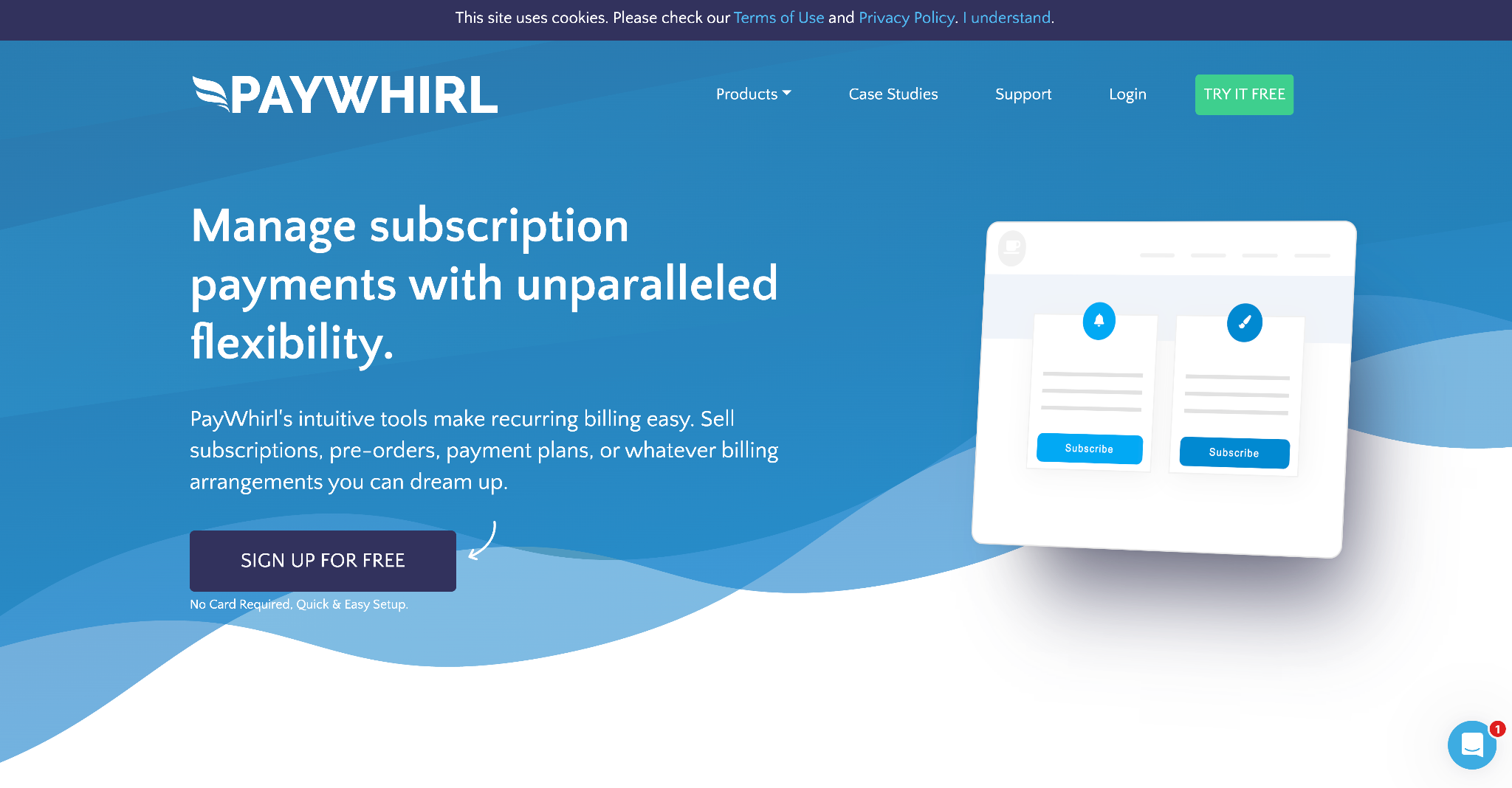
PayWhirl also supports mixed carts, so a customer can buy a one-time item and a subscription item in the same order. That is useful for replenishment products, memberships, bundles, accessories, and stores where subscriptions are only part of the catalog.
For B2B merchants, PayWhirl also supports BigCommerce B2B Edition Buyer Portal subscriptions. That lets business buyers manage subscriptions through the same portal they already use for quotes, company accounts, and repeat purchasing.
One thing to check before setup: native checkout subscriptions depend on a payment gateway that can save a customer's payment method for future charges. PayWhirl lists Stripe, Braintree, and Authorize.net as supported options for that setup.
The practical rule: use PayWhirl if subscriptions need to feel native to the BigCommerce checkout, especially for mixed carts, replenishment products, memberships, payment plans, or B2B recurring orders.
Best CRM Integration for BigCommerce
Some BigCommerce stores do not end at checkout.
A customer might place an order online, then come back later through a sales rep, wholesale account, quote request, or larger B2B order. When that happens, your CRM needs to know what happened in the storefront.
That is where HubSpot makes sense.
A HubSpot and BigCommerce integration can sync standard ecommerce data like contacts, customers, orders, products, and abandoned cart activity into HubSpot.
This gives marketing and sales teams a clearer customer record, so a rep can see storefront order history, segment customers, trigger follow-up workflows, or hand off a lead without digging through BigCommerce first.
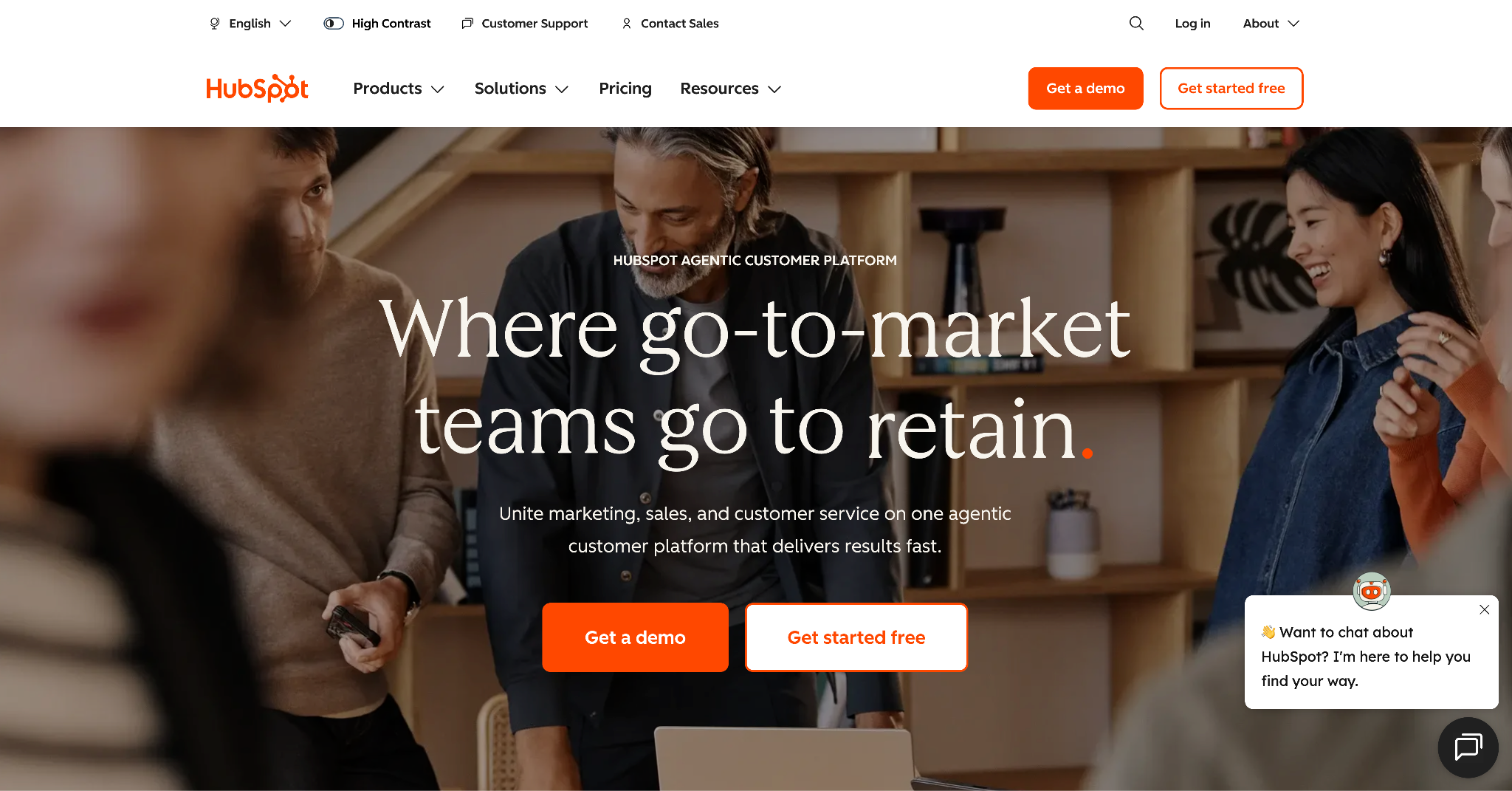
The honest caveat is integration. Some merchants report that the native connector fails to sync certain data, including company records. It's unclear whether that falls on HubSpot or BigCommerce to fix.
The official connector is useful for orders, contacts, products, and basic ecommerce workflows, but stores with more needs, like negotiated pricing, company-specific catalogs, quote workflows, or deeper B2B Edition requirements, may need custom integration work. Other connectors on the market, including MakeWebBetter and Unific, are generally the better-reviewed option for BigCommerce specifically, so compare what each one actually syncs before picking one.
Despite that setback that appears to plague all CRMs on BigCommerce, HubSpot is still the CRM most sales and marketing teams are already trained on, which counts for more than a clean sync when a rep needs to move fast on a lead.
Best Theme Starting Point for BigCommerce
Your theme is not just how the store looks. It affects speed, navigation, product discovery, merchandising, and how painful every future storefront change becomes.
For most BigCommerce stores, Cornerstone is the safest place to start.
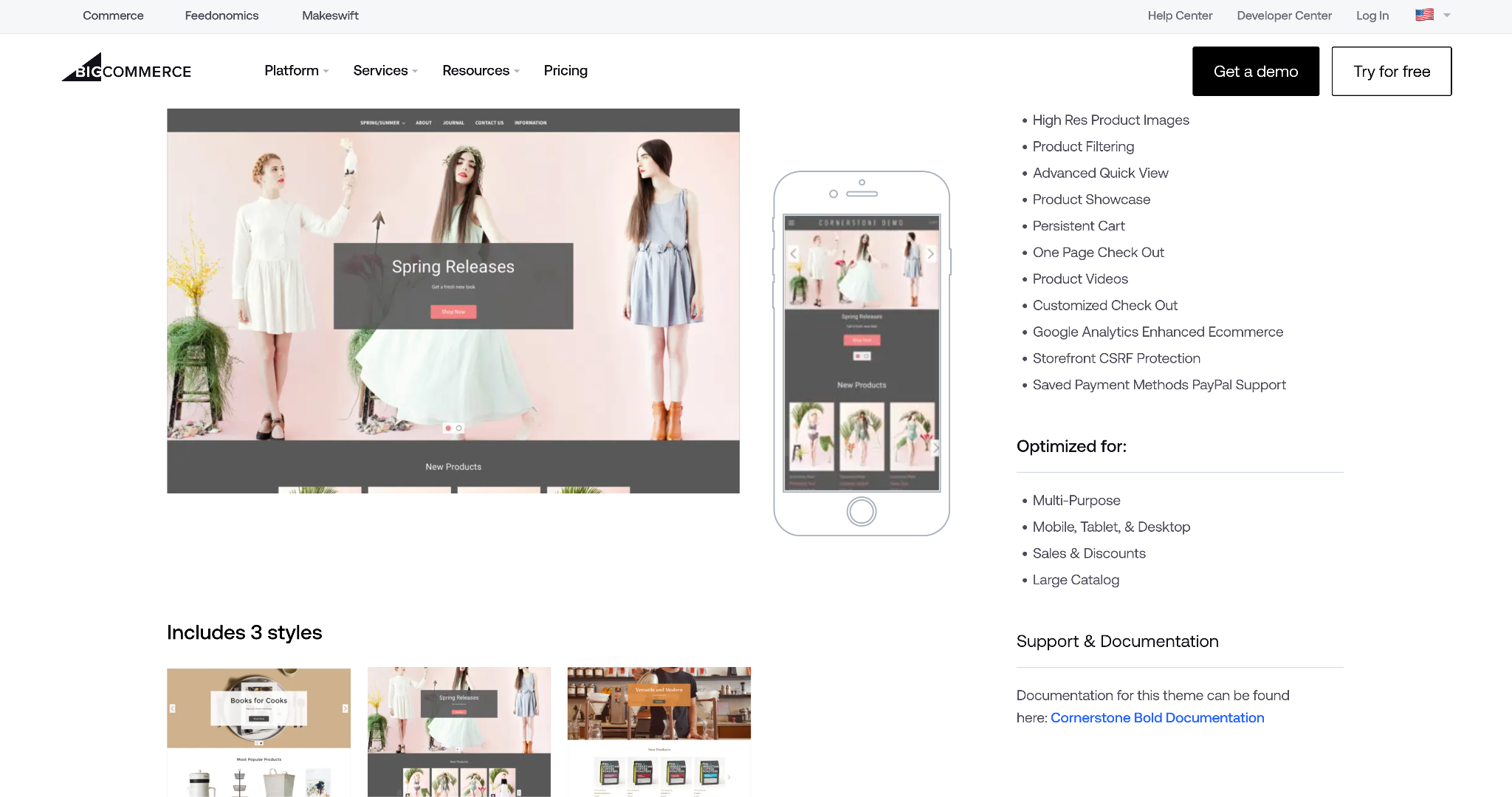
Cornerstone is BigCommerce's own free, responsive theme. It is actively maintained, built as the default foundation for Stencil storefronts, and works with Page Builder for no-code customization.
That gives merchants a clean base for product pages, navigation, merchandising, and checkout styling without betting the whole storefront on a niche theme vendor.
That does not mean every store should stay on Cornerstone forever.
Larger catalogs, more advanced merchandising needs, or brand-heavy storefronts may eventually call for a paid theme or a custom Stencil build. But starting with the foundation BigCommerce actively supports gives your team a safer place to customize from.
Best Dropshipping App for BigCommerce
Dropshipping is most useful when it helps you test demand without committing to inventory upfront.
For most BigCommerce merchants, that does not mean building the whole business around random products. It usually means testing a new category, adding accessories, or filling a catalog gap before buying in bulk.
Spocket is the strongest pick for that use case because its supplier network focuses on faster shipping from US and EU suppliers. Most orders ship in 2 to 5 days, which gives customers a much better experience than the long delivery windows that come with overseas-only suppliers.
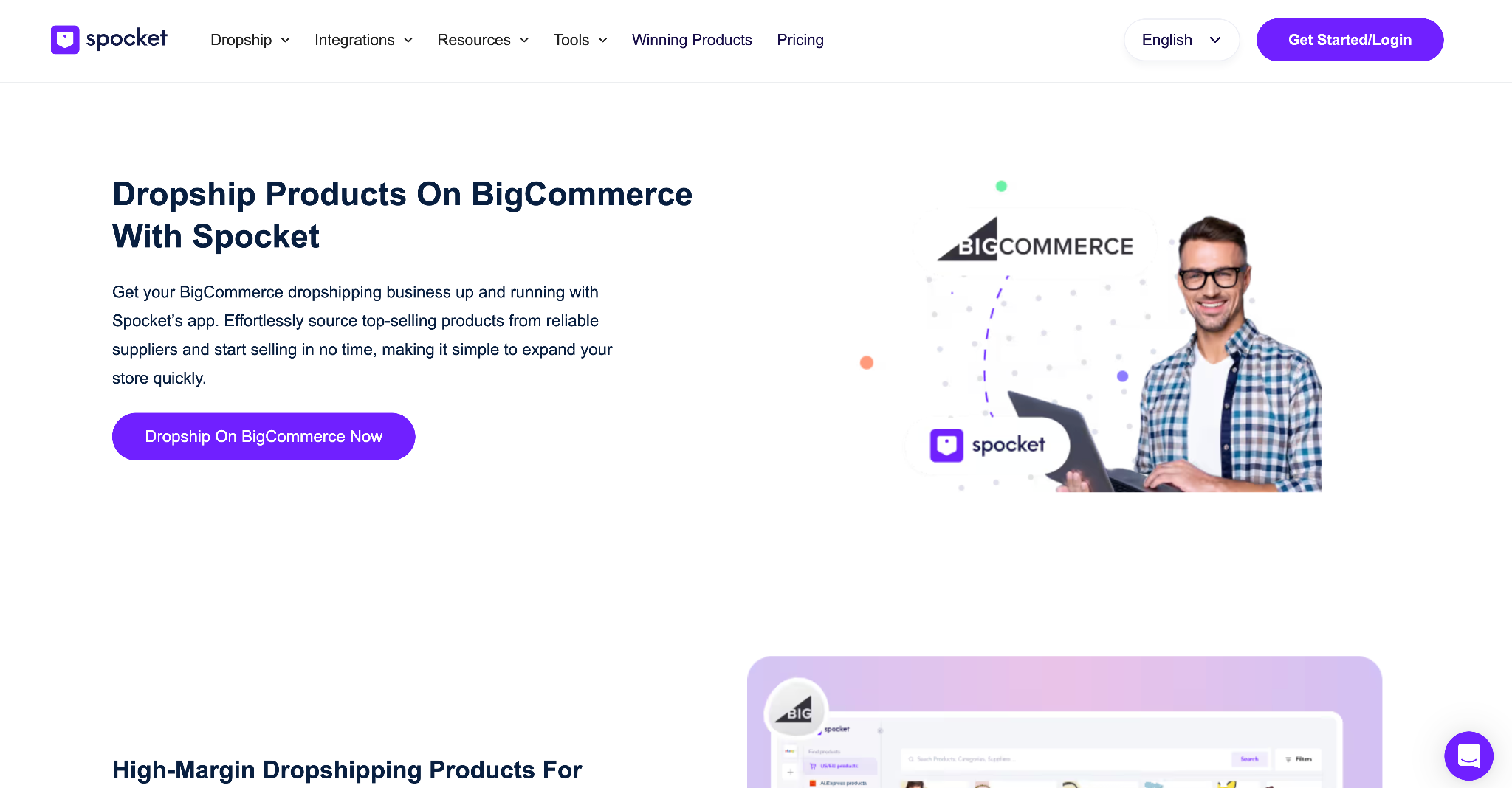
The catalog is also large enough to support real testing. Spocket gives merchants access to more than 100 million products, with many listed at up to 30% off retail. That means merchants can test new products without giving up margin from day one.
Spocket also gives merchants control before products go live. You can edit product titles, descriptions, images, and pricing before publishing them to your BigCommerce store. That matters because dropshipping products often need better positioning before they fit your brand.
It also supports print-on-demand products alongside standard dropshipping, so you are not locked into one sourcing model.
Once an order comes in, Spocket can automate fulfillment and route the order to the supplier. That keeps the merchant from manually pushing every order through after checkout.
The practical rule: use Spocket if you want a dropshipping app built around faster shipping, product testing, and catalog flexibility, not just the lowest possible unit price.
Best Email Marketing Integration for BigCommerce
Email marketing gets much more useful when it knows what customers actually do in your store.
That is why Klaviyo is the strongest email marketing integration for BigCommerce. It is not just a newsletter tool. It uses customer, order, product, and browsing data to power campaigns based on behavior.

Klaviyo's BigCommerce integration syncs sales, order, and customer data into Klaviyo. That gives merchants the foundation for stronger flows: abandoned cart, post-purchase follow-up, replenishment reminders, product recommendations, win-back campaigns, and VIP customer segments.
That matters most for stores where repeat purchase behavior is part of the growth plan. If product timing, customer lifetime value, or loyalty matters to the business, email needs to be tied to ecommerce data instead of sitting in a separate system.
Klaviyo also has real scale behind it. It powers over 196,000 brands across 100 countries, processes billions of customer events each day, and connects with 350+ tools across the ecommerce stack. Brands like Tatcha, Princess Polly, Dollar Shave Club, and Daily Harvest have used Klaviyo to consolidate marketing data and reduce tool sprawl.
The setup caveat is worth knowing upfront. Some BigCommerce tracking events, like Added to Cart, do not work automatically from the base integration and may require adding a JavaScript snippet to theme files. That is not a reason to avoid Klaviyo, but it is a reason to verify tracking before relying on those flows for revenue reporting.
The practical rule: use Klaviyo if email and SMS are becoming serious revenue channels and you want BigCommerce customer data driving the automation. Just make tracking QA part of the launch, not something you discover after the first campaign underperforms.
How to Choose the Right BigCommerce Apps for Your Store
Not every store needs every app on this list running at once. Start with the problem costing you the most money, margin, or time right now. On BigCommerce, that is often shipping accuracy, because rate mistakes compound as order volume, catalog complexity, and fulfillment locations grow.
Check whether the limitation is native or app-level before assuming BigCommerce cannot do something. BigCommerce's native tools cover more than people expect, including real-time parcel rates from major carriers. The real question is where native functionality stops and where more advanced logic starts.
Match the app to your current scale, not the version of the business you hope to have two years from now. A subscription platform, CRM integration, or cross-border checkout tool makes sense once volume or operational pain justifies it. Installing it too early can add cost and maintenance before there is a matching benefit.
Do not switch systems just to match a "top pick." If your team already runs on Salesforce, Mailchimp, or another core platform, check the BigCommerce integration before assuming HubSpot or Klaviyo is worth a migration. Familiar tools only help if they fit the way your team already works.
Final Thoughts
The best BigCommerce stack is not the biggest one. Start with the problems that are already costing you money, margin, or time, whether that is payment flexibility, shipping accuracy, subscription logic, CRM visibility, storefront performance, product testing, or email automation.
Fix those first, then add the rest only when the operation actually calls for it.
Frequently Asked Questions
What is the best shipping app for BigCommerce?
For stores shipping from more than one warehouse, handling freight-class items, or needing rates that reflect real product dimensions, ShipperHQ is the strongest option. It adds LTL freight, dimensional packing, delivery-date logic, address type detection, landed cost logic, and multi-origin rating control beyond BigCommerce's native shipping setup.
Does BigCommerce support real-time carrier shipping rates natively?
Yes. BigCommerce supports native real-time rates from major parcel carriers, including USPS, UPS, and FedEx. Where native support stops more clearly is advanced shipping logic: LTL freight, multi-origin rate routing, dimensional box-packing logic, address type detection, landed cost logic, and detailed delivery-date rules.
Does BigCommerce have a native subscription feature?
BigCommerce does not include a full native subscription engine. Stores that need recurring billing or subscription management typically use a third-party app like PayWhirl.
What payment gateways does BigCommerce support?
BigCommerce supports a large number of payment gateways through native integrations and app-based options, so most stores are choosing between payment providers rather than adding payment capability from scratch.
How do I choose the best BigCommerce apps for my store?
Start with where you are losing money, margin, or time. For many BigCommerce stores, shipping accuracy is the first place to look because it affects every order and gets more expensive as fulfillment gets more detailed. Match each app to a specific current problem instead of installing based on popularity.
How many apps does a BigCommerce store actually need?
Fewer than most merchants think. Start with apps that solve current operational problems, especially shipping accuracy, subscription management, CRM visibility, cross-border checkout clarity, or email automation. Add more only when the business case is clear.