

Sometimes we get a little nostalgic for simpler times. Back when Black Friday meant lining up outside a storefront at 5 a.m. and sprinting through just-opened doors for the last discounted TV.
Or, maybe not.
Today's shoppers aren't just shopping from the couch instead of a parking lot. They're shopping smarter. AI-powered research means they've already compared prices, read reviews, and narrowed down exactly what they want before they ever land on your site. They know what a good deal looks like, and they know within seconds whether your checkout is going to make buying it easy or annoying.
That shift changes what actually wins a sale during the BFCM peak season. It's not who has the flashiest
doorbuster (or the prettiest product images) anymore. It's who can deliver on the promise once a shopper hits "add to cart," with accurate rates, clear delivery dates, and a checkout that doesn't blink under pressure.
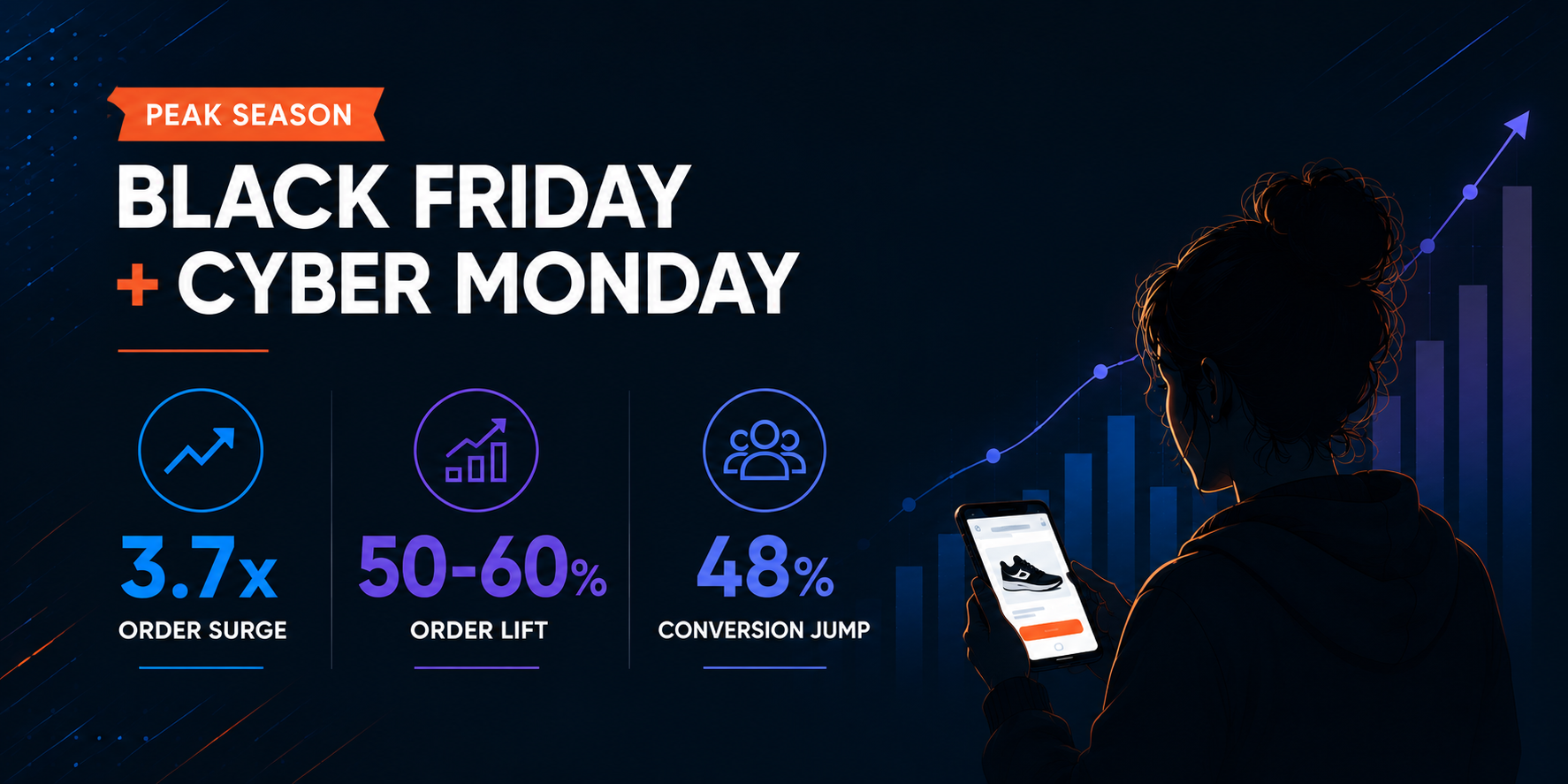
Black Friday 2026 is shaping up to be a real opportunity for merchants: a chance to promote your best deals, help customers get ahead on holiday shopping, and see order volume climb significantly. (That's not an exaggeration. Last year's data showed merchants saw an average 3.7x order surge on Black Friday.)
That's the upside. The downside is that all that opportunity gets compressed into just a few days, or weeks at most, which puts real stress on your checkout and shipping operations.
This is where last year's data comes in. ShipperHQ pulled real-time data from thousands of merchants throughout peak season in 2025, and the numbers were telling:
-
4X order volume during BFCM
-
Merchants saw 50% more orders in early November
-
Shoppers chose free shipping 50% more often than usual
-
Conversion rates jumped 48%
To help you get ahead of increasingly savvy BFCM shoppers this year, we're breaking down six market shifts we noticed during the 2025 peak season, so you can walk into this year's pressure points already knowing where they'll hit, and exactly how to handle them.
What should ecommerce merchants know about Black Friday 2026?
ShipperHQ’s 2025 peak-season data, told us that peak demand begins in early November, not on Black Friday. Still, order volume on Black Friday can reach roughly 3.7 times normal levels, and conversion rates rise sharply during the highest-traffic window. Most shoppers still choose the lowest-cost shippoing option, and free shipping is much more popular during peak season.
Shift #1: Peak Season Starts Before Thanksgiving, Not On It
The biggest shift we saw last year was that the peak season surge began weeks before the actual holiday. Orders were already running well above baseline through early and mid-November, outpacing the same period the year before by 25%.
Merchants who treated Black Friday as a single-day (or even single-week) event got caught flat-footed by demand that had been building for weeks. The ones who won had already locked in carrier capacity, tested their rates and shipping rules, and staffed fulfillment before the calendar event turned to November.
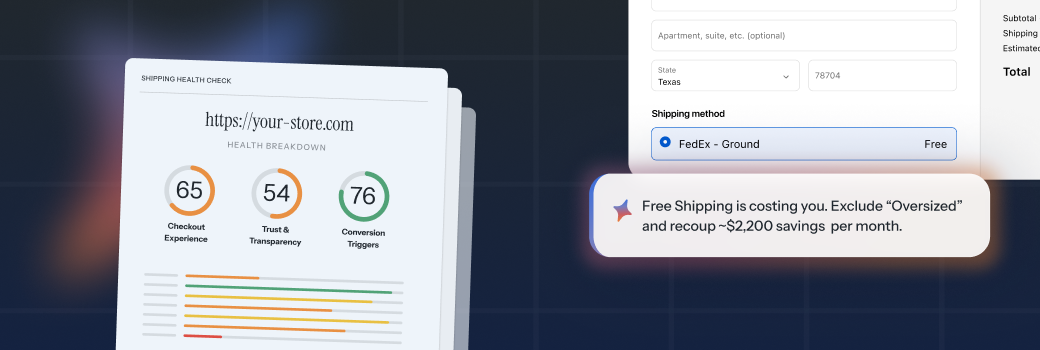
The move for 2026: stop planning around a single date and start planning around a peak season window. Run a free Shipping Health Check now, then optimize your product pages, cart, shipping rules, and rate logic so they're ready to hold up for the entire season, not just one weekend.
Shift #2: Black Friday Free Shipping Is The Default Expectation
Free shipping accounted for 58% of Black Friday orders last year, up from 45% the year before, and shoppers chose it 50% more often than on a normal day.
That trend line points in only one direction: 2026 Black Friday buyers will expect to see free shipping.
We get the nuance. Offering free shipping across the board is a fast way to eat your margin during your highest-volume week of the year. The merchants who remained profitable in 2025 while meeting shopper expectations used conditional free shipping rather than blanket free shipping.
A few ways to do that:
-
Free shipping over a set order value.
-
Free shipping on specific product groups with room to absorb it.
-
Free shipping on everything except your oversized or expensive-to-ship SKUs.
The move for 2026: get surgical with your free shipping logic. Spend time with your product catalog and build out shipping rules around thresholds and conditions, so you're meeting customer expectations without giving away margin you don't have to.
See it in action: Read how Hoosier Tire used shipping rules to offer free shipping on apparel and other gear and increased AOV by 8%.
Shift #3: Shoppers Want To Know Exactly When Their Order Will Arrive with Exact Dates
Shoppers used to tolerate a checkout that said "ships in 2-5 business days," but that was back when slow just meant normal. Now they expect that Amazon-like clarity on every order. They want an exact range, not a guess.
Your BFCM shoppers may be getting ahead on holiday shopping, but many are juggling multiple gift deadlines at once. Think the office White Elephant. School teacher gifts. Hostess gifts. A shopper who isn't sure an order will arrive in time won't wait around to find out. They'll buy from someone who can tell them.
The move for 2026: Give your customers real dates and times they can trust by integrating precise delivery dates into your cart.
See it in action: See how wholesale food retailer Clean Eatz Kitchen cut cart abandonment by 50% after replacing vague shipping estimates with clear delivery dates at checkout.
Shift #4: Your Conversion Window Is Short And Unforgiving
Traffic, rate calls, and checkouts peaked at 11 a.m. EST on Black Friday last year, an hour earlier than the year before. Conversion rates during that window climbed 48% above normal.
Picture it: millions of shoppers finally crawling out of their turkey day food comas, logging on all at once, and tearing through their holiday lists one item at a time. That's a massive opportunity. But only if your store lets them move from selection to checkout to hitting buy without a single hiccup.
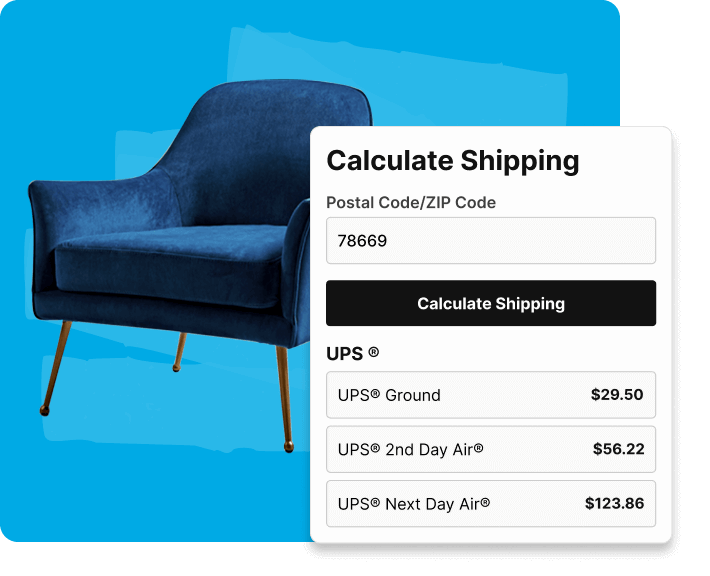
The move for 2026: pressure-test the entire path to purchase. Make sure your product pages carry all the shipping information shoppers need to decide fast, and make sure your cart shows the most accurate rates every step of the way.
Pro tip: You can easily add shipping info on your product page just like Amazon does with our product page shipping calculator.
Shift #5: Outages Cost More Than You Think
The merchants who stayed stable through last year's nearly 4x surge in orders weren't lucky. They had resilient infrastructure in place before November arrived: backup carriers ready to go, rates tested early, and real-time performance monitored throughout the surge. An outage during a normal week is an inconvenience.
An outage during Black Friday is a direct hit to revenue, and it happens more often than most merchants expect.
The move for 2026: shore up your infrastructure before traffic peaks, not after something breaks. If you're relying on a single carrier for your checkout rates, configure backup carriers now. Test your rate calls under load. Monitor performance in real time so you catch problems within minutes, not hours.
See it in action: Read how Eagle Mountain Flag created a seamless shipping infrastructure that cut cart abandonment by 30%
Shift #6: Cost Still Wins Over Speed
67% of buyers chose the cheapest available shipping option last year. Accurate, competitively priced rates at checkout matter more than flashy expedited options most shoppers won't pick anyway. That's especially true during the BFCM window, when most people are getting ahead on their holiday shopping rather than scrambling on a last-minute deadline.
The move for 2026: keep expedited options on the table, but spend most of your time honing your checkout and shipping rules so customers consistently see the lowest possible shipping rates. That's what actually moves the needle on conversion.
Keep your eye out for: carriers haven't released their 2026 peak season surcharge schedules yet, but based on recent years, expect additional fees layered onto standard rates during the surge. We'll update this post as soon as carriers confirm their plans, so you can lock in the best rates for your customers and adjust your shipping logic in advance.
Your Black Friday 2026 Prep Checklist
-
Run a shipping health check to see where your checkout needs optimization, then hop on a call with one of our shipping experts to review the results and identify gaps you can close
-
Test shipping rules before Thanksgiving week and make logic adjustments
-
Set conditional free shipping thresholds based on your product mix
-
Test checkout rate calls under simulated high-traffic conditions
-
Configure backup carriers so a single outage can't take your checkout offline
-
Confirm in-store pickup is ready to handle last-minute December demand
-
Add features like delivery dates and time to your cart, and shipping rates to your product pages
-
Review your BFCM 2025 numbers against this year's plan before you finalize anything
Where This Data Points For 2026
The pattern across every one of last year's numbers is the same: Marketing gets shoppers to your site. Shipping and checkout decide whether you keep them.
The merchants who came out ahead last peak season weren't the ones with the flashiest campaigns. They were the ones whose checkout experience held up under pressure they'd already planned for. They treated shipping and checkout as core infrastructure, not a fire drill they'd deal with when it broke. If you're not sure where your shipping strategy has gaps heading into 2026, now's the time to find out, while there's still time to fix it.
Our free Shipping Health Check shows you exactly where your shipping and checkout stand and what to optimize before Black Friday hits. From there, one of our cart optimization experts will walk you through the report and help you close any gaps, so this year's BFCM is your biggest and most profitable yet.
These days, your customers aren't racing anyone to checkout. They're just deciding whether to wait around for you or buy from someone with a more optimized checkout experience.

FAQs
When should merchants start preparing for Black Friday 2026?
Before November, you should test shipping rules, delivery-date logic, carrier connections, free-shipping thresholds, and checkout rate calls to identify errors early enough to fix them before peak demand begins. The ShipperHQ Shipping Health Check can help you to determine what parts of your store need updates.
Should stores offer free shipping during BFCM?
Shoppers expect free shipping at checkout, and they are 50% more likely to select it during peak season than at other times. Free shipping does not have to apply to every order. Conditional free shipping based on cart value, product group, destination, or shipping method can meet shopper expectations while protecting margin. ShipperHQ’s Shipping Rules feature supports these types of conditions.
What shipping information should shoppers see before checkout?
Shoppers are more likely to convert when they see costs and delivery dates. Display the delivery date, time, and costs on the product page, if possible, or in the cart . This helps shoppers evaluate the full purchase cost and determine whether an order will arrive before a deadline. ShipperHQ has dedicated product-page calculation and delivery-date functionality for this use case.
How can merchants protect checkout during a traffic surge?
Traffic can surge to almost 4X their normal levels during peak season. To ensure your store stays functional, test rate requests under load, connect more than one carrier or service option, monitor errors, and define fallback methods. The objective is to prevent a single carrier API or rate configuration issue from blocking checkout.