



Shipping is the second largest expense for online retailers and can make up as much as 70% of a company’s total fulfillment costs.
As online shopping continues to explode, so does the need for efficient and cost-effective shipping strategies. One critical aspect of this is understanding and calculating dimensional weight.
If you’re not familiar with the term, you’re not alone — but understanding dimensional shipping can save your business significant money and headaches.
In this blog, we’ll dive into what dimensional weight is, why it matters, and how you can calculate it accurately to optimize your shipping strategy.
Quick answer: To calculate dimensional weight, multiply a package’s length, width, and height, then divide by the carrier’s DIM factor. Most carriers bill based on whichever is greater: the package’s actual weight or its dimensional weight.
What is Dimensional Weight?
Dimensional weight, often shortened to DIM weight and also known as volumetric weight, is a pricing technique shipping carriers use to account for the amount of space a package occupies, rather than just its actual weight. This concept is especially important when shipping lightweight, bulky items that take up more space in a delivery vehicle than a heavier, compact item.
Carriers use it to ensure that shipping costs reflect the volume of space a package requires, thereby optimizing their capacity and efficiency. For online businesses, understanding how to calculate and manage dimensional weight is crucial to avoid unexpected shipping costs and to provide accurate pricing to customers at checkout.
How to Calculate Dimensional Weight for Shipments?
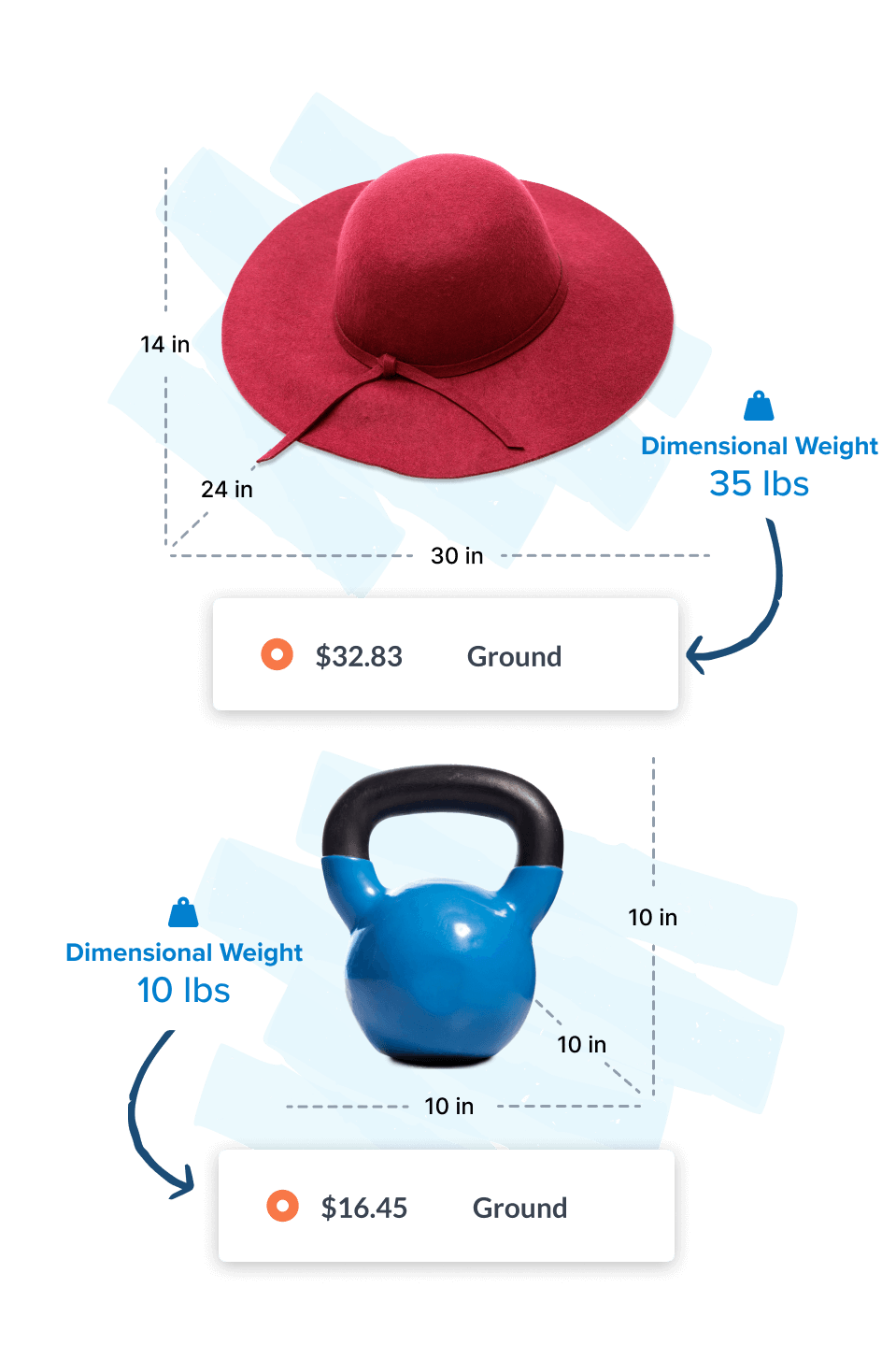
Carriers like UPS, FedEx, DHL, and others rate packages by a combination of factors. Aside from distance, the most significant is weight. However, they do not use actual package weight for all shipments but rather the greater of actual weight, also called dead weight, and dimensional weight.
This is where billable weight comes in. Billable weight is the weight a carrier uses to rate the shipment, usually whichever is greater: the package’s actual weight or its dimensional weight. That’s why a lightweight but oversized box can cost more to ship than expected.
Dimensional weight significantly impacts shipping rates. With consumers’ rising expectations of free shipping, retailers often struggle to balance competitive pricing with maintaining profitability.
Calculating dimensional weight helps merchants understand their shipping expenses better and offers an opportunity to adjust packaging strategies, negotiate better rates, and improve overall cost efficiency.
Formula to Calculate Dimensional Weight
The formula for dimensional weight calculation varies slightly depending on the carrier and the unit of measurement used. However, the basic formula is:
Dimensional Weight = (Length x Width x Height) ÷ Dimensional Factor
- Measure the package’s length, width, and height.
- Multiply length x width x height to get cubic size.
- Divide cubic size by the carrier’s DIM factor.
- Round up according to the carrier’s rules.
- Compare DIM weight to actual weight. The higher number is usually the billable weight.
Important update: As of August 18, 2025, UPS and FedEx round fractional package dimensions up to the next whole inch before calculating dimensional weight. That means a box measuring 11.1 inches is treated as 12 inches for rating purposes, which can increase the calculated DIM weight.
Understanding the Components of Dimensional Weight Shipping
Length, Width, Height: Measure the package dimensions in inches or centimeters. It’s important to use the longest points for each dimension, including any protrusions.
Dimensional Factor: This is a number set by carriers that converts package volume into dimensional weight. Common dimensional factors include:
- 139 for many UPS and FedEx daily, account, or negotiated rates
- 166 for some UPS retail rates or other carrier/service scenarios
- 5000 for many metric calculations using centimeters and kilograms
These factors can vary by carrier, service, account type, destination, and contract. Always check your carrier guide or negotiated rates before making final pricing decisions.
USPS also applies dimensional weight rules to certain package services, and those rules can change. Check the current USPS rate guide or PostalPro updates before using a USPS divisor in your calculations.
Example Calculation:
Imagine you’re shipping a package with the following dimensions: 20 inches long, 15 inches wide, and 10 inches high.
For a domestic shipment in the US:
Dimensional Weight = (20 x 15 x 10) ÷ 139 = 21.6 pounds
Always round up to the nearest whole number, so the dimensional weight would be 22 pounds. If the actual weight of the package is less than 22 pounds, carriers will charge based on the dimensional weight.
Can Dimensional Packing Solutions Reduce Shipping Costs?
A dimensional packing solution becomes essential for optimizing packaging to reduce dimensional weight and lower shipping costs. By selecting the right packaging for each order, you can reduce void fill, prevent damage during transit, and improve customer satisfaction.
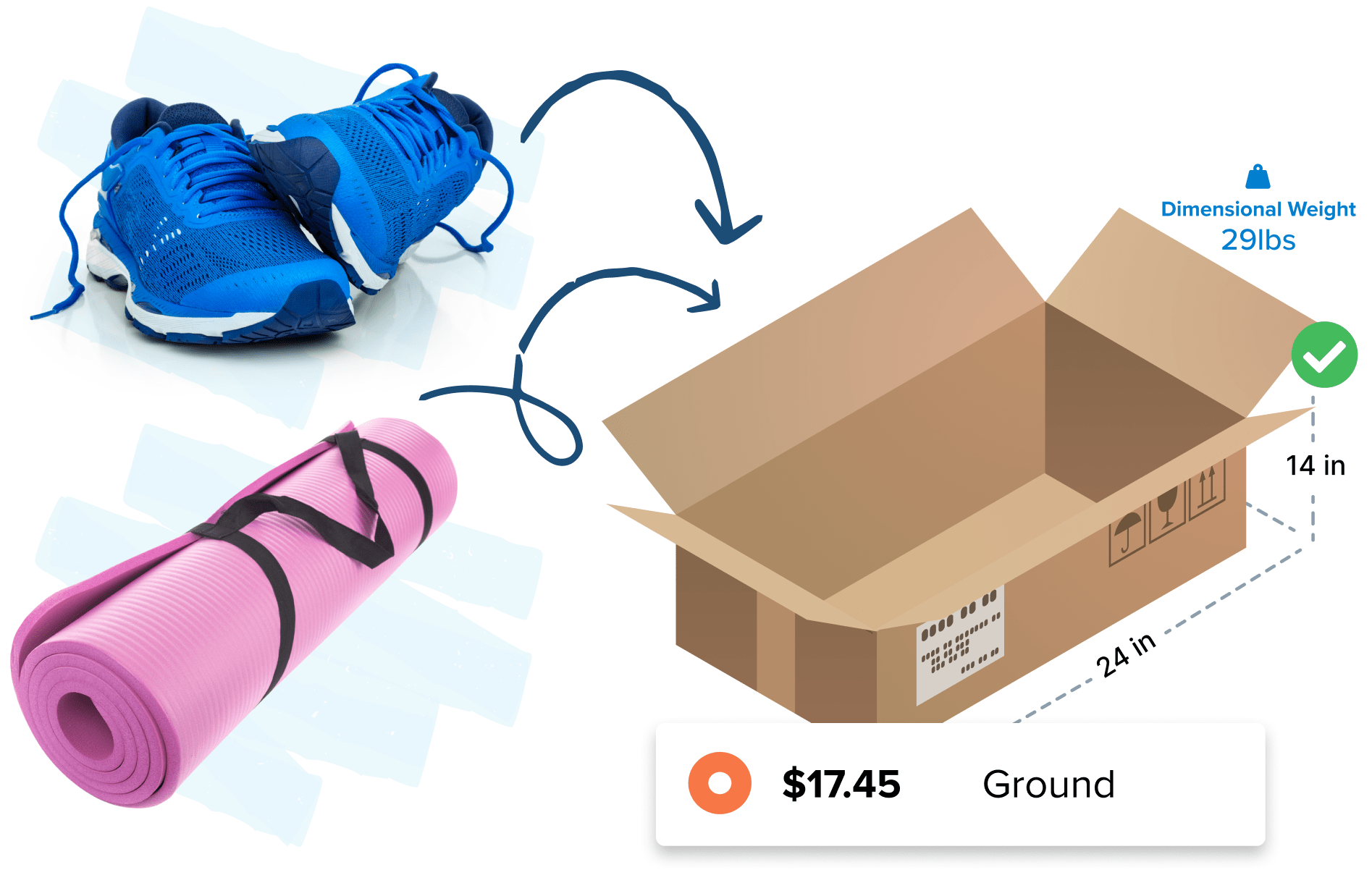
This matters even more when a customer orders multiple units or a mixed cart. Two items may ship best in one box, separate boxes, or a custom packing setup depending on their size, weight, fragility, and carrier rules. The right dimensional packing logic helps you rate that order closer to how it will actually be packed.
ShipperHQ offers a robust dimensional packing solution as part of its shipping management platform. It helps you automatically determine the best packing configuration for any combination of products in the cart. You can also create packing rules to process specific products differently based on unique conditions that you designate.
Sign up for a free 15-day trial or chat with our shipping expert to learn how dimensional packing can take your shipping strategy to the next level.

FAQs
What is the DIM weight formula?
The DIM weight formula is: dimensional weight = length x width x height ÷ DIM factor. After calculating DIM weight, compare it with the package’s actual weight. Most carriers use the higher number as the billable weight.
What is dimensional weight, and why is it important in shipping?
Dimensional weight (DIM weight) is a pricing method used by carriers that considers a package’s size relative to its weight. It ensures shippers pay fairly for the space a package occupies during transit.
How do you calculate dimensional weight?
To calculate DIM weight, multiply the package’s length, width, and height, then divide the result by the carrier’s DIM factor. Each carrier may use a different DIM factor, so it’s important to verify.
Why do carriers use dimensional weight pricing?
Dimensional weight pricing helps carriers optimize space utilization in their vehicles and ensures that lightweight but bulky packages are charged appropriately for the space they occupy.
How can businesses reduce dimensional weight shipping charges?
Follow these five tips for reducing your package DIM weight and saving on shipping.
- Optimize Packaging: Use packaging that fits the product tightly, minimizing empty space and reducing the need for additional filler materials, which helps cut down on dimensional weight.
- Choose the Right Packaging Material: Select lightweight yet durable materials to maintain product safety while keeping the overall package weight as low as possible.
- Consolidate Shipments: Combine multiple items into one package to reduce the number of shipments, ultimately lowering dimensional weight charges for each individual package.
- Utilize Advanced Packing Techniques: Use efficient packing techniques like nesting or stacking to maximize space usage and reduce the overall dimensions of the package.
- Negotiate Carrier Contracts: Work with shipping carriers to negotiate better rates and dimensional factor for your business.