


Estimated delivery dates are "estimated" for a reason.
There's simply no way to predict everything that will happen when a package leaves your hands and starts making its way to your customer's doorstep.
Maybe a massive rainstorm blows into town and floods the streets for a couple days. Maybe a package misses a pickup window. Maybe a label prints badly enough that someone at the local transportation hub has to stop and figure out where it's supposed to go.
Even the definition of "Next Day Delivery" can become a giant question mark when weekends, holidays, order cutoff times, and warehouse schedules enter the picture.
But that does not mean estimated delivery dates are a guessing game. The best ecommerce retailers account for what they can control, communicate clearly about what they cannot, and show shoppers realistic delivery dates before the order is placed.
An estimated delivery date is the arrival date shown at checkout when a customer places an order. How accurate that date is depends on two things: the factors your team controls, like carrier transit times, order cutoffs, processing lead times, and blackout dates, and the factors nobody controls, like weather, carrier exceptions, customs delays, and missed delivery attempts.
Shoppers do not usually make that distinction. The date at checkout is the promise. If the package arrives three days late with no explanation, the promise was broken. That is where "Where's my order?" tickets come from, and where trust quietly starts to erode.
What Is an Estimated Delivery Date?
An estimated delivery date (EDD) is the projected date a customer's order will arrive at their shipping address. It is different from the estimated ship date, which is when the order leaves your warehouse, store, vendor, or fulfillment center.
That gap between ship date and delivery date is where most of the complexity lives. Carriers calculate transit time based on origin ZIP, destination ZIP, service level, delivery zone, and network conditions. Your store adds processing time, cutoff rules, blackout dates, and any product-specific lead time on the front end. The result is the date the shopper sees at checkout.
Most standard shipping services treat the estimated delivery date as a forecast, not a guarantee. Certain express and time-definite services may include delivery guarantees, but ground and economy services usually do not. That distinction matters when you are setting shopper expectations.
Why Estimated Delivery Date Accuracy Matters
Including estimated delivery dates at checkout adds credibility to your store. But there's a lot involved to get it right.
Accurate delivery dates do more than make checkout look polished. They help customers decide whether to buy.
According to ShipperHQ data, 62% of consumers prioritize an accurate estimated delivery date over fast shipping. 75% are more likely to buy when they see a specific delivery date at checkout. And 41% of ecommerce checkouts still do not show one.
That last number is the opportunity. If your checkout says "5-7 business days" while a competitor says "Arrives by Tuesday, July 1," you are not competing on the same terms. One option feels vague. The other feels reliable.
Clean Eatz Kitchen, which ships perishable meal kits, saw the impact directly. The day they connected ShipperHQ, their customer service tickets dropped by half. Fewer shoppers were asking where their package was or whether it would arrive safely. They also saved $200,000 in product resends and saw customer retention increase by 25%.
The inverse is also true. When delivery estimates are wrong and packages arrive late, shoppers notice. They contact support. They leave reviews. And they hesitate before buying again. The delivery date at checkout is a small promise, but it is one shoppers hold you to.
6 Factors That Make Estimated Delivery Dates Inaccurate
You can only plan for so much, so it helps to know what situations might arise and what you can do to stay ahead of them.
Some delivery date problems start inside your operation. Others happen after the carrier takes the package. This section covers the external factors: the ones that can affect accuracy even when your checkout setup is solid.
1. Inclement Weather
Yep, plain old weather can simply get in the way.
Carriers may deliver through rain, sleet, and snow, but they are not going to risk sending workers into a tornado, hurricane, flood, wildfire, or ice storm so someone can get their Harry Potter throw pillow on time.
Some weather is just not deliverable.
When roads are closed, flights are grounded, or a carrier facility is shut down, the package is not moving. At that point, the estimated delivery date is less of a promise and more of a best-case scenario that no longer applies.
A winter storm in one region can also delay packages that are only passing through a hub there, even if the origin and destination are both unaffected. There is no reliable way to account for every weather event at checkout. The practical move is to communicate proactively with affected customers as soon as a carrier advisory goes out, before they contact you.
2. Strikes and Labor Actions
Wage disputes are a tale as old as time, or at least as old as labor unions have been around.
These disputes sometimes involve the people who move packages from coast to coast. Carrier strikes, port stoppages, or labor disruptions can slow shipments quickly and with limited advance notice.
Reading the news helps, of course, but you may not always hear about a regional issue before customers start asking why packages are late.
If your business depends heavily on a single carrier, labor disruptions represent a concentration risk that goes beyond just estimated delivery date accuracy. Having a multi-carrier setup gives you options when one carrier has a disruption. The ability to reroute quickly matters more during these periods than any amount of perfect EDD configuration.
3. Security or Regulatory Delays
Sending most items through the mail does not normally cause any raised eyebrows regarding security or regulation. But occasionally, this issue pops up.
Packages can be held for customs inspections, compliance screening, security review, or other carrier checks. This is most common with international shipments, but domestic shipments can also be delayed if a carrier flags a package for additional handling or review.
These delays are rarely predictable and usually do not mean your checkout calculated the original date incorrectly. Still, if your store sells regulated products, ships internationally, or moves goods that require special documentation, your estimated delivery dates should account for the extra time those orders typically need.
4. Illegible Address or Label
Now for something a little more mundane: unreadable print.
It is not glamorous, but it happens. A label prints with a smudge. An address line gets cut off. A barcode will not scan. A package leaves the warehouse looking fine, then hits a carrier hub where someone has to stop and figure out where it is actually supposed to go.
One small label issue can turn a clean delivery timeline into a manual carrier review. Best case, the package gets delayed by a day. Worst case, it gets returned and you have to reship.
This one is within your control. Tight quality control at the pack-and-label stage catches these problems before the package leaves your building. Review your label format and print quality periodically, especially if carrier exception reports show a pattern of address-related returns.
5. Person to Sign Not Available
Some shipments require a signature at delivery, especially high-value orders, regulated products, or packages requiring adult signature confirmation.
A customer may be excited enough to pay for expedited shipping, but if nobody is available to sign, "next day" can quickly become "next delivery attempt." Maybe they stepped out. Maybe they were in a meeting. Maybe they did not hear the knock. Whatever the reason, the delivery person cannot wait around all day.
For signature-required shipments, let the customer know before delivery that someone needs to be available. A short transactional email after the order ships can prevent a missed delivery attempt and reduce support frustration later.
6. Borders and Cross-Border Complications
Sending items internationally could be its own list. Basically, take everything mentioned above and add the layer of customs, import rules, duties, taxes, documentation, and country-specific restrictions.
Every country has its own customs rules and restrictions for imports and exports. International shipments are subject to customs clearance, which can add time that carrier transit estimates do not always fully reflect.
Incomplete commercial documentation, duty assessments, and border congestion can all extend delivery beyond what your checkout suggested. If your store ships internationally, your estimated delivery dates for cross-border orders need to factor in realistic customs clearance windows for each destination country.
The last thing you want to do is set yourself up for trouble with customs, especially for something that is preventable with the right shipping rules and product restrictions. Again, most merchandise is not going to raise any eyebrows, but occasionally something pops up where you least expect it.
How to Plan Ahead for Accurate Estimated Delivery Dates
Life happens despite preparation.
Just when you think you have everything in your business figured out and working like a well-oiled machine, one of the situations above occurs.
Can you do anything about it while it happens? Not always.
However, you can take steps to stay ahead of the game when it comes to shipping. The goal is not to predict every possible disruption. The goal is to make sure your estimated delivery dates are realistic under normal conditions, and that your team has a plan when the real world gets messy.
Below are a few ways to reduce the damage. While they are not 100% effective for every situation, they can minimize the time you spend putting out fires.
1. Provide Tracking Information
Obviously, not getting the item they want is the most frustrating thing for your customers.
But a close second is just not knowing what is going on. Is it a few miles away? Is it still across the country? Did it fall into a black hole somewhere between "label created" and "out for delivery"?
It becomes a little more tolerable when customers can see where on planet Earth their package may be. If they are especially excited about the item, they can plan on being nearby when it is out for delivery.
These days you can track everything, and even ordering a pizza comes with a delivery tracker. Giving your customers the option to watch their package is a huge deal and cuts back on customer service contacts from buyers just wanting an update.
2. Add a Shipping Policy Page
So what happens if your customer does not get their package at all?
It is frustrating for customers when they cannot track down what you are going to do about it. You are bound to get some irritated messages wondering what restitution they can expect now that the delivery did not go as planned.
The more documentation you have on your site, the better. Consider adding a shipping policy page so everyone knows what to expect in certain cases. This gives customers a clear place to get answers, and it gives your support team fewer repeat questions to answer.
Your shipping policy should cover standard processing times, available carrier options, typical transit ranges for each service level, and how your store handles delays, missing packages, or delivery exceptions.
3. Offer Buy Online, Pickup In Store (BOPIS)
Remember the scenario where a customer wants a signature-required order but is unavailable when it is time to sign?
What if the backup option was to ship the item to a store, locker, or approved pickup location? Somewhere they could safely pick it up rather than leaving it on their doorstep where it could get stolen or damaged?
Having the option to buy online and pick up in store can be very convenient for your customers. Maybe they want to stop by on their way home from work and grab their package. Or maybe they just like the comfort of knowing a trusted employee has eyeballs on it.
In general, the more delivery and pickup options you can provide, the better.
4. Offer Free Shipping with Longer, Clearly Stated Timelines
So many customers want their items instantly these days. It has become a bit of an expectation.
The reality, though, is most items do not need to be next-day deliveries. Give customers the option of free shipping if they are willing to receive the item in a more leisurely time frame. It is much easier to meet, and even exceed, a customer's delivery expectations when you give yourself some breathing room.
The key is to state the timeline clearly at checkout. "Free Shipping, Arrives in 7-10 Business Days" sets a much better expectation than a vague "Standard Shipping" option with no date or range attached to it.
There are also a few other clever ways to offer free shipping without hurting your margins.
5. Quality Control
While running a business, it is easy to get a little too into the weeds and become blind to common issues that impact estimated delivery dates.
As mentioned above, something as simple as a shipping label printed with a smudge can goof up your nice, smooth process, leading to upset emails from customers.
Combating this blindness can often be as simple as having another pair of eyes. If you can afford it, consider bringing on an employee for quality control, or at least having someone in your warehouse perform spot checks. Having someone check for label mishaps, improper packaging, and broken merchandise can stave off multiple problems.
Every reship is a delivery that arrives later than estimated, plus the cost of sending the order again. A consistent quality control process at pick, pack, and label is foundational to EDD accuracy.
6. Set Up Order Cutoff Times
There are only so many pickup windows in a day. If your item misses one, it is behind schedule before it ever leaves your building.
To combat this confusion, set cutoff times for orders. Something like "Orders placed after 3:00 PM ET will ship the next business day" sets the right expectations for your customer, especially when it comes to same-day and next-day delivery.
If your carrier picks up at 3 PM and a customer orders at 4:15 PM, that order is not leaving today. But if your checkout does not account for cutoff times, it may still calculate a delivery date as if the package ships immediately.
Setting blackout dates also helps. This especially comes in handy if you know your warehouse will not be shipping during a specific time frame, like a holiday closure or scheduled downtime.
Getting cutoff times and blackout dates right is one of the highest-leverage changes you can make for EDD accuracy. It does not require you to ship faster. It just requires your checkout to do the math correctly.
How ShipperHQ Calculates Estimated Delivery Dates
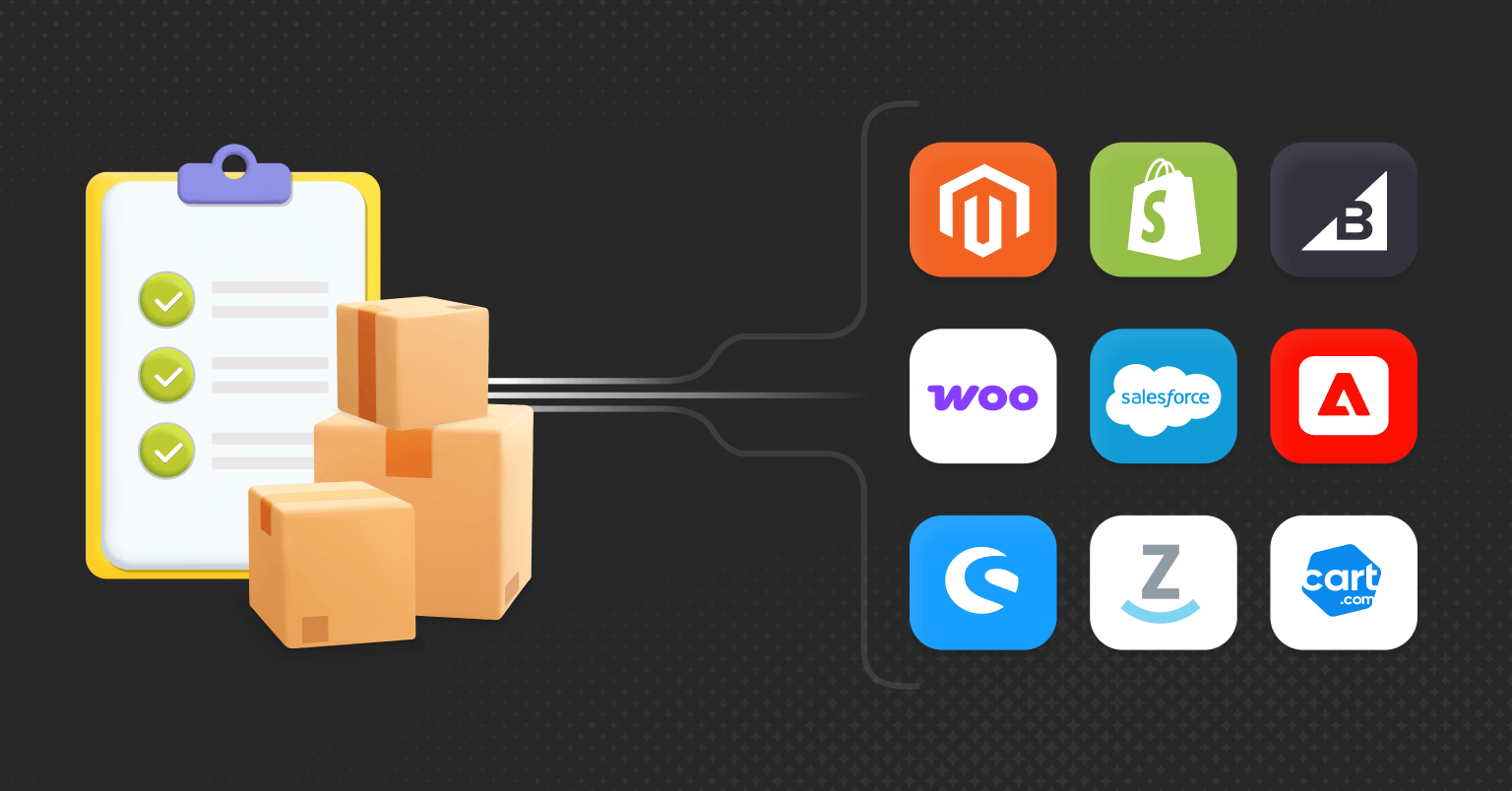
Another great move is to connect ShipperHQ. We help you show accurate delivery dates at checkout by pulling live transit data directly from carriers such as UPS, USPS, FedEx, and Canada Post, then layering in the operational rules that reflect how your fulfillment actually works.
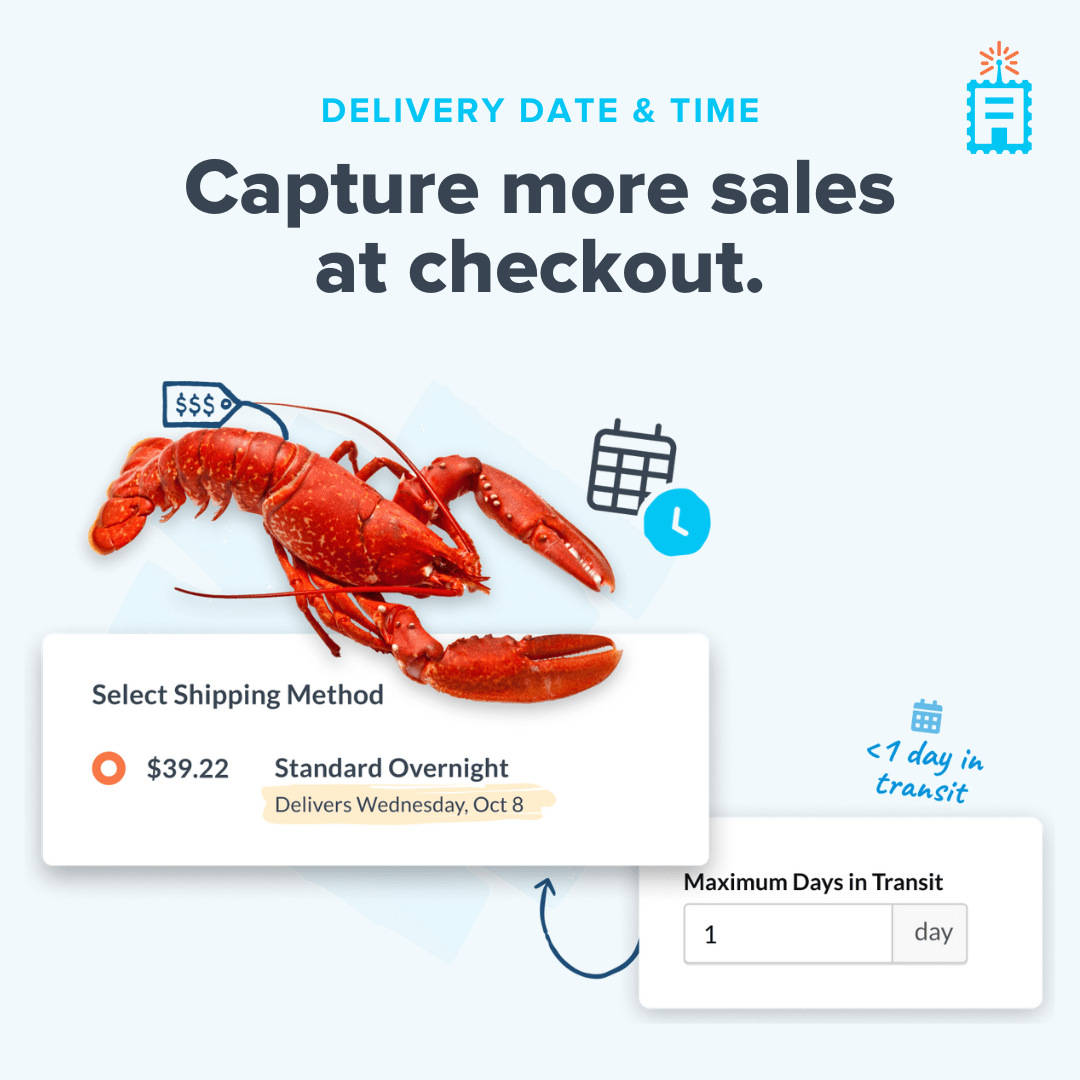
ShipperHQ's Delivery Date & Time feature lets you show accurate, specific delivery dates at checkout. Instead of showing a vague range like "5-7 business days," your checkout can show a specific delivery promise, such as "Arrives by Thursday, July 3." That date accounts for carrier transit time plus the operational inputs that determine when an order can realistically ship.
Here is what goes into the calculation.
Carrier Transit Times
ShipperHQ pulls live rates and transit time data from 50+ small parcel and LTL freight carriers, including UPS, FedEx, USPS, DHL, Canada Post, and others. The transit time used to build the delivery date estimate is carrier-specific and route-specific, calculated based on actual origin and destination. It is not a generic range applied across every order.
For custom table rate methods, you can also assign transit times so ShipperHQ calculates delivery estimates consistently across all your shipping options, not just live carrier rates.
Order Cutoffs
You can define daily order cutoff times by fulfillment location. If your warehouse stops processing same-day orders at 1 PM, ShipperHQ applies that rule when calculating which orders can ship today and which roll to the next business day. The shopper sees the accurate date, not an optimistic one that assumes their 3 PM order ships in two hours.
Lead Times
Lead times are the gap between when an order is placed and when it is actually ready to ship. ShipperHQ lets you set lead times by origin, product group, or carrier. A made-to-order product that takes two days to prepare before it ships can have a different lead time than an in-stock item that ships immediately. Your checkout reflects the correct processing window for each product in the cart.
Blackout Dates
You can block specific dates when your warehouse is not shipping: public holidays, scheduled downtime, or any other non-production day. ShipperHQ pushes the estimated delivery date past those blocked dates automatically. A shopper who orders right before a holiday closure sees a delivery estimate that accounts for the missed shipping day, not one that pretends fulfillment happens every day of the year.
Together, these inputs let you show delivery estimates that actually match what you can deliver. FullWell, one of ShipperHQ's customers, described it this way:
"It's crucial to show our customer the estimated delivery day at checkout, which is dynamically displayed based on MY business's shipping rules (same-day shipping cut off, blackout days, day of the week they order, etc) coupled with the carrier's real-time API."
FullWell
Plus, ShipperHQ can calculate your ideal shipping rates and options for a wide range of situations.
- Only want ground shipping for lightweight items? Check.
- Want to run a free shipping promotion for a sale period? Done.
- Need to add a surcharge for items that are dropshipped? You got it.
There is a lot you can do with ShipperHQ's shipping management software to customize your checkout experience, including giving your customers more accurate delivery information before they place their order.
While you cannot plan for every unforeseen circumstance, you can plan ahead and narrow the possibilities for a delivery that misses the mark.
Get started by signing up for a free trial of ShipperHQ. We’re available on major ecommerce platforms and custom websites.

FAQs
Are estimated delivery dates accurate?
-
They can be, but accuracy depends on how the estimate is calculated. A reliable estimated delivery date should account for carrier transit time, processing time, order cutoff times, lead times, blackout dates, and your actual fulfillment schedule. Accuracy drops when checkout relies on a generic carrier estimate or ignores how your operation actually ships orders.
What is the difference between an estimated delivery date and a shipping date?
-
The estimated ship date is when an order is expected to leave the warehouse, store, vendor, or fulfillment center. The estimated delivery date is when the order is expected to arrive at the customer's address. The time between those two dates depends on carrier transit time, service level, destination, and any applicable processing delays. Showing both dates at checkout helps shoppers understand the full timeline.
What causes an estimated delivery date to be wrong?
Estimated delivery dates can be wrong because of external issues like weather, carrier delays, customs holds, labor disruptions, or missed delivery attempts. They can also be wrong because of internal setup issues, such as missing cutoff times, incorrect lead times, no blackout dates, or shipping methods that do not reflect the actual fulfillment process. Most chronic EDD inaccuracy comes from the internal category.
Can a package arrive before the estimated delivery date?
-
Yes. Packages can arrive before the estimated delivery date, especially when carrier networks are running smoothly or when transit estimates include a small built-in buffer. Most shoppers consider early delivery a positive surprise. The bigger customer experience problem is when an order arrives after the estimated date without clear communication about why.
What happens if I do not show an estimated delivery date at checkout?
-
Shoppers fill in the gap with their own assumptions, and those assumptions are often more optimistic than your actual fulfillment timeline. This leads to more support contacts, more "Where's my order?" questions, and lower confidence at checkout. Showing a specific delivery date helps set expectations before the order is placed. Research suggests that 62% of consumers prioritize delivery certainty over delivery speed, so not showing a date does not reduce expectations. It just removes your ability to set them.
How does ShipperHQ calculate estimated delivery dates?
-
ShipperHQ's Delivery Date & Time feature combines live carrier transit time data with your operational rules: order cutoff times, product or origin lead times, and blackout dates. The result is a specific delivery date at checkout that reflects both what the carrier expects and what your fulfillment operation can actually deliver. You can set these rules by carrier, product group, and origin location. The feature supports 50+ small parcel and LTL freight carriers.