


62% of consumers prioritize an accurate delivery promise over fast shipping promises.
Imagine this: you’re shopping online on a Sunday afternoon, and two stores offer the same product. One promises to deliver on Wednesday. The other just says, “3 to 5 business days.” Which one do you choose?
Most of us would pick the store with the clear delivery date estimate.
Quick answer: Delivery date estimates show shoppers when an order is expected to arrive before they buy. Accurate ecommerce delivery date estimates depend on carrier transit times, fulfillment lead times, cutoff times, inventory location, holidays, blackout dates, and the customer’s destination. The best delivery date prediction tools use these inputs to show reliable delivery dates on product pages, cart, and checkout.
In today’s ecommerce, accurate delivery date promises are no longer a nice-to-have. They are a core part of the shopping experience. Clear ecommerce delivery dates help build trust, increase conversions, reduce support tickets, and improve customer satisfaction.
In this blog, we’ll break down what delivery date estimates are, what affects delivery date accuracy, why delivery promises matter, and how ecommerce retailers can get them right.
What Is a Delivery Date Estimate?
A delivery date estimate is the expected arrival date shown to a shopper before or after they place an order. In ecommerce, the most useful delivery date estimates appear before purchase, especially on product pages, cart, and checkout, because they help shoppers decide whether the delivery timing works for them.
A strong estimate is more specific than “3 to 5 business days.” It turns shipping speed into a clear promise, such as “Arrives Wednesday, December 18.”
That specificity matters. A vague delivery range makes shoppers do the math themselves. A clear ecommerce delivery date gives them confidence to keep moving toward purchase.
Why Do Delivery Date Estimates Matter?
Modern consumers demand transparency and speed. With the rise of quick commerce, same-day delivery, and Amazon-style checkout expectations, ecommerce retailers are under more pressure than ever to show shoppers exactly what to expect.
Delivery date estimates answer one of the most important questions in checkout: “When will my order arrive?”
This transparency reduces uncertainty and builds confidence, which can directly influence whether a shopper completes their purchase. Fast shipping is great, but certainty often matters more. A shopper planning for a gift, event, project, meal kit, or business deadline may choose a slightly slower option if the delivery date is clear and reliable.
How Delivery Date Estimates Shape Customer Expectations
Delivery date estimates are not just about convenience. They set expectations before the order is placed.
- They ease purchase anxiety: Customers are more likely to hit “Buy Now” when they know when their order should arrive.
- They create a competitive edge: Retailers offering accurate delivery dates stand out from competitors with vague timelines.
- They build long-term trust: Meeting or exceeding a delivery promise improves confidence and encourages repeat purchases.
- They make shipping options easier to compare: “Arrives Friday” is easier to understand than “Expedited Shipping.”
Shoppers often choose stores with clear delivery dates, even when the delivery option is not the fastest. Certainty beats guessing.
What Goes Into Delivery Date Prediction?
Accurate delivery date prediction depends on more than carrier transit time. A reliable estimate should account for the full path from order placement to final delivery.
- Carrier transit time: How long the selected service usually takes once the package ships.
- Fulfillment lead time: How long your team needs to pick, pack, produce, or prepare the order.
- Cutoff times: Whether the customer orders before or after your same-day processing deadline.
- Inventory location: Which warehouse, store, 3PL, or dropship location will fulfill the order.
- Destination: Where the customer is located and which delivery methods are available there.
- Blackout dates and holidays: Days when your warehouse, carrier, or delivery team is not operating.
- Product rules: Whether an item is made-to-order, perishable, oversized, restricted, or requires special handling.
When these inputs work together, delivery dates become more than a rough guess. They become a promise your business can actually keep.
Where Should Ecommerce Retailers Show Delivery Date Estimates?
Delivery dates are most useful when shoppers see them before they have to make a decision. For most ecommerce stores, that means showing estimates in three key places:
- Product pages: Help shoppers decide whether the item will arrive in time before they add it to cart.
- Cart: Reinforce the delivery promise before checkout begins.
- Checkout: Show delivery dates beside each shipping option so customers can compare cost and speed clearly.
Checkout is the most critical placement, but product page and cart estimates can reduce uncertainty earlier in the buying journey. The earlier you answer “when will this arrive?”, the less work the shopper has to do.
Watch: How to Show Delivery Dates on Shopify Product Pages
For Shopify merchants, product page delivery dates can answer one of the shopper’s biggest questions before they even add an item to cart: “Will this arrive in time?”
Watch this walkthrough to see how ShipperHQ helps show shipping estimates and delivery dates directly on Shopify product pages.
The Business Impact of Delivery Promises
Providing transparent ecommerce delivery date estimates can have a real impact on your business.
Increased Conversions
Uncertainty kills sales. Cart abandonment rates hover around 70% globally, and unclear shipping timelines are a major contributor. Offering specific delivery dates removes one more reason for shoppers to hesitate.
A delivery promise also makes premium shipping easier to understand. “Express Shipping” is vague. “Arrives Friday” is a decision.
Boosted Customer Trust
Reliable delivery promises show professionalism and respect for the customer’s time. When you give shoppers a clear delivery date and then meet it, you build credibility.
Trust compounds. A shopper who receives their order when promised is more likely to come back, especially if timing matters for gifts, perishables, projects, or business needs.
Reduced Customer Support Costs
One of the most common customer questions is, “When will my order arrive?” Providing delivery date estimates before purchase helps reduce those questions before they happen.
Clear delivery promises also help your support team. When customers understand the expected arrival date upfront, they are less likely to contact your team immediately after ordering for status updates.
Challenges in Offering Accurate Delivery Date Estimates
The benefits of delivery date promises are obvious. Getting them right is the hard part.
1. Shipping Complications
Shipping timelines depend on multiple variables: carrier performance, delivery address, inventory availability, fulfillment location, and shipping method. For merchants using multiple carriers and fulfillment centers, syncing this data can feel like a tricky puzzle.
A delivery estimate based only on carrier transit time may be wrong if it ignores warehouse processing time, product availability, or where the order is actually shipping from.
2. Peak Season Strain
During holidays or shopping spikes like Black Friday and Cyber Monday, carrier delays and inventory issues become more common. This can lead to inaccurate or missed delivery dates if your estimates do not account for operational limits.
Peak season is when delivery promises matter most. It is also when they are easiest to break.
3. Insufficient Tools
Many merchants lack tools that account for cutoff times, lead times, blackout dates, product-specific rules, and regional differences. The result is inaccurate delivery date estimates and unmet customer expectations.
If your checkout can only show static ranges, your team may be forced to choose between being vague or making promises you cannot reliably keep.
Proven Strategies to Improve Delivery Date Accuracy
So how can merchants improve ecommerce delivery date accuracy? Start by connecting delivery promises to the way your operation actually works.
1. Real-Time Carrier Integration
Integrating with carriers to pull real-time shipping data is crucial. It allows you to provide delivery estimates that reflect available services, transit times, and carrier-specific logic.
Carrier data is only one part of the equation, but it is an important foundation. Without it, delivery estimates can drift away from what carriers can actually support.
2. Inventory and Fulfillment Optimization
To minimize delays, maintain visibility across warehouses, stores, dropshippers, and fulfillment partners. If an item can ship from more than one place, your delivery date estimate should account for the origin that will actually fulfill the order.
This matters for multi-origin fulfillment. A customer in Texas may receive a different delivery promise depending on whether the order ships from California, Georgia, a local store, or a dropship vendor.
3. Technology Adoption
Use shipping management software like ShipperHQ to account for the full delivery promise, not just the carrier’s generic transit time. That includes lead times, cutoff times, holidays, blackout dates, shipping origins, product rules, and delivery methods.
Shipping management software like ShipperHQ can help ecommerce merchants calculate delivery date estimates based on configurable rules and real fulfillment constraints.
4. Clear Communication
If delays occur, proactive communication can protect customer trust. Customers feel valued when you keep them in the loop about unexpected changes.
That said, the best communication starts before the purchase. Showing accurate delivery dates on product pages, cart, and checkout gives shoppers better expectations from the beginning.
How to Implement Delivery Date Estimates Without Overpromising
Showing ecommerce delivery dates is powerful, but only if the dates reflect how your business actually fulfills orders. The goal is not to show the most aggressive date possible. The goal is to show a date your team can keep.
Here’s a practical rollout plan:
- Map your fulfillment workflow: Document how long it takes to pick, pack, produce, or prepare each type of order.
- Define your cutoff times: Decide when same-day processing ends for each warehouse, carrier, or shipping method.
- Add blackout dates: Block holidays, weekends, warehouse closures, production pauses, and carrier non-service days.
- Segment by product type: Separate ready-to-ship items from made-to-order, perishable, oversized, or restricted products.
- Account for fulfillment origin: Make sure delivery dates reflect the warehouse, store, 3PL, or dropship vendor shipping the order.
- Test before launch: Compare estimated delivery dates against real orders to catch gaps before customers see them.
- Monitor performance: Track late deliveries, WISMO tickets, conversion rate, and shipping method selection after launch.
If your date logic skips these steps, you may technically show delivery estimates, but they won’t be reliable enough to build trust.
What to Look for in Delivery Date Prediction Tools
The best delivery date prediction tool depends on how your ecommerce business fulfills orders. Before choosing a solution, look for features that help you show delivery dates your team can actually meet.
- Carrier integrations: Pull transit times from the carriers and services you use.
- Lead time controls: Account for order processing, production, handling, and fulfillment delays.
- Cutoff times: Adjust delivery promises based on when the order is placed.
- Blackout dates: Exclude holidays, weekends, warehouse closures, or carrier non-service days.
- Multi-origin logic: Calculate estimates based on the warehouse, store, or vendor shipping the order.
- Product-specific rules: Handle made-to-order, perishable, oversized, or restricted items accurately.
- Checkout display options: Show delivery dates beside shipping methods so shoppers can compare clearly.
- Product page estimates: Show delivery timing earlier in the shopping journey when it helps customers decide.
- Testing and analytics: Let your team test date logic before launch and monitor performance over time.
The right tool should not just predict a date. It should help you control the promise behind that date.
How ShipperHQ Helps You Show Accurate Delivery Date Estimates
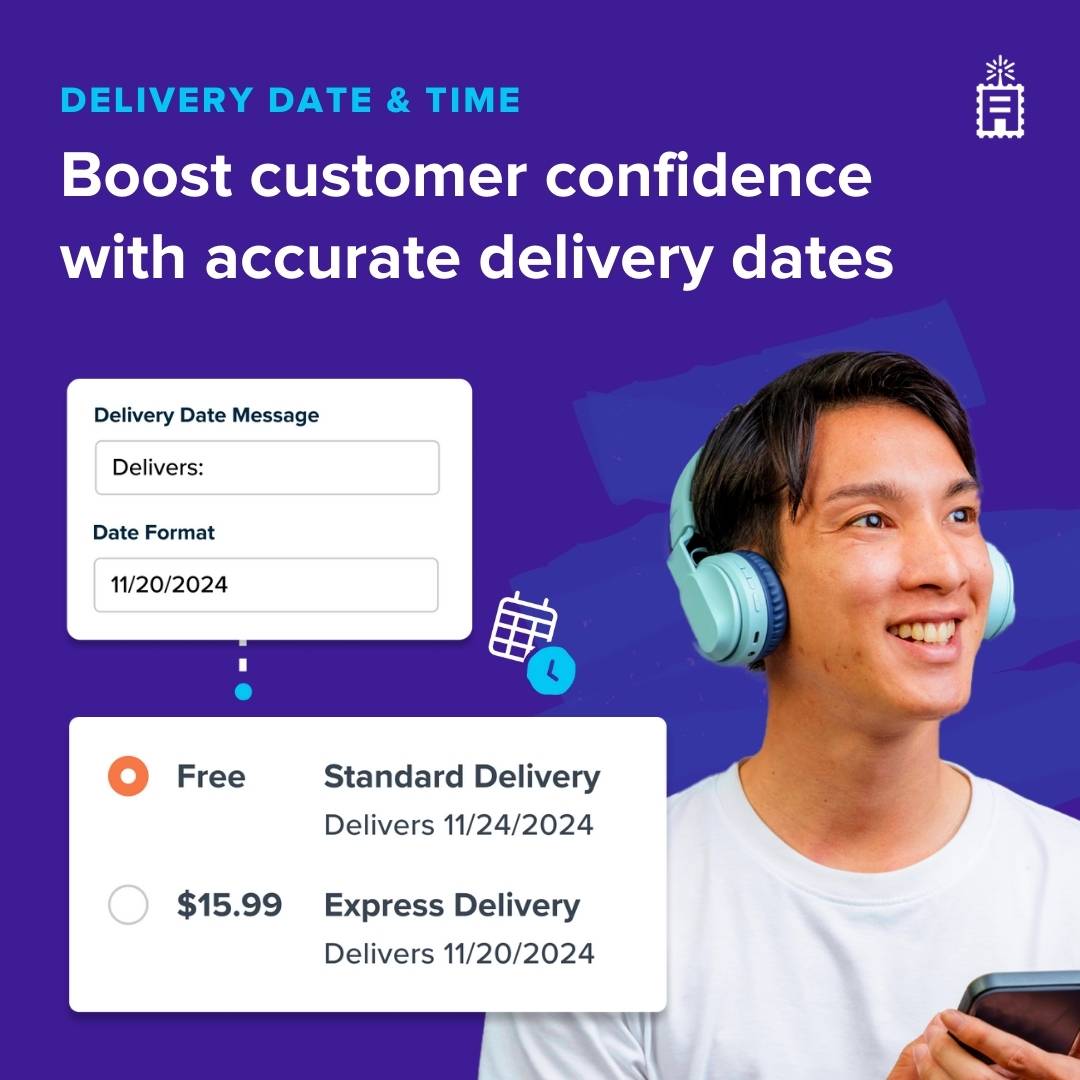
In a world where customer trust and convenience dictate shopping decisions, delivery date estimates have become a must-have for thriving ecommerce retailers. But achieving precision is difficult without the right tools.
ShipperHQ helps ecommerce merchants calculate and display delivery date estimates using the details that actually affect fulfillment, including carrier transit time, lead time, cutoff times, blackout dates, shipping origin, destination, and available shipping methods.
Depending on your setup, ShipperHQ can support:
- Lead times at the origin, carrier, and product-group level
- Cutoff times that adjust delivery promises based on when the order is placed
- Blackout dates for production, dispatch, and delivery
- Multi-origin delivery date calculation for stores shipping from multiple warehouses, stores, or vendors
- Calendar delivery so shoppers can choose a delivery day where supported
- Time-slot delivery for more curated delivery experiences where supported
- Product page delivery dates to show estimates earlier in the buying journey
Instead of showing vague shipping speeds, you can give shoppers clearer choices at checkout, such as which option arrives sooner, which option costs less, and which delivery promise fits their needs.
That means fewer surprises for customers, fewer “Where is my order?” tickets for your support team, and a checkout experience that feels more trustworthy.
Ready to show delivery dates your customers can trust? Start your free 15-day trial with ShipperHQ and see how accurate delivery estimates can improve checkout confidence, reduce support questions, and protect your delivery promises.
Delivery Date Estimates FAQs
A delivery date estimate is the expected date an order will arrive. In ecommerce, delivery date estimates are often shown on product pages, cart, or checkout to help shoppers understand when they should receive their order.
Delivery date estimates are calculated using factors like carrier transit time, fulfillment lead time, order cutoff times, inventory location, customer destination, holidays, blackout dates, and available shipping methods.
Delivery date estimates reduce uncertainty before purchase. They help shoppers choose the right shipping option, build trust, reduce cart abandonment, and lower delivery-related customer support questions.
Retailers should look for a tool that supports carrier integrations, fulfillment lead times, cutoff times, blackout dates, multi-origin shipping, product-specific rules, product page estimates, and delivery date display at checkout.
Yes. Delivery date tools like ShipperHQ can help ecommerce merchants show accurate delivery dates by accounting for carrier transit time, lead times, cutoff times, blackout dates, fulfillment origin, and customer destination.
A delivery date at checkout is the estimated arrival date shown beside a shipping option before the shopper places an order. It helps customers compare delivery options based on both cost and timing.