

What does DDP (Delivered Duty Paid) or DDU (Delivered Duty Unpaid) mean? Here’s what you need to know to handle your international logistics correctly.
DDP and DDU are terms you’ll probably see pop up when shipping goods cross-border. They are both statuses for international shipments that specify which party is responsible for duty payments. In other words, who will be paying import fees for an order before it’s out for delivery?
Quick note: DDU is an older term, but it is still commonly used by merchants, carriers, ecommerce sellers, logistics teams, and customers when talking about who pays import duties and taxes.
DDP vs. DDU: What’s the Difference in Shipping?
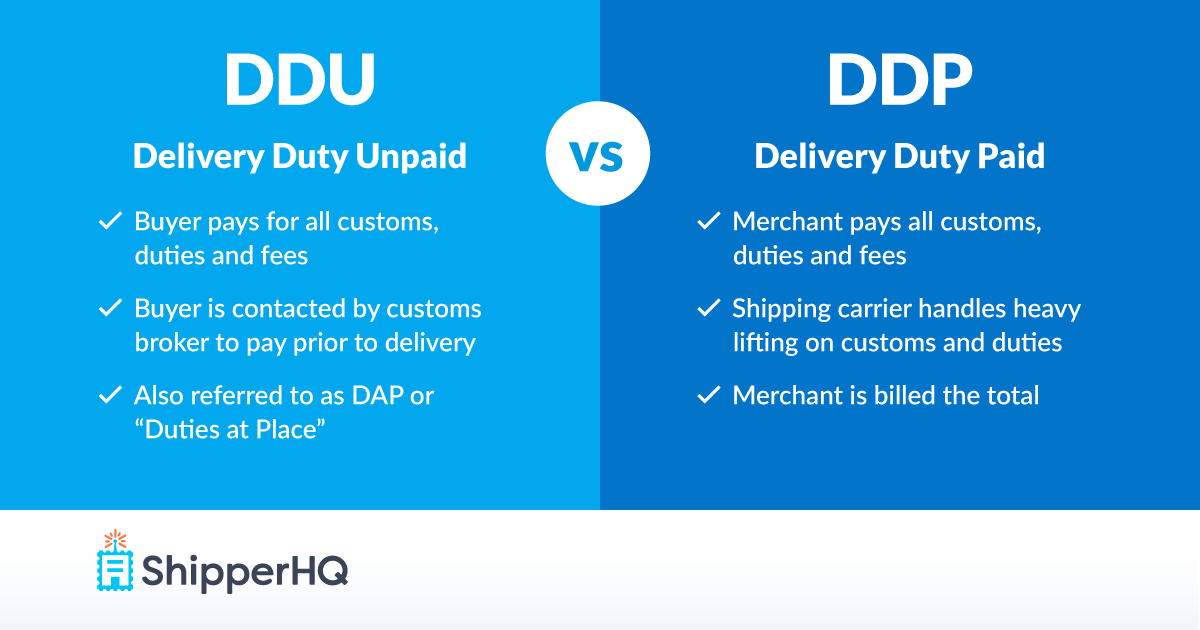
DDP is a shipping term that stands for “Delivered Duty Paid.” This means you, the seller, will pay all customs clearance, duties, and taxes associated with shipping a product into another country. Generally speaking, the logistics providers you work with, think UPS, FedEx, DHL, do the heavy lifting on customs and duties and bill you the total before an item is imported.
DDU is a shipping term that stands for “Delivered Duty Unpaid.” This means your buyer is responsible for paying customs clearance, duties, and taxes associated with the purchase. Your buyer will be contacted by a customs broker, and they will be required to pay duties before receiving the package.
DDU is an older term that is often used similarly to DAP, Delivered at Place, though the exact responsibilities should always be confirmed with your carrier or logistics provider.
| Term | Who pays duties and taxes? | What it means for the customer |
|---|---|---|
| DDP, Delivered Duty Paid | Seller pays or collects upfront. | Fewer surprises at delivery. |
| DDU, Delivered Duty Unpaid | Buyer pays at import or delivery. | Lower checkout total, but possible surprise fees later. |
What Do DDP and DDU Mean for Ecommerce Sellers?
When shipping cross-border, many countries impose a duty or tax on a shipment. As an online seller, deciding whether you want to pay the duty or pass that cost along to your customer is up to you.
Whether a duty or tax is required depends on factors like shipping origin, declared value of an order, shipment purpose, and shipping destination. Since every country has its own set of rules, regulations, and import taxes, things can get complicated quickly.
For example, the U.S. Harmonized Tariff Schedule, the U.S. government document spelling out what customs and duties are owed on what products, is 3,863 PDF pages long and updated annually. Ouch.

DDU vs. DDP: Which Should You Use for International Customers?
The short answer is: it depends.
Sticking with DDU shipments may seem more cost-effective since no processing fees are involved on top of the duty. However, the hassle of explaining why a customer needs to pay more on top of their order and shipping costs can cause unnecessary confusion.
The important thing is making sure your customer knows what to expect before they buy. If duties and taxes are not included at checkout, that needs to be clear. No one likes surprise fees at the door.
Benefits of Shipping DDP
If you choose to ship DDP, you pay the cost for shipping, VAT or sales tax, customs, duties, etc. Because the duty has been paid upfront, your customer can avoid the delay and hassle of paying a customs broker. Your carrier will bill you for the customs costs.
However, this still leaves you with the expense. You may take the cost on yourself, pass this on at checkout, or include it in your item’s price.
Shipping DDP also has advantages. A customer’s shipment will arrive more quickly because it isn’t delayed in customs waiting for payment. And as ecommerce matures, savvy online shoppers are getting more accustomed to paying customs and duties on cross-border purchases.
The difference is that with DDP, those costs are handled upfront instead of showing up as an unwelcome surprise later.
Disadvantages of Shipping DDP
Shipping DDP offers benefits such as quicker delivery and the convenience of upfront payment for customs fees. However, there are potential drawbacks. Sellers bear the expense of customs clearance, duties, and taxes. This can eat into your profit margins unless you pass it on to the customer by increasing the item’s price or charging separate fees at checkout. You may incur unexpected expenses if you miscalculate or underestimate the customs costs.
DDP can also make returns more complicated. If duties and taxes have already been paid upfront, you need to understand how those costs will be handled if an order is returned, refused, or refunded.
Benefits of DDU Shipments
If you choose to ship DDU, your customer is ultimately responsible for paying customs and duties.
Your carrier will deliver the package to a customs broker in your customer’s home country. A customs broker can be your carrier, the local post office, or another company that handles customs fees. Your customer is then responsible for paying the duty before they can take final possession of the package.
Shipping DDU has advantages when it comes to winning a sale. Without taxes and duties included upfront, your price-conscious customer sees a lower price at checkout.
DDU can also make sense for experienced international buyers, B2B customers, or customers who already expect to handle import fees themselves.
Disadvantages of Shipping DDU
Although DDU shipments may attract price-conscious customers with the allure of lower upfront costs, there are risks associated with this approach. One key drawback is the potential for confusion and negative customer experiences. If you fail to communicate that taxes and duties are due upon delivery, customers may be caught off guard and feel blindsided by unexpected fees.
Moreover, if customers delay picking up the package or fail to pay the required duties, storage fees and the possibility of order cancellation become concerns. As the seller, you would cover return shipping fees, fines, and penalties.
It is essential to carefully weigh these disadvantages against the advantages of each shipping method. You must consider the specific needs of your ecommerce business and customer base before implementing DDP or DDU on your website.
Implementing DDU or DDP Shipping: Considerations for Your Ecommerce Website
Implementing DDU or DDP shipping on your ecommerce website requires careful consideration of your international logistics. DDP, or Delivered Duty Paid, means that as the seller, you take responsibility for paying all customs clearance, duties, and taxes associated with shipping a product to another country.
This option offers a smoother process for customers, as they can avoid paying a customs broker before receiving their package. DDU, or Delivered Duty Unpaid, shifts the responsibility to your buyer. They will be contacted by a customs broker and must pay duties upon delivery.
Ultimately, the choice between DDU and DDP depends on the products you ship and your customer’s willingness to pay taxes and duties upfront. Working with a partner that calculates these costs automatically and provides transparent information at checkout can simplify the process for you and your customers.
Key Differences Between DDU and DDP
When deciding whether to implement DDU or DDP shipping on your ecommerce website, it’s essential to understand the critical differences between the two approaches. Consider the following points:
DDP (Delivered Duty Paid):
- The seller takes responsibility for paying customs clearance, duties, and taxes.
- The duty is paid upfront, ensuring a smoother process for customers receiving the package without the hassle of paying a customs broker.
- The seller incurs the expense of customs costs and must decide whether to absorb it, pass it on at checkout, or include it in the item’s price.
- Faster delivery times are possible as the package avoids delays in customs.
- Customers are becoming more accustomed to paying customs and duties on cross-border purchases, especially when those costs are shown clearly at checkout.
DDU (Delivered Duty Unpaid):
- The buyer is responsible for paying customs clearance, duties, and taxes before receiving the package.
- The carrier delivers the package to a customs broker in the buyer’s home country, who handles the customs fees.
- Customers may see a lower price at checkout due to excluding taxes and duties.
- Clearly communicate that taxes and duties are due on arrival to avoid customer confusion and negative experiences.
- Delays in picking up the package or non-payment of duties may result in additional storage fees and the risk of order cancellation.
- Sellers are liable for return shipping fines and penalties if customers abandon the shipment at customs.
Understanding these key differences will help you decide which shipping method aligns best with your business model and customer expectations. Consider factors such as your product mix, customer preferences, and the potential impact on your profitability.
Introducing ShipperHQ’s Duties & Taxes Feature
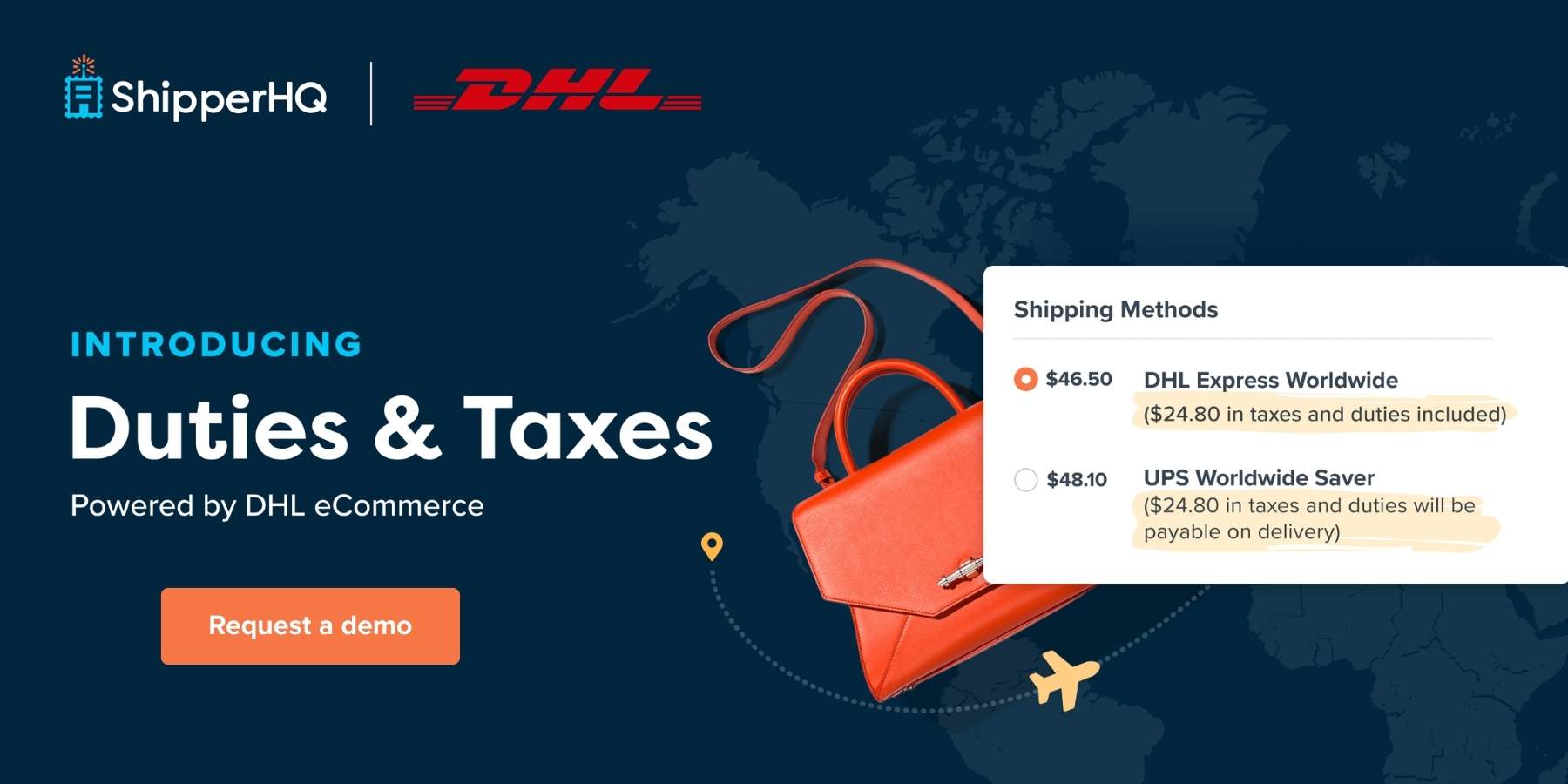
Our latest Duties & Taxes feature, powered by DHL eCommerce, automatically calculates accurate duty and tax at checkout. It integrates seamlessly with any carrier and every major ecommerce platform, displaying duty and tax calculations within the shipping methods portion of checkout.
You can choose from several Duties & Taxes configurations, including DDP or DDU. It will ultimately depend on the mix of products you ship internationally and how receptive your customers are to paying taxes and duties upfront or dealing with customs brokers after the fact.
Need more information about this feature or want to discuss DDP vs. DDU? Request a demo to learn more.
FAQs About International Shipping
What does DDU mean in shipping?
DDU means Delivered Duty Unpaid. It means the buyer is responsible for paying import duties, taxes, and customs fees when the shipment reaches the destination country.
What does DDP mean in shipping?
DDP means Delivered Duty Paid. It means the seller is responsible for duties, taxes, customs clearance, and related import fees. The seller may absorb those costs, include them in pricing, or collect them at checkout.
Is DAP the same as DDU?
DAP, Delivered at Place, is the newer term often used in place of DDU. In many ecommerce conversations, both terms are used to describe a shipment where the buyer may be responsible for import duties and taxes, but they are not formally identical.
What role does DDP play in returns?
DDP can complicate returns as the seller has already paid customs fees upfront, potentially leading to complex and costly processes for handling return shipping and customs clearance.
Does DDP include unloading?
Including unloading fees may vary based on agreements between the seller, carrier, and destination country. It’s important to clarify with your logistics provider.
What’s DDP’s impact on delivery speed?
DDP can lead to faster delivery times since the customs fees have been paid upfront, allowing the package to avoid delays in customs clearance.
How does the choice of DDP or DDU affect profits?
The choice between DDP and DDU can impact profits. DDP involves the seller bearing customs costs, potentially reducing profit margins if those costs are not calculated or passed on correctly. DDU shifts the duty payment to the buyer, offering lower upfront costs but posing risks such as storage fees, return shipping expenses, and customer support issues for the seller.
Please note that specific circumstances and agreements may vary. Therefore, consulting with logistics partners or shipping experts is advised for the best approach for your ecommerce business.