


2026 Carrier Rate Increases: What Shippers Need to Know
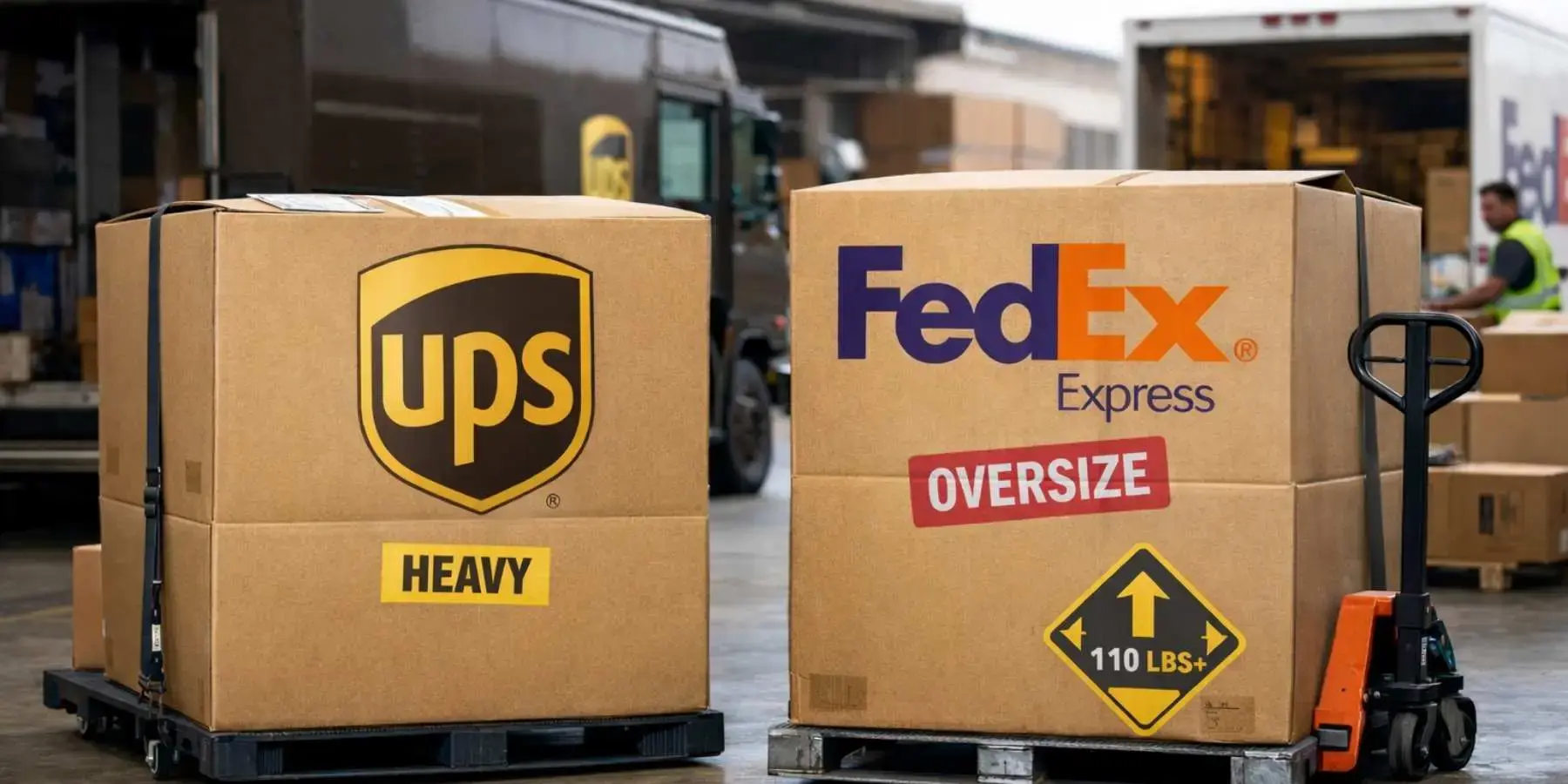
Carrier rate increases in 2026 are raising shipping costs across UPS, FedEx, and USPS, with average base rate increases of around 5.9% to 7.8% depending on the service and carrier. For ecommerce teams, the headline increase is only part of the story. The bigger story is that both base rates and the surcharge structure have been updated across carriers. Oversize and additional handling thresholds now tie more directly to cubic volume on both UPS and FedEx, and residential fees have risen alongside base rates. Understanding where your shipment profile sits within the updated rate structure helps you plan more accurately.
Products that are bulky, orders going to residential addresses, or shipments rated on estimates can land in a different cost range than the headline suggests. That makes it worth reviewing your shipping setup with the full rate structure in mind, not just the base GRI. At the same time, USPS updated its dimensional weight divisor in July 2026, which increases the billable weight on larger packages even without a new base rate change.
Below is a summary of the 2026 last-mile carrier updates and what they mean for your bottom line.
2026 carrier rate increases at a glance: UPS raised average base rates 5.9%, effective December 22, 2025. FedEx raised average base rates 5.9%, effective January 5, 2026. USPS raised rates 7–8% for Ground Advantage, effective January 18, 2026. Both UPS and FedEx have expanded cubic volume triggers for oversize and additional handling surcharges. USPS updated its DIM weight divisor from 166 to 139, effective July 12, 2026. Last updated: July 2026
How Shipping Rates Have Changed Across Carriers in 2026
Across the major carriers, three themes stand out:
- Base shipping rates have increased ~6% through 2026 General Rate Increases
- Oversize and additional handling thresholds now tie more directly to cubic volume, meaning package dimensions play a larger role in how surcharges are assessed
- Residential, delivery area, and remote surcharges have risen and affect a broad share of B2C shipments
Individually, these changes are familiar. Together, they introduce more cost variability if shipments are not rated accurately upfront. Industry analysts estimate surcharges account for a significant and growing share of total per-package costs on UPS and FedEx shipments. For many merchants, the surcharge side of the rate structure is where the difference between estimated and actual shipping costs is largest.
For example, when a shipment crosses an oversize threshold, added charges can exceed $250 to $300 per package for the Large Package Surcharge alone, depending on zone and carrier, before base transportation costs are included.
What Changed with UPS Rates in 2026
UPS announced a 5.9% average General Rate Increase for U.S. domestic shipping, which took effect December 22, 2025. In addition to base rate changes, UPS has updated how it applies oversize and handling surcharges.
Effective January 26, 2026: Large Package and Additional Handling Updates
Domestic Large Package Surcharge (LPS) applies when a package:
- Exceeds 17,280 cubic inches in cubic size
- Exceeds 110 lb in actual weight
Existing dimensional factors, including length and length plus girth, remain in place.
Domestic Additional Handling Charge (AHC) applies when a package:
- Exceeds 10,368 cubic inches in cubic size
UPS has also updated measurement practices. Fractional inches will round up to the next whole inch, which can affect dimensional weight calculations. Minimum charges have increased as well, which may affect how discounts apply to lower-weight shipments.
Residential and Remote Surcharges
Oversize thresholds get attention, but residential and remote fees are often the more repeatable cost driver because they apply to a broad share of B2C orders.
Key updates include:
- Residential Surcharge (Ground) increased by roughly 6–7%, placing per-package residential fees in the mid-$6 range
- Remote Area Surcharge (U.S. 48) increased by roughly 7–8%, with per-package costs now in the mid-teens
For shippers delivering to remote or extended ZIP codes, that translates to around $15 to $17 per package, applied consistently across eligible orders.
UPS also notes that surcharge applicability can shift as ZIP code and zone alignment lists may update over time, which means exposure can change even if shipping volume stays flat. For full definitions and published guidance, refer to UPS's shipping costs and rates page.
For a full breakdown of UPS surcharge changes, GRI history, and what to do about it, see our UPS General Rate Increase guide.
What Changed with FedEx Rates in 2026
FedEx announced an average 5.9% rate increase for 2026 across Express, Ground, and Home Delivery services, which took effect January 5, 2026.
Effective January 12, 2026: New Volume and Weight Triggers
FedEx has added new volume and weight thresholds to its existing oversize rules.
Additional Handling Surcharge – Dimension applies when:
- A package exceeds 10,368 cubic inches in cubic volume
Oversize Charge applies when a package:
- Exceeds 17,280 cubic inches in cubic volume
- Exceeds 110 lb in actual weight
These criteria apply alongside FedEx's existing length and girth rules. The oversize charges vary by zone, but for many shipments, they can fall in the mid-$200s to low-$300s per package range, depending on lane and service.
Residential, Delivery Area, and Remote Fees Have Also Increased
FedEx's 2026 surcharge updates show continued increases across residential and delivery area fees, particularly for Home Delivery shipments.
- Residential Delivery Surcharges increased by roughly 8%, pushing per-package fees into the mid-$6 range. At the same time, FedEx Date Certain Home Delivery®, FedEx Evening Home Delivery®, and FedEx Appointment Home Delivery® surcharges are now applied per package rather than per shipment as of Jan. 12. This change causes costs to scale more quickly on multi-box residential orders.
- Delivery Area Surcharges increased by around 6% for both residential and commercial deliveries, affecting a broader share of last-mile shipments.
- Remote Delivery Area Surcharges increased by 8%, with per-package fees now approaching $17, further amplifying costs for orders shipping to harder-to-reach locations.
For a full breakdown of FedEx GRI history, surcharge details, and strategies for managing costs, see our FedEx GRI article.
What Changed with USPS Rates in 2026
USPS rate changes for Shipping Services took effect January 18, 2026. The average rate increase is as follows:
- Around 7 to 8% for USPS Ground Advantage
- Around 6 to 7% for Priority Mail
- Around 5% for Priority Mail Express
USPS pricing is structured differently from UPS and FedEx and does not include fuel or residential surcharges. However, a second significant change took effect July 12, 2026: USPS updated its dimensional weight divisor from 166 to 139 for packages that exceed 1 cubic foot (1,728 cubic inches).
A smaller divisor produces a larger billable dimensional weight for the same box. The formula is: length × width × height ÷ 139 = dimensional weight. If the calculated dimensional weight exceeds actual weight, you pay the higher number. That means the same product, in the same box, can become more expensive to ship if it crosses the 1-cubic-foot threshold, even with no change to the product or service.
USPS continues to apply actual-weight-only pricing for packages at or under 1 cubic foot, which is still one of its clearest advantages for ecommerce merchants shipping lightweight products in compact packaging. Staying under that threshold matters more now that the divisor has tightened.
For a full breakdown of USPS rate history, dimensional weight changes, service comparisons, and strategies for protecting margin, see our USPS rate increases guide.
Why Accurate Shipping Rates Matter in 2026
As shipping rates rise and pricing leans more heavily on dimensional weight and added fees, accuracy at checkout matters more than ever. For shippers, that doesn't just mean higher rates. It means more variability at a time when margins are already being squeezed by tariffs, returns, labor costs, and fulfillment complexity.
Instead of planning around a single headline increase, ecommerce brands are now managing a growing mix of surcharges tied to how items are packed, how many boxes ship in an order, and where those orders are delivered. This shows up in a few specific ways.
Keeping checkout rates aligned with carrier assessments
When checkout rates are built on real package data, they align closely with what carriers charge. When they rely on estimates, the two can diverge. On oversized shipments, that difference can be significant, especially as more surcharges are assessed at the per-package level.
The shopper who almost checked out
Shipping costs play a direct role in conversion. Rates that are overstated can discourage customers at checkout. Rates that are understated mean absorbing the difference between what checkout showed and what the carrier charges once the full cost is assessed. Neither outcome is good. Both come down to the same thing: how accurately checkout rates reflect real packing and destination conditions.
The surcharge your forecast didn't include
Most teams can plan around a 5–6% headline increase. The harder problem is forecasting the mix of surcharges that vary by carton selection, packing behavior, destination type, and package count. A product that looks profitable at checkout may not be once the full cost is calculated: base rate plus residential delivery, delivery area, and handling fees, all applied at the zone and package level.
The 2026 carrier updates reinforce a clear reality for shippers. Shipping costs are becoming more precise, more conditional, and more dependent on how orders are actually packed and delivered.
If you're looking to align your checkout rates with how carriers actually assess your shipments, that's where ShipperHQ comes in. ShipperHQ helps ecommerce merchants rate orders using real conditions: package dimensions, cubic volume, origin, destination, service type, and delivery area. That means checkout rates that reflect what you'll actually be charged.
Start a 15-day free trial or book a demo to see how ShipperHQ handles it.

Share this article
Related Articles

2026 Holiday Shipping Deadlines and How to Stay Ahead
Holiday Shipping Deadlines Are Critical. Your Strategy Decides the Outcome. Carrier cut-offs are non-negotiable. Miss ...

The Auto Parts Shopify Stack: 5 Apps That Handle What the Platform Doesn't
Shopify is a good place to sell auto parts. It is not, out of the box, a good place to sell a 90-pound driveshaft next ...
You Don't Need to Be Amazon to Ship Like Amazon
You've probably heard the story before: back in the early '90s, a man turned the garage of his rental house into a ...