


Best Shopify Apps for 2026
Shopify has an app for almost everything. That is a huge advantage, but it can also become a mess fast.
Every app adds another tool to set up, test, and manage. Some apps are worth it. Others slow your store down, overlap with tools you already use, or create more work than they save.
The best Shopify apps are not the ones with the longest feature lists. They are the ones that fix a real problem in your store. That might mean better shipping rates, fewer abandoned carts, stronger email marketing, faster product pages, easier returns, or better support.
This guide is organized by the job each app does. Every pick is based on real use cases, reviews, ratings, and trust signals. That way you can start with whatever is actually broken in your store right now.
Quick summary, the best Shopify apps by category:
- Payments & Installments: Shop Pay Installments or Klarna
- Subscriptions: Recharge
- Pricing Optimization: Shopify Smart Pricing plus Intelligems
- Shipping: ShipperHQ
- Returns: Loop Returns or AfterShip Returns
- SEO: Booster SEO or Boost AI Search & Filter
- Email Marketing: Klaviyo
- Upsell: Upsell.com (formerly ReConvert)
- Customer Loyalty: Klaviyo Reviews (reviews) plus Smile.io (loyalty and referrals)
- Customer Support: Gorgias
Best Payment and Installment App for Shopify
Shop Pay Installments is Shopify's own Buy Now, Pay Later option. It's built right into Shopify, so there's nothing extra to connect. Shop Pay itself is trusted by hundreds of millions of buyers worldwide.
It splits a purchase into four interest-free bi-weekly payments, or longer monthly terms of up to 24 months through Affirm for bigger-ticket items, and one in four merchants who turn it on see a 50% higher average order value as a result.
Because it's built into the Shopify admin dashboard, it activates without installing a separate app or asking customers to create another account.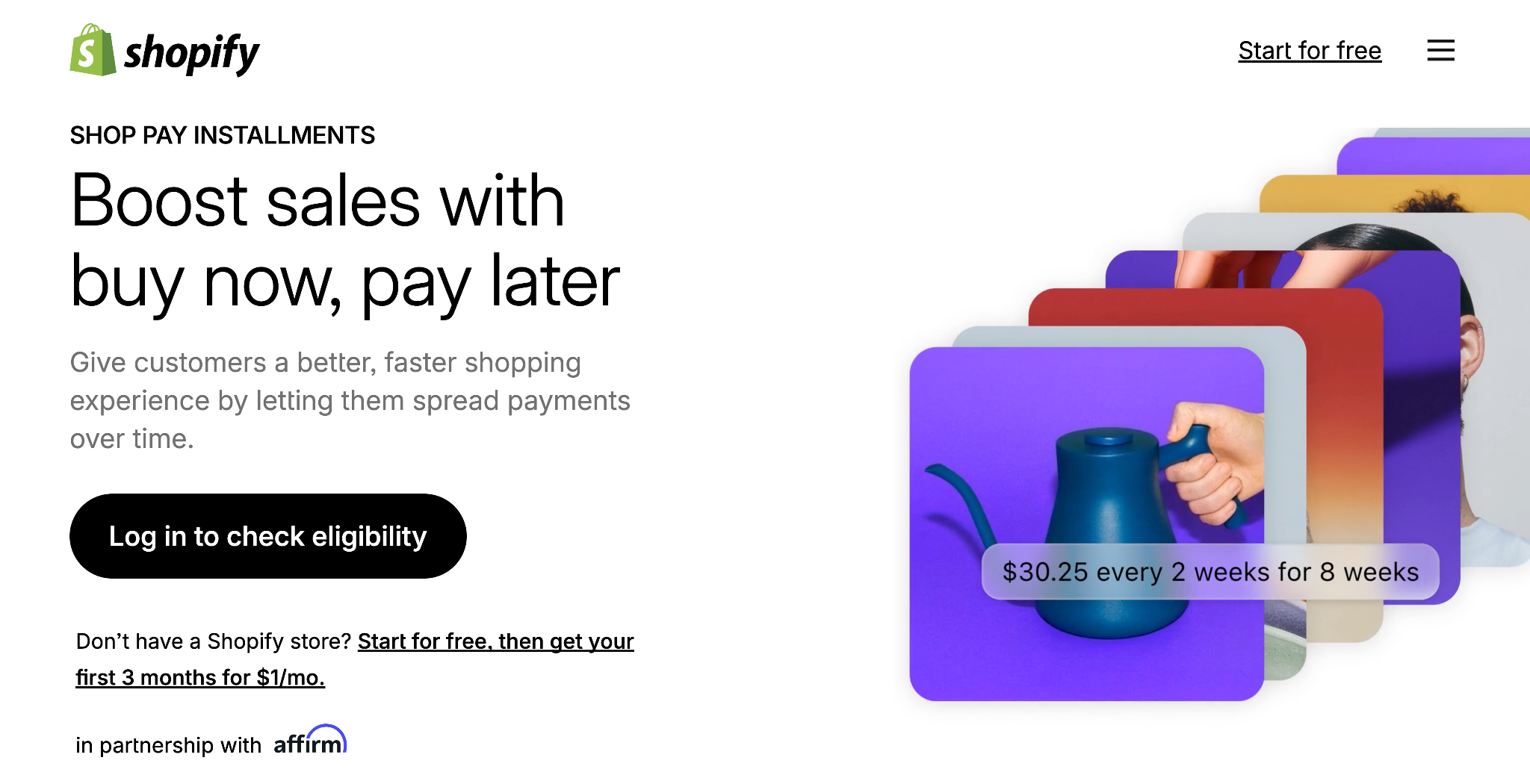
Klarna is another installment option that can be used through Shopify, but its advantage is international reach. Klarna itself reports 119 million shoppers and 1 million+ retail partners globally, and brands that add it report a 40% increase in average order value, a 20% increase in conversion, and 46% higher purchase frequency than their average shopper.
That global footprint is exactly why shoppers in a lot of markets outside the US already recognize the brand at checkout, which matters for conversion in a way a lesser-known option doesn't.
In most supported regions (UK, Canada, Australia, New Zealand, and most of Europe) it's not really a separate app decision at all: it can be turned on directly inside your existing Shopify Payments settings, with no separate account, no extra app, and payouts flowing through your normal Shopify Payments schedule.
US availability through that same native path has been rolling out, so check your Shopify admin's payment settings directly rather than assuming; where the native option isn't available yet, Klarna's own standalone app fills the gap.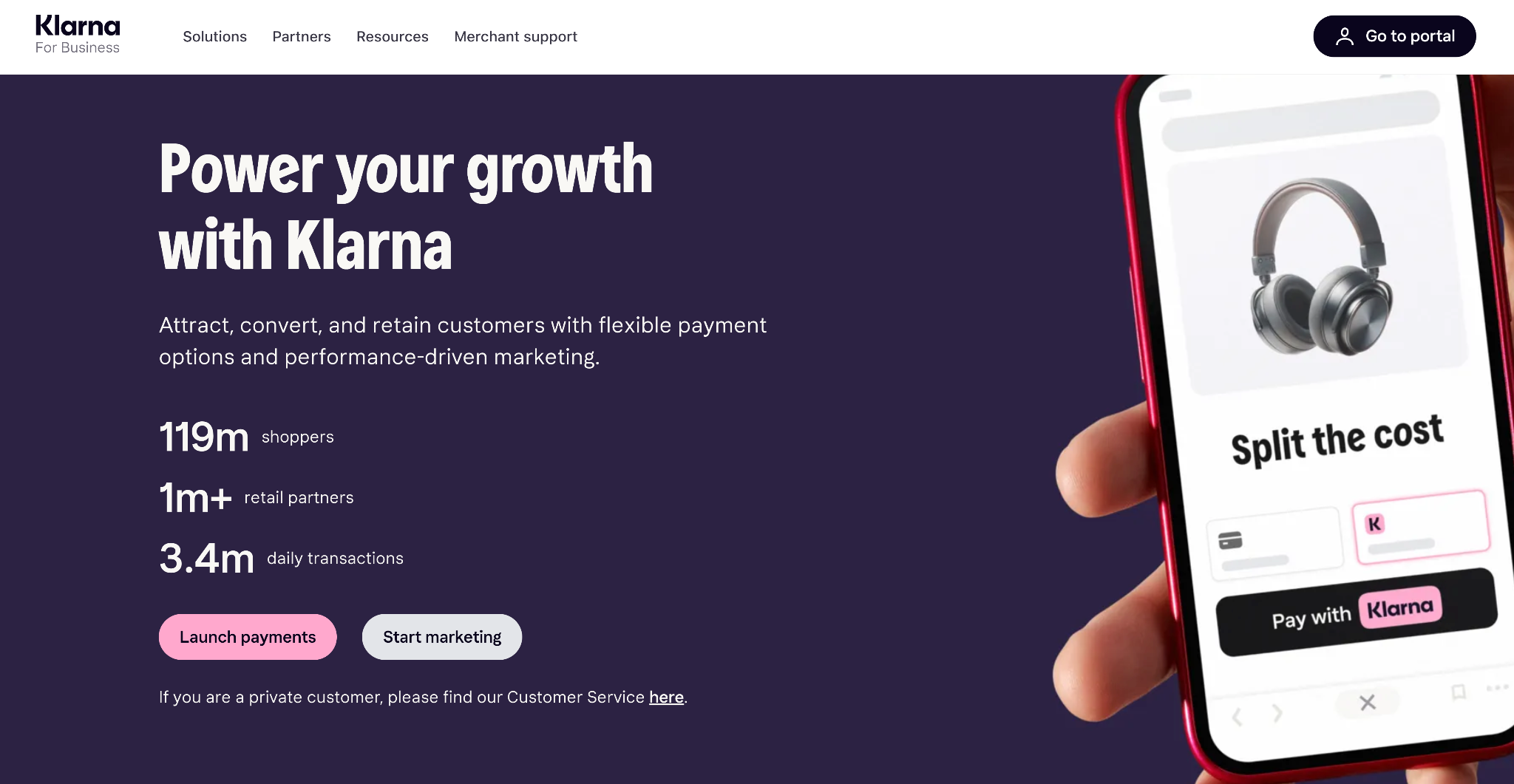
Which one fits depends on where your customers actually are. A US-only store has little reason to look past Shop Pay Installments, while a store with real international order volume gets more out of Klarna's broader recognition.
Best Subscription App for Shopify
The biggest threat to a subscription program usually isn't the offer. It's how easy or annoying it is for someone to manage their own subscription. Friction at that step quietly turns into cancellations.
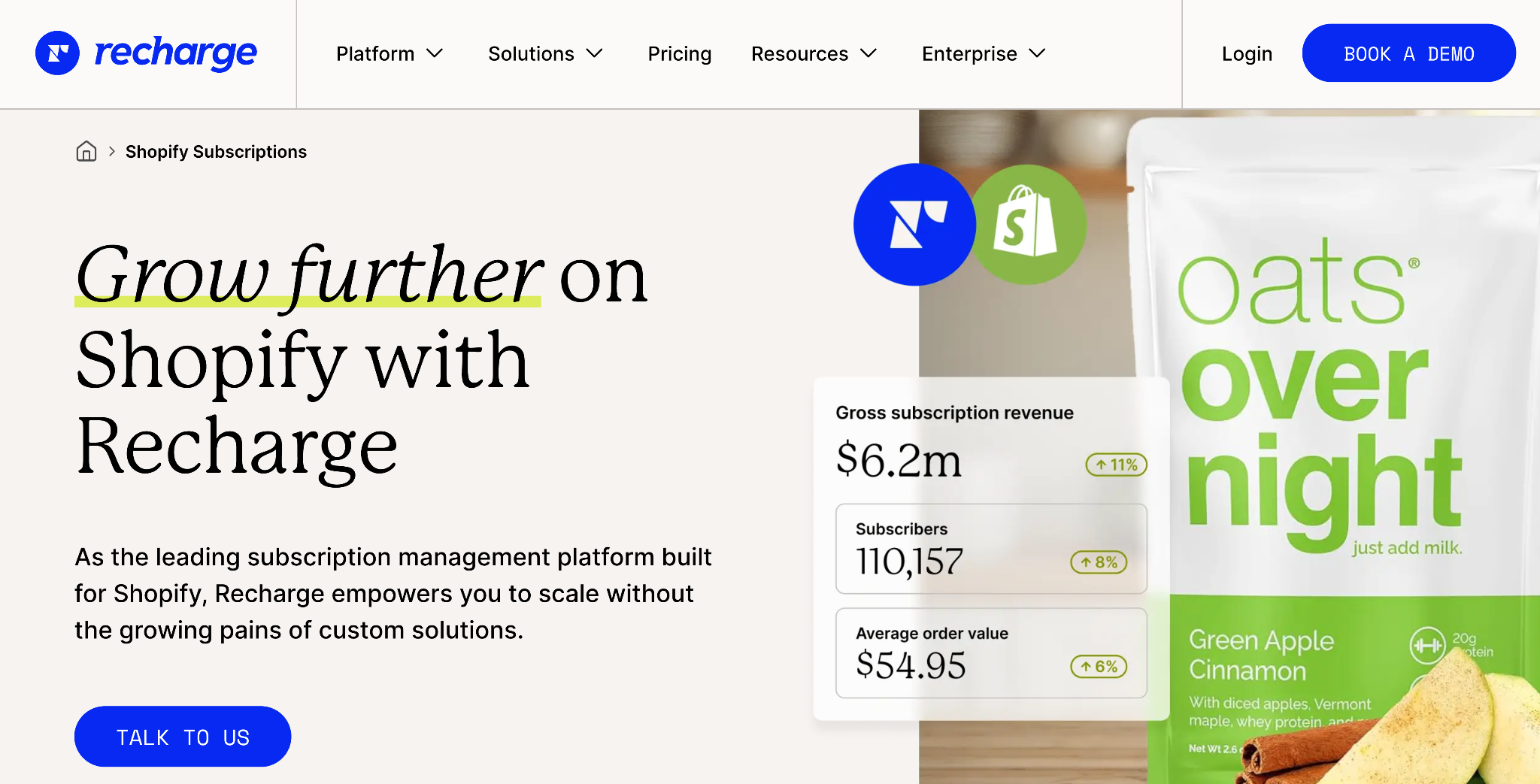
Recharge (which recently acquired Skio, a subscriber-portal-focused competitor) is the largest subscription platform in ecommerce. Recharge reports that merchants running subscriptions through Shopify and Recharge together have processed more than $30 billion in recurring revenue cumulatively.
Its product-page subscription widget claims to convert up to 4x more subscribers versus a basic subscribe-and-save toggle. Customers can pause, skip, or swap products themselves from a branded portal, with passwordless SMS or email login instead of another password to forget.
Recharge also connects directly to Klaviyo and Gorgias, so a subscriber's status can trigger the same lifecycle emails covered earlier and a support agent can see subscription details without leaving the helpdesk. That matters most once you have enough subscribers that a clunky portal starts generating support tickets instead of preventing them.
Best Pricing Optimization App for Shopify
Shopify Smart Pricing and Intelligems are both price optimization tools that help you set the right prices for your products, but they approach it differently.
Shopify’s Smart Pricing has two modes. The first is an AI-powered recommendation engine that analyzes your sales, inventory, and seasonality to suggest markups or markdowns. The second mode is a separate A/B testing mode that splits live traffic 50/50 between a control price and a test price.
You can gain a lot of valuable information from this free tool. If you don't have a price optimization tool on your Shopify store yet, you should install this one today.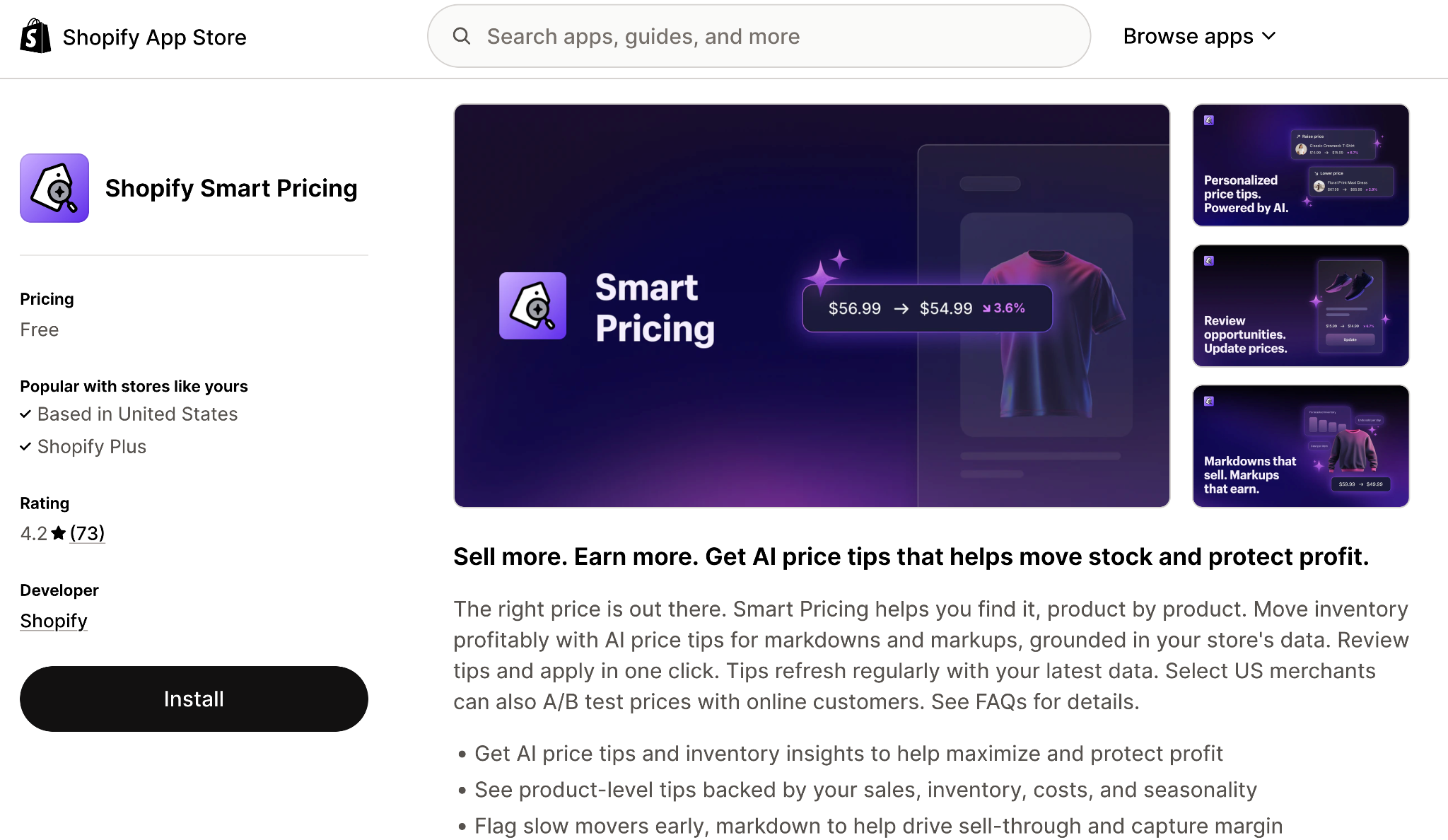
However, per Intelligems' own comparison article of itself vs Smart Pricing, Shopify’s A/B testing mode has an eligibility bar: it's limited to US-based stores on the Grow plan or higher, selling in US dollars through a single US catalog, with at least 10 products that each see 25 or more monthly sales.
A store also gets one mode or the other, not both running at once, so plenty of stores end up in the recommendation-only bucket by default.
Also, Smart Pricing only lets you run one test at a time on 250 items. You also can't test discounts or subscriptions.
Intelligems lets you run unlimited tests on all your products. You can test discounts, and you can apply a winning price with just one simple click.
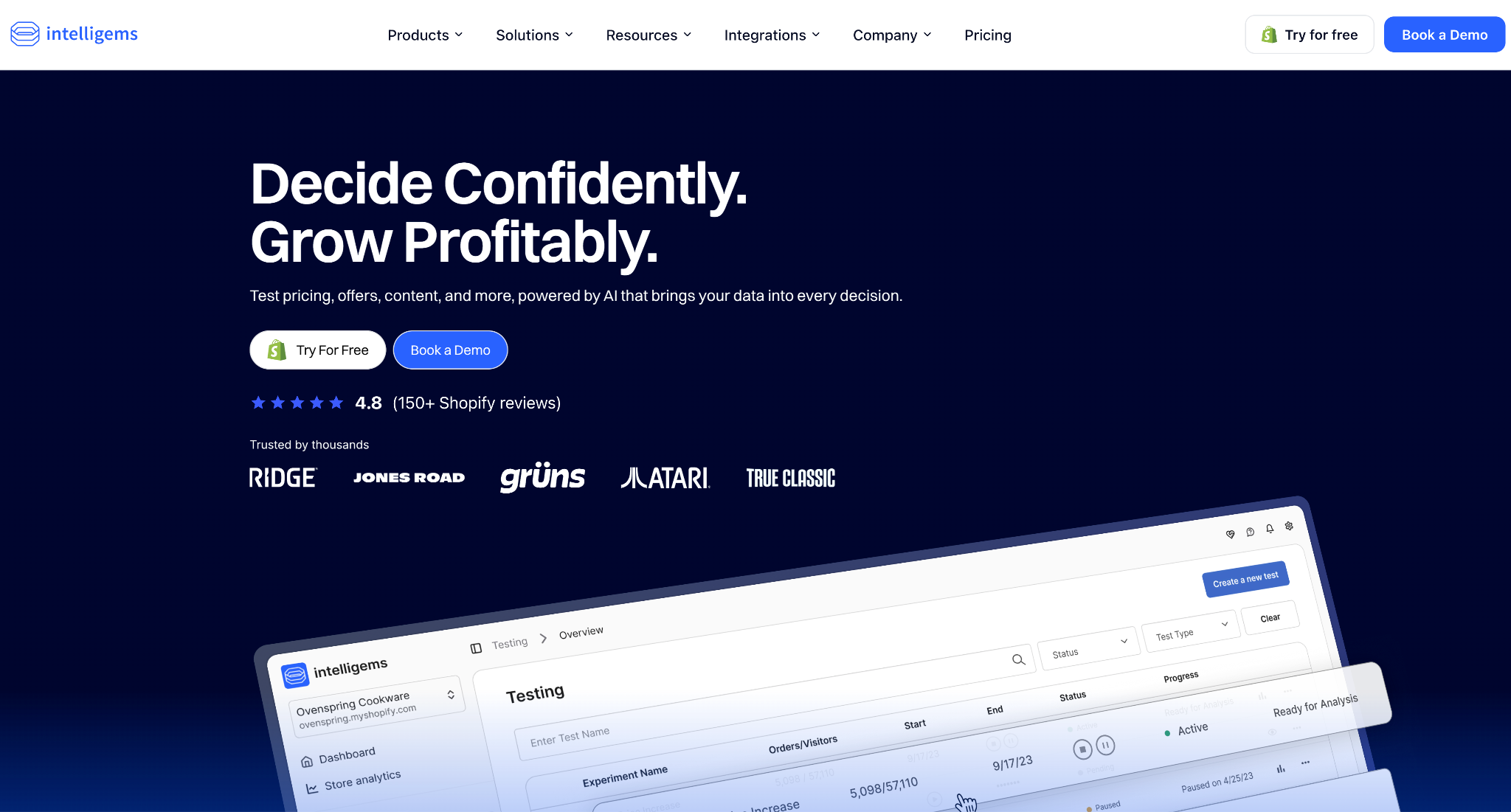
The right choice depends on your store. Both are great, and at least one price optimization tool is necessary. If you have nothing, go for Smart Pricing. If you want more freedom, try out Intelligems.
Best Shipping & Checkout Optimization App for Shopify
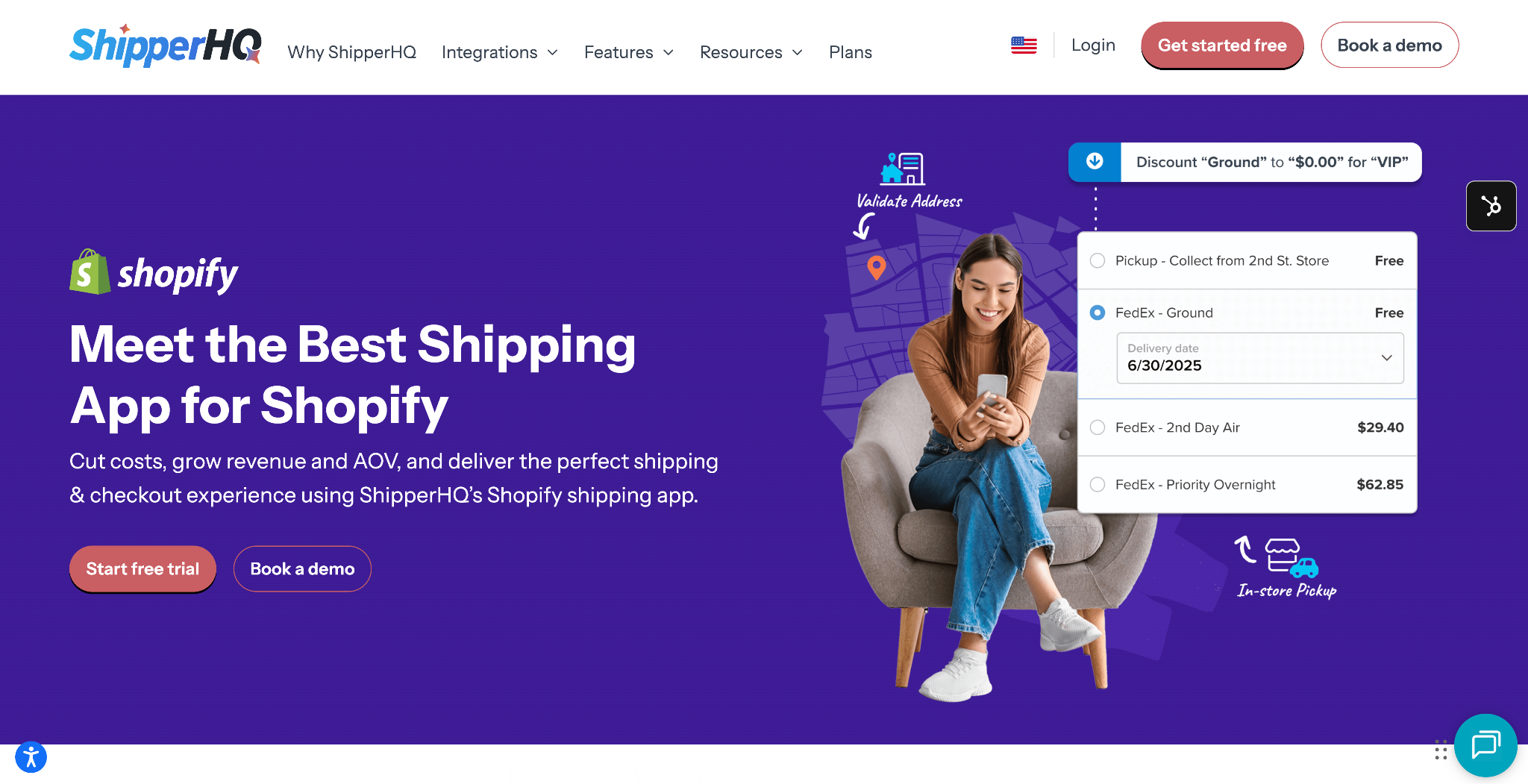
Shipping apps solve two different jobs, and it's worth knowing which one you actually need. Some calculate rates and delivery promises before a customer pays. Others print labels and manage fulfillment afterward. ShipperHQ is the best shipping app for Shopify stores that need more control over shipping rates, rules, delivery promises, multi-origin fulfillment, freight shipping, or address-based shipping logic.
Shopify's built-in shipping tools work well for simple, single-location setups with predictable shipping costs.
Merchants run into trouble as their business grows. Shopify's default setup just doesn't handle complex shipping well. Once you add bulky items, multi-item orders, freight, or multiple warehouses, you usually end up with inaccurate rates.
That's where ShipperHQ fits in. It gives over 6,000 merchants real control over their shipping and checkout experience. Instead of guessing, it uses real product and package dimensions and the correct warehouse when you ship from more than one location. You can also set custom shipping rules by product or cart value, and show delivery dates that account for cutoff times instead of a generic estimate.
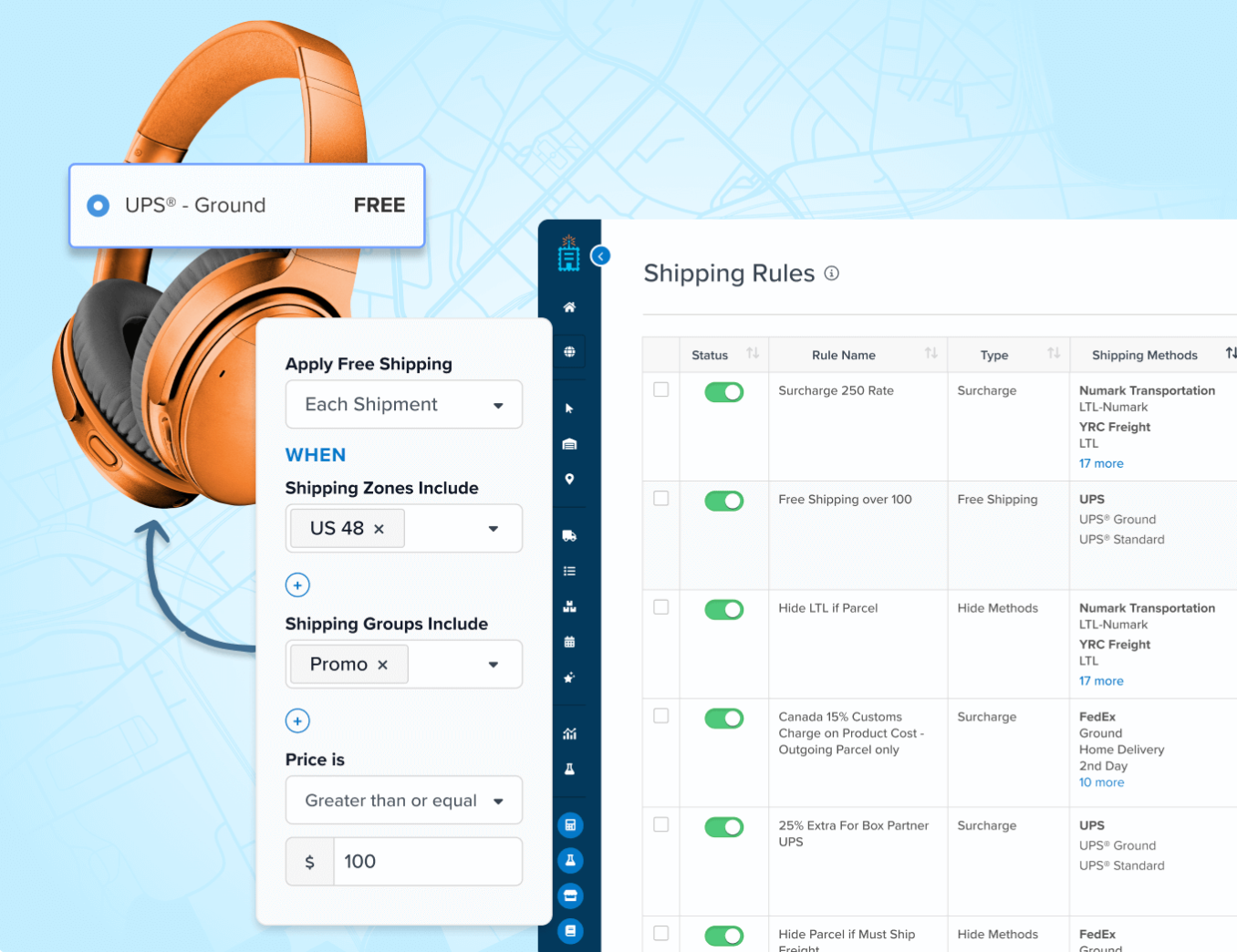
Its Advanced Shipment Details feature also passes that same rating and packing data from checkout into fulfillment systems, so warehouse teams can pack orders efficiently and hit the dispatch and delivery dates a customer was shown.
Here's how that breaks down against Shopify's own app categories for orders and shipping:
|
Capability |
Native Shopify |
ShipperHQ |
|
Basic shipping profiles and flat or tiered rates; accuracy drops for big or bulky items, multi-item orders, freight, or more than one origin |
Rates calculated from real product dimensions, the correct warehouse, and rules by product, zone, or cart value |
|
|
Shop Promise is limited to Shopify's top 1% of shippers by performance; native pickup options are limited by plan and market, with no PO Box or zone restriction controls |
Delivery dates with cutoff times and blackout rules, pickup-point support through carrier integrations, and full zone control including PO Box blocking |
|
|
Checkout rates rely on default package assumptions, not true multi-box packing logic |
Dynamic multi-box packing based on real product dimensions |
|
|
Supports multiple fulfillment locations, but checkout rating logic is limited when rates need to change by origin, warehouse proximity, or fulfillment rule |
Proximity-based routing and fulfillment rules across multiple origins |
|
|
A limited, country-dependent set of built-in carriers |
100+ live rate carriers, including 30+ LTL freight carriers |
|
|
Basic shipping profiles and rates; advanced conditional rate hiding or renaming usually requires Shopify Functions, Checkout Blocks, or a dedicated shipping app |
Rules by product, zone, tag, address type, and cart value, on any plan |
|
|
Not supported natively |
Built-in LTL freight support |
|
|
Not available |
Detects commercial vs. residential addresses for accurate rates |
One thing worth knowing: ShipperHQ doesn't create shipping labels or manage warehouse fulfillment. That's a separate job, handled by a different category of tool.
The short version: ShipperHQ is the best shipping solution for Shopify stores with growing or complex shipping needs. Shopify's native tools handle simple, small-package shipping fine on their own, but the moment you need real logic behind your rates (multi-origin routing, freight, delivery dates, or rules that change by product, destination, or cart value), ShipperHQ is how you add that logic without writing a line of code.
Best Returns App for Shopify
A good returns app isn't just a logistics tool. It's a revenue retention tool. The difference between losing a refund entirely and converting it into an exchange or store credit adds up fast.
Loop Returns is built around that idea specifically. Its self-serve portal lets customers start a return without emailing support, and it actively nudges people toward store credit or an exchange instead of a refund, often with a small incentive attached, plus AI-driven suggestions that recommend an alternative size or color based on the return reason rather than a generic "pick something else."
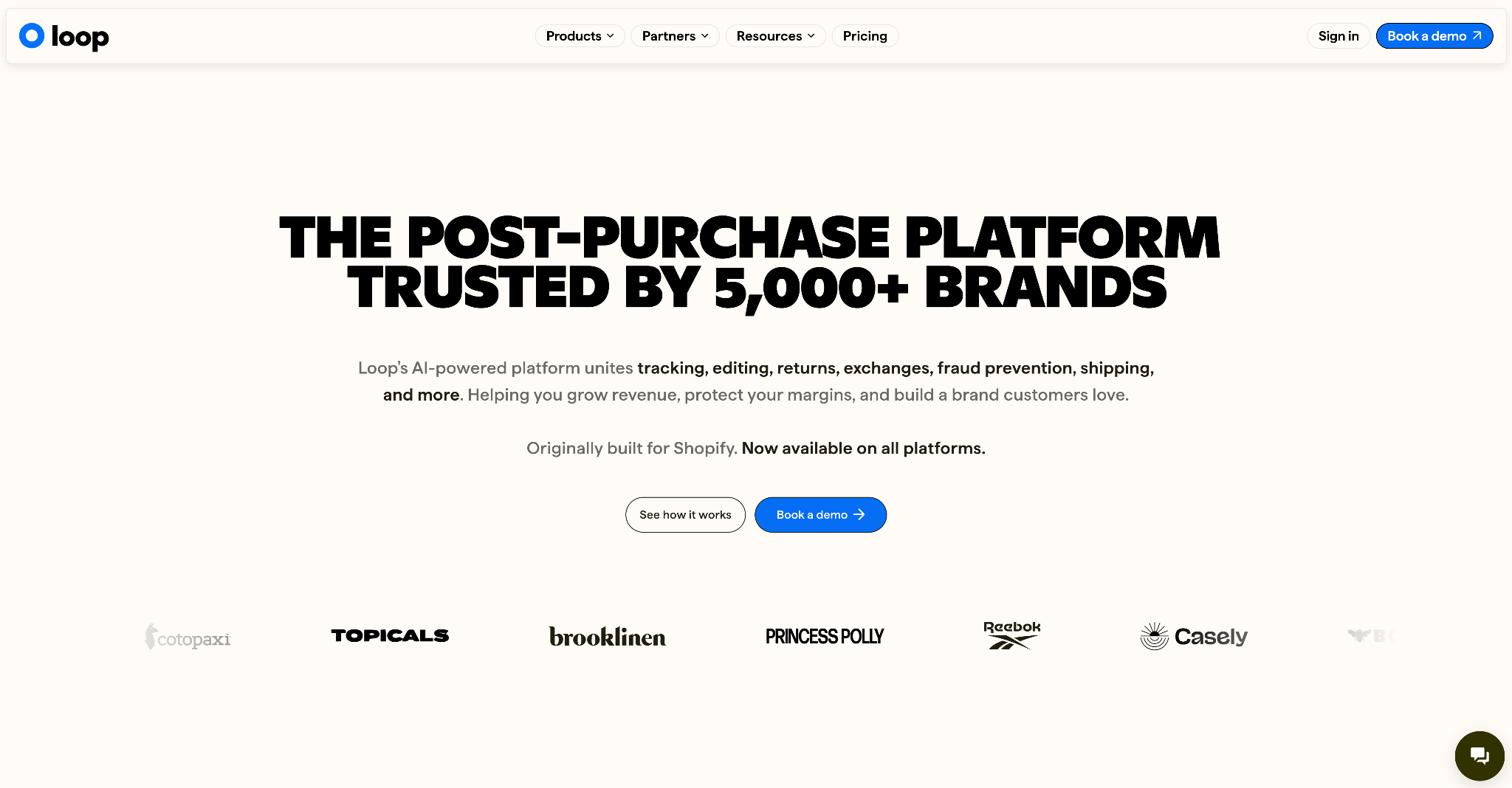
Loops returns is Shopify-only, but within that world it has a serious footprint, with 5,000+ merchants and brands like Brooklinen and Princess Polly among them. That makes it a particularly strong fit for stores with apparel, sizing, or variants, anywhere a customer might want a different size or color rather than their money back.
AfterShip Returns is the simpler, lower-cost option if your catalog doesn't lend itself as naturally to exchanges (single-variant products like electronics or supplements, for example).
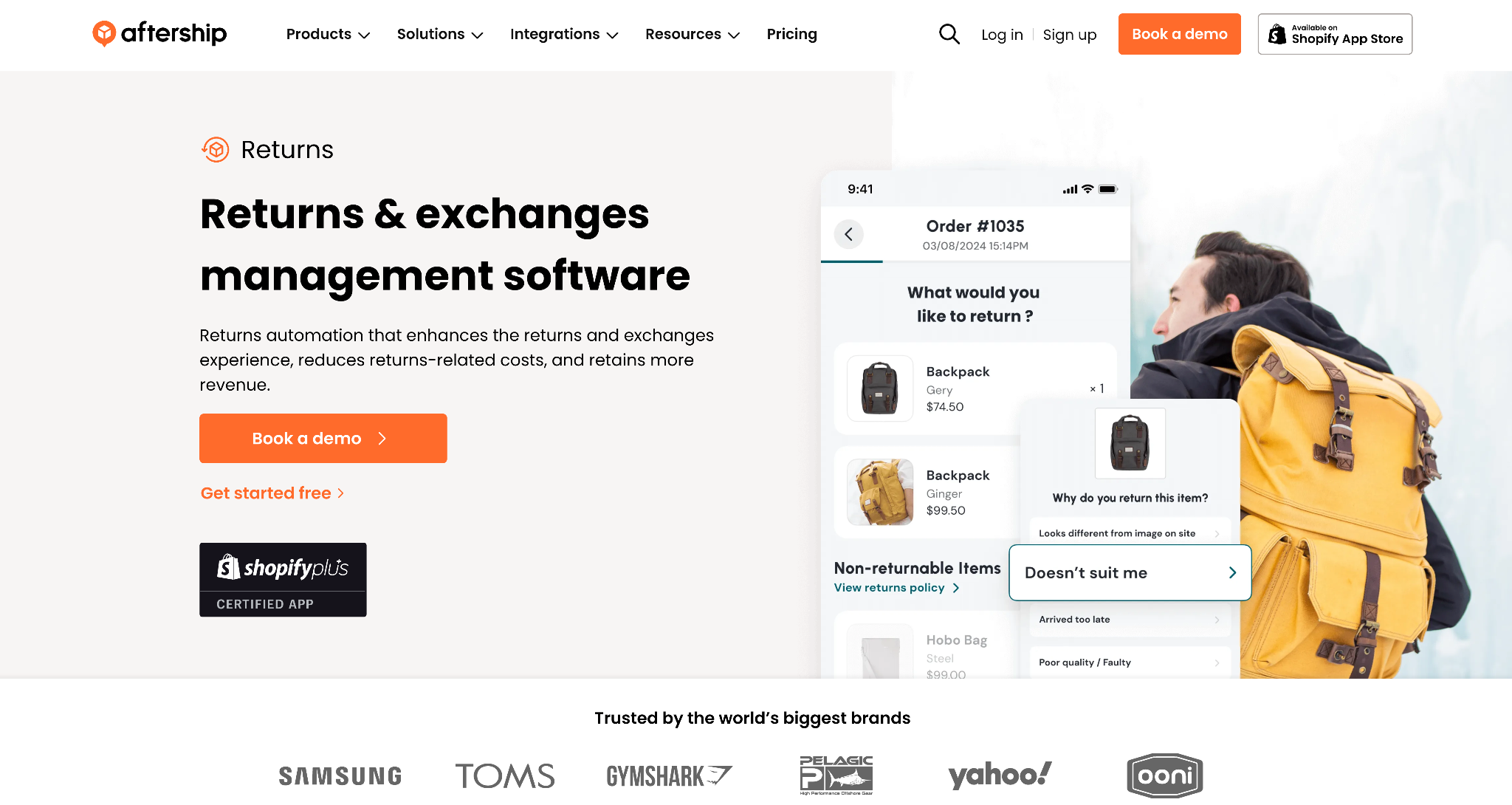
It leans on the same carrier network behind AfterShip's tracking product (1,000+ carriers globally), which matters if you sell internationally and need returns routed through more than one country's carrier options. You still get a branded, automated returns portal, just with a faster setup and a lighter price tag for stores that don't need to lean as heavily on exchange logic.
Best SEO App for Shopify
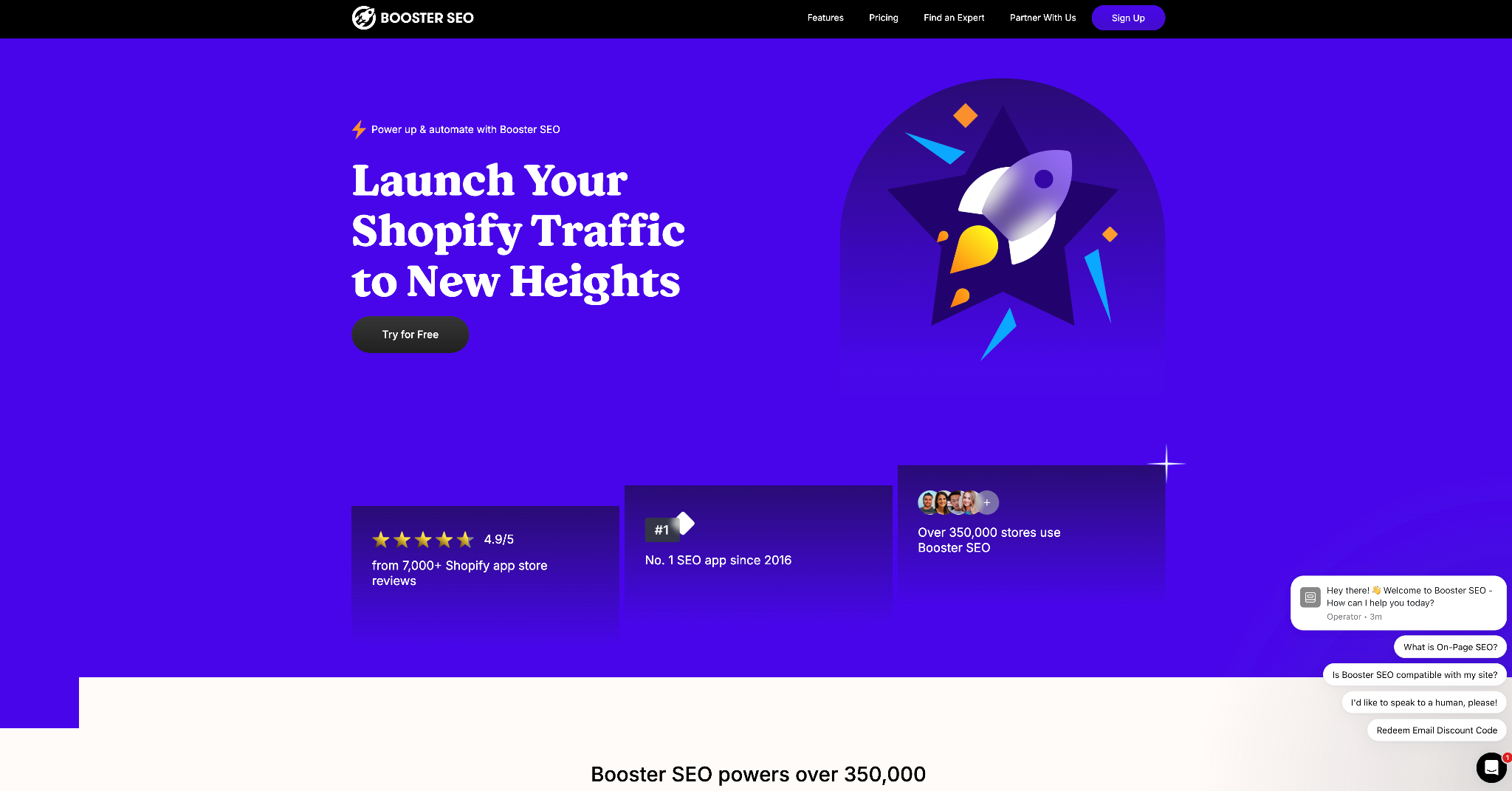
Booster SEO is a strong pick for image compression and page speed, plus the automated housekeeping that comes with it: it sets up a redirect the moment a product page gets deleted, so you're not quietly bleeding rankings to a 404 months later without noticing, and its AutoPilot mode runs ongoing scans and updates metadata on its own. That hands-off approach is convenient, but review its changes after the first install before letting it run unsupervised, especially on hand-written product copy.
Boost AI Search & Filter (by Boost Commerce, 4.7 stars across 1,300+ reviews) is worth adding if on-site search itself is the bottleneck rather than speed or metadata.
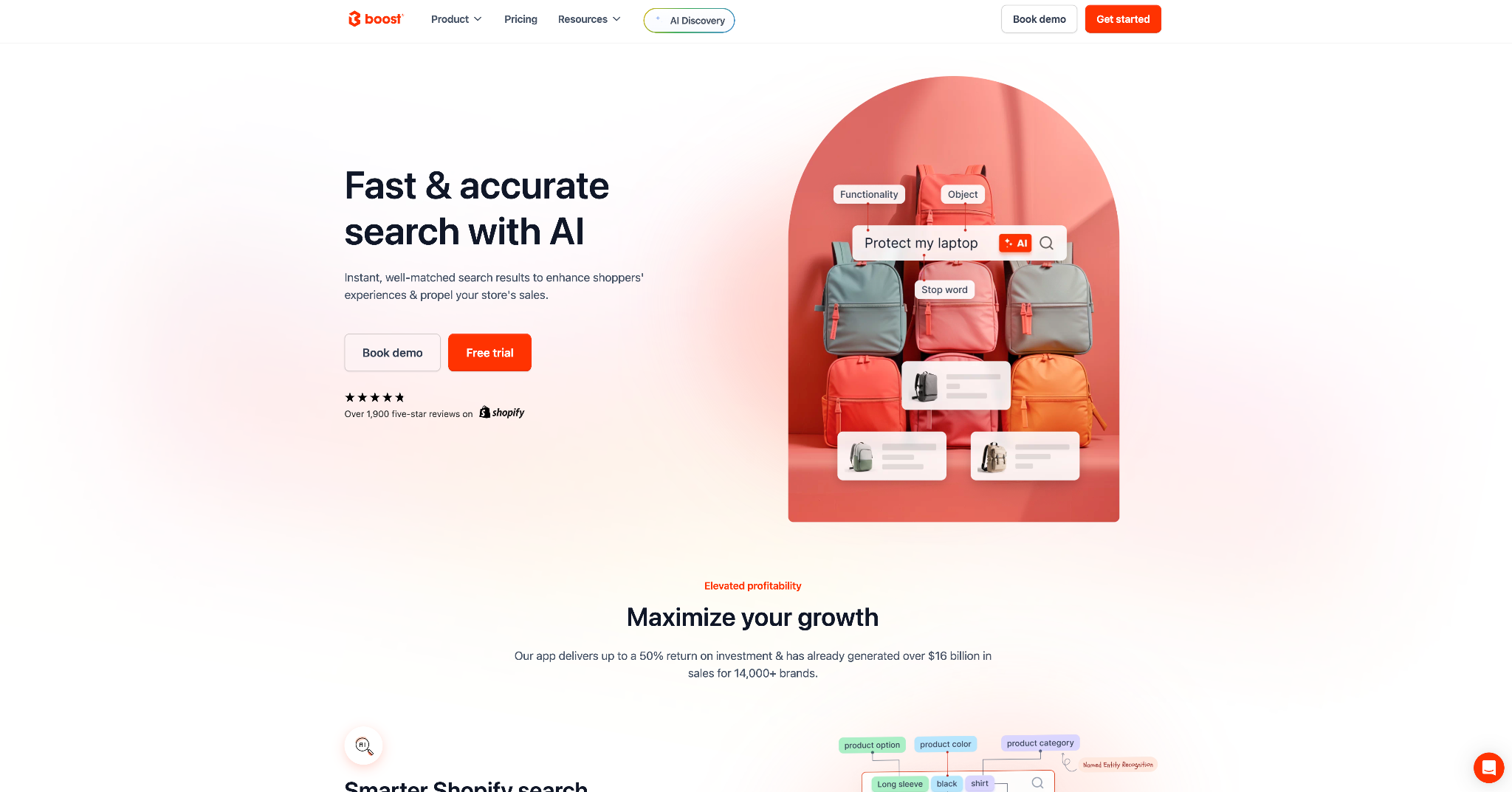
Shopify's native search is built for shoppers who already know the product name; the moment someone's browsing by description, comparing options, or searching in a way that doesn't exactly match a product title, native search tends to return nothing useful, and a shopper who hits a blank results page rarely tries a second search before leaving. Boost's AI search is typo-tolerant and handles vague queries, and it goes beyond search itself with filtering by tag or variant, merchandising controls to pin or demote specific products in results, and AI-driven bundle recommendations that can lift average order value once search is actually surfacing the right products.
Best Email Marketing App for Shopify
In ecommerce, driving revenue from customers who already bought from you is consistently more effective than spending to acquire new ones, and email is the channel that makes that repeat business happen automatically instead of by chance.
Klaviyo is the strongest option for turning that idea into specific, working flows. It names its predictions rather than leaving them vague: Predicted CLV, Churn Risk, and Expected Date of Next Order all show up on a customer's profile, so a win-back email can go out right before someone's actually likely to churn instead of on a generic 30-day timer.
That kind of segmentation is what turns a one-off buyer into a repeat customer on purpose, rather than by luck, and it's why Klaviyo is the default recommendation for stores that are serious about lifecycle marketing.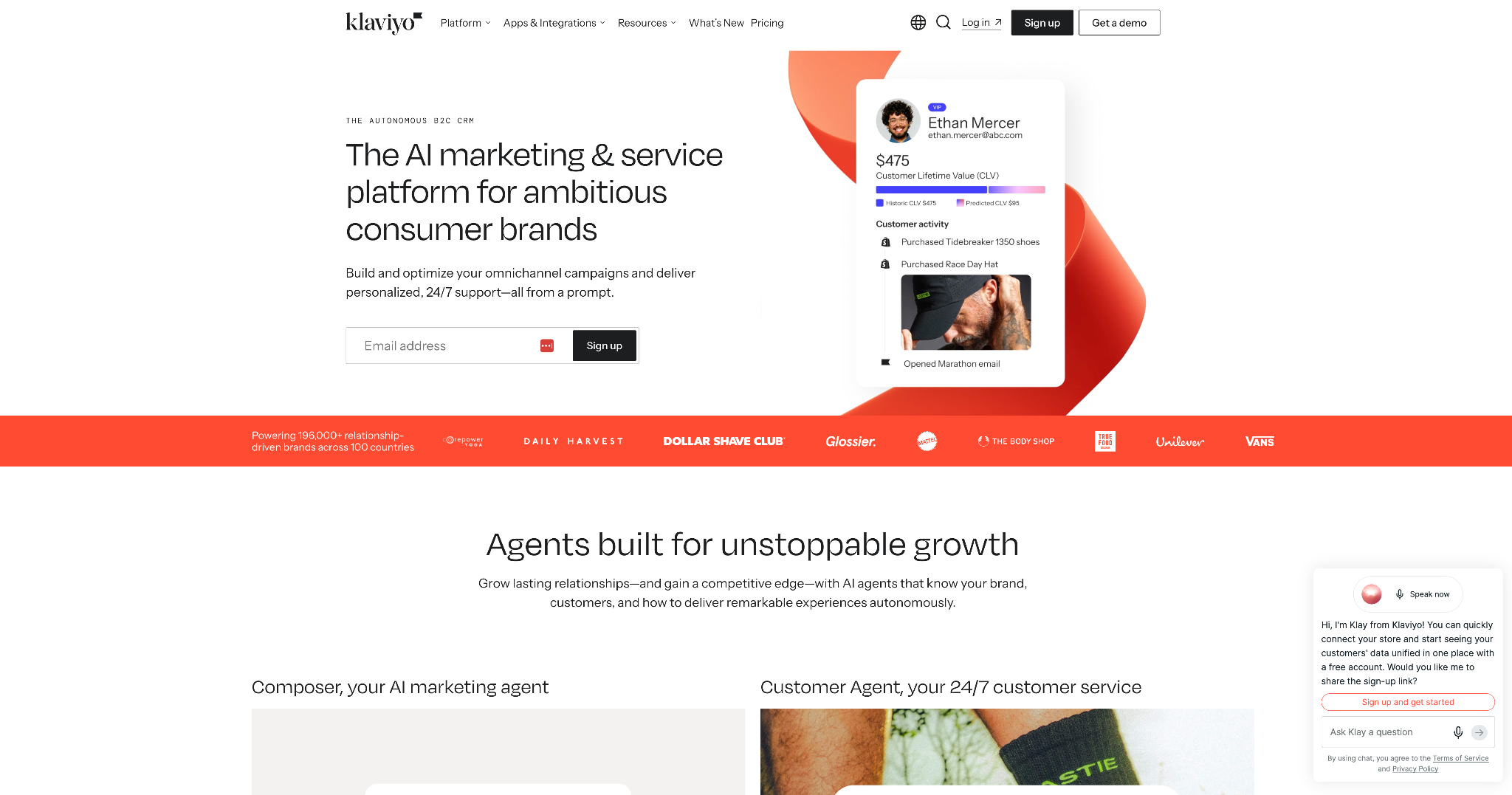
The platform goes well beyond email. Email, SMS, WhatsApp, and push all run from the same set of segments and the same customer profile, so a win-back sequence can move a customer from an email to a text without rebuilding the logic twice, and there's a dedicated SMS-only automation option for stores that want text to carry its own campaigns rather than just backing up email.
Klaviyo also connects with other apps on this list. It links to Recharge, so a subscriber's status can trigger a flow automatically. It links to Smile.io, so loyalty status feeds into the same segments. It links to Gorgias, so a support agent can see marketing context without switching tools. If you're already running any of those, Klaviyo slots in instead of duplicating what you've built.
Klaviyo also has its own review-collection app that syncs directly into the same customer profiles, and a signed-in Customer Hub where shoppers can track orders and manage returns without leaving the flow you built for them, so retention tooling and marketing data end up in one place instead of three separate apps. For Shopify stores also running physical retail or wholesale, Klaviyo's POS and B2B integration supports distinct messaging for in-store versus online customers and separate nurture workflows for wholesale accounts.
Best Upsell App for Shopify
The post-purchase moment is one of the easiest upsell opportunities to capture, since the customer has already committed to spending money and there's no payment friction left to overcome.
Upsell (formerly ReConvert) is built around that exact window. It replaces the standard, static Shopify "Thank You" page with a customizable builder that can surface a one-click upsell right after checkout (a complementary product or a discount on something related) without touching the existing cart or checkout flow.
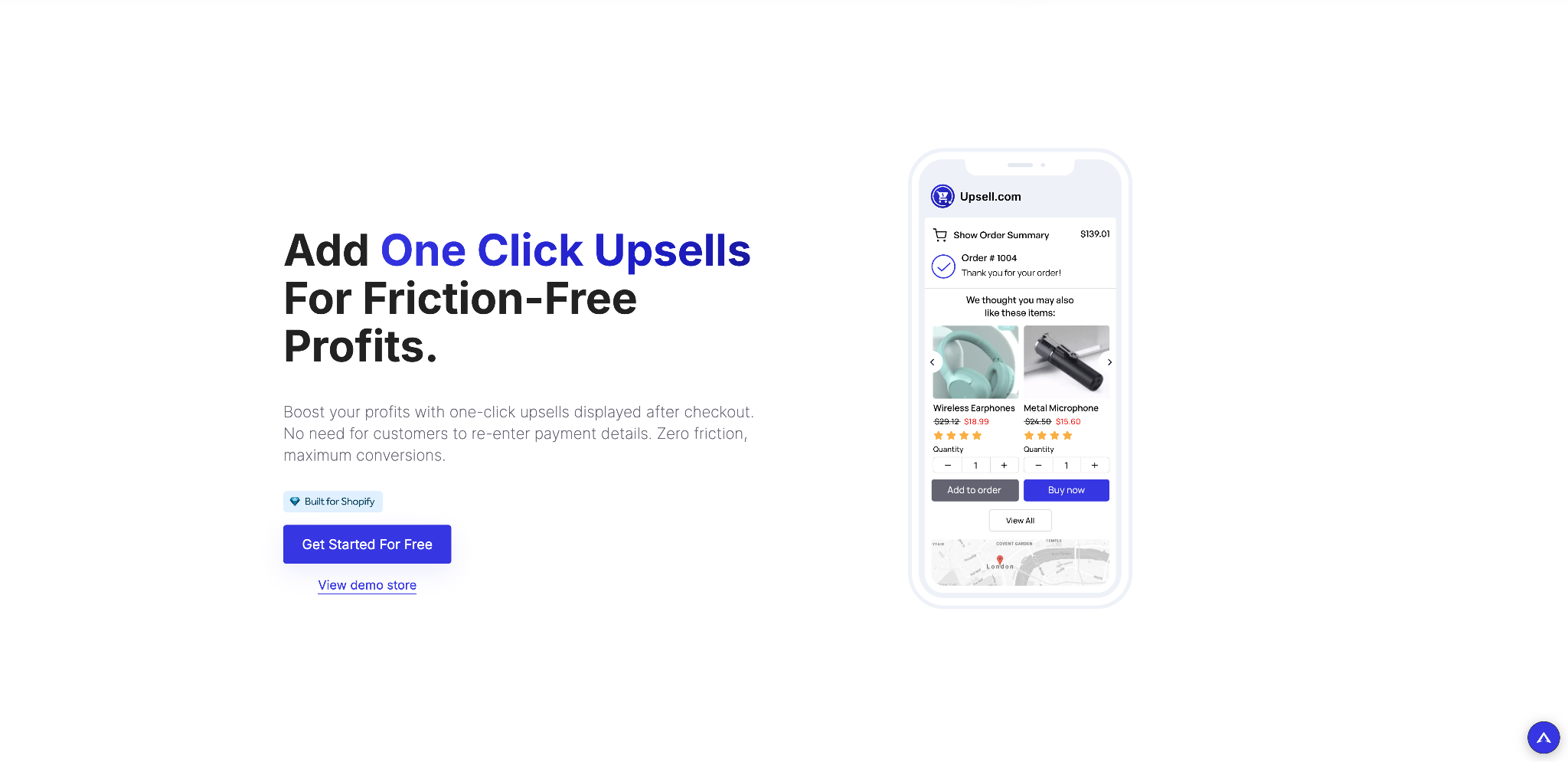
Because payment is already captured, there's nothing standing between the offer and the click, which is why post-purchase upsells tend to convert well compared to prompts shown earlier in the funnel.
It also includes A/B testing and revenue analytics, so you can see which offers are actually moving average order value instead of guessing. One thing worth knowing before you install: its pricing scales with either your revenue or order volume rather than a flat plan, so check how that's calculated before committing.
Best Customer Loyalty App for Shopify
Klaviyo Reviews is the pick if you're already running Klaviyo for email. It's built by the same company, so review data lives in the same place as everything else. It's a separate app from Klaviyo's email and SMS platform, billed on its own rather than bundled into your existing plan. It's free to install, with a free tier covering up to 50 orders a month.
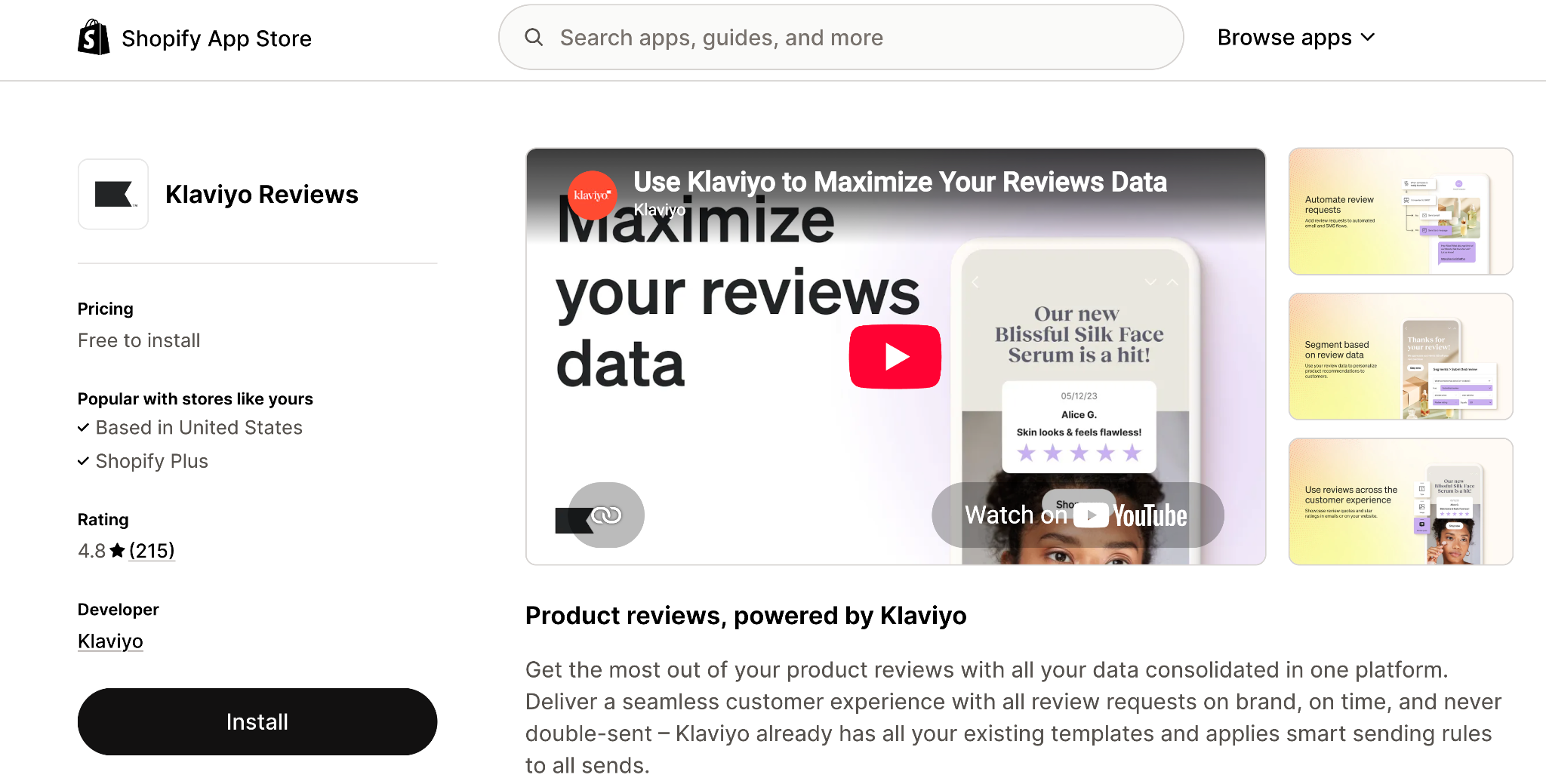
It covers photo and video reviews, on-site Q&A, and Google Shopping syndication. AI-powered moderation catches spam and fake reviews before they go live. You can also import reviews you've already collected elsewhere, so switching doesn't mean starting from zero.
Smile.io handles loyalty and referrals specifically, a different job from either reviews tool above: points, VIP tiers, and referral rewards in one platform. It's built specifically for Shopify (it holds both the Built for Shopify badge and Shopify Technology Partner status).
Smile integrates directly with Klaviyo, so loyalty status can trigger the same kind of lifecycle email flows covered above. One thing worth knowing before you commit: redeeming points directly at checkout currently requires Shopify Plus, so stores on a standard plan can still run points and VIP tiers, just not checkout-level redemption.
Best Customer Support App for Shopify
The moment support tickets outpace what a shared inbox can handle, response times slip, and slow responses cost repeat business just as surely as a bad product does.
Gorgias is our recommendation for Shopify-specific customer support, and it's a recognized Shopify Premier Partner for CX. It centralizes email, chat, social, and SMS into one inbox with live order and customer data attached to every conversion. Agents will no longer be switching tabs to look up what someone ordered.
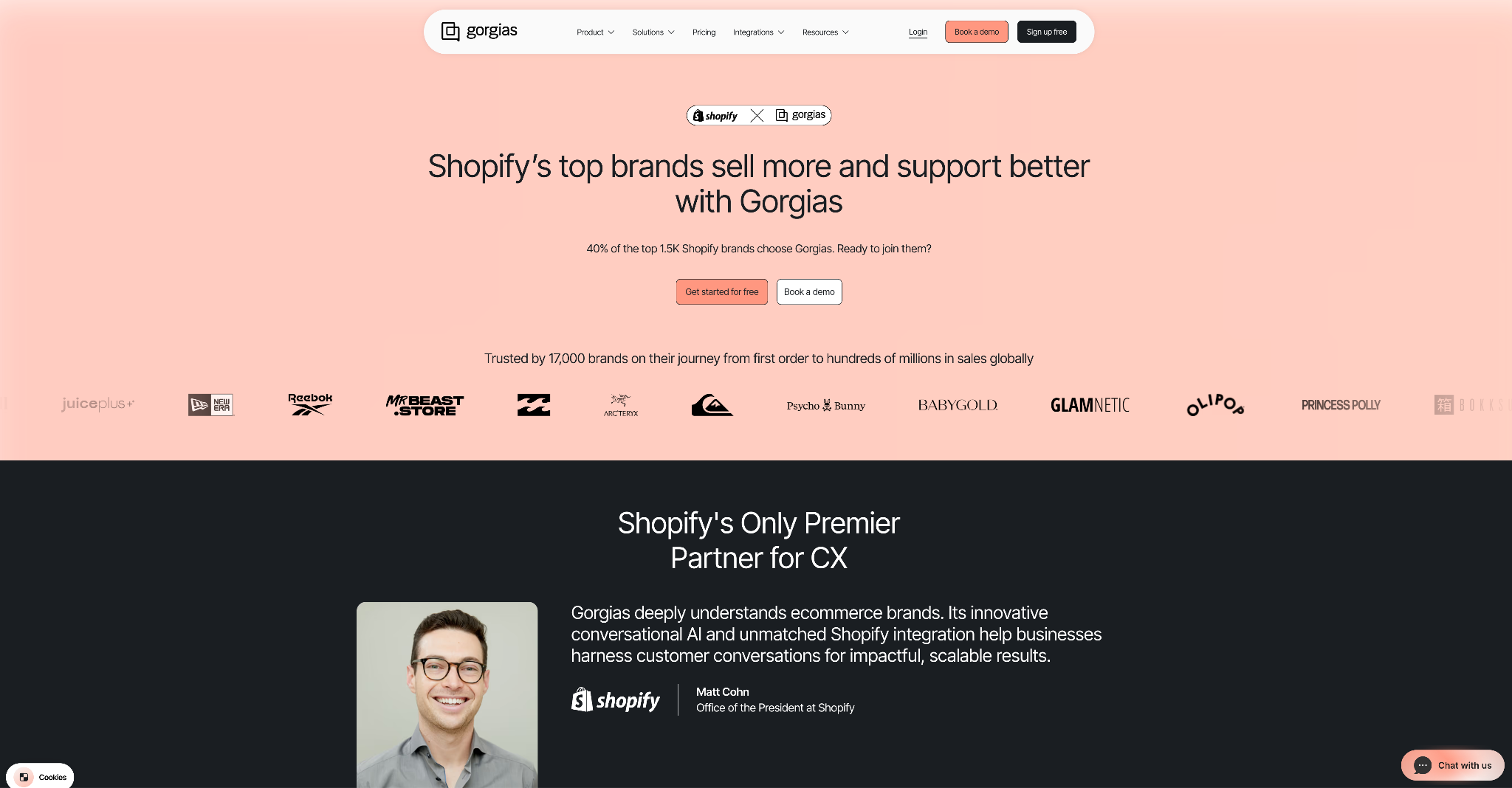
Its AI Agent handles the repetitive, high-volume tickets, like "where is my order," cancellations, and subscription changes, using live store data rather than generic scripted responses, which frees up the team for the conversations that actually need a human.
It also connects natively with several other tools on this list, including Klaviyo, Recharge, and Loop Returns. This makes support, retention, and marketing data end up in the same picture instead of three separate ones.
Worth knowing before you commit: pricing is ticket-based, so cost scales directly with support volume, which matters most during a seasonal spike.
How to Choose the Right Shopify Apps for Your Store
Not every app on this list is needed on day one. Start with whatever is causing the clearest revenue loss or operational pain right now.
For many stores, that starts with checkout and shipping friction. If rates are wrong, delivery expectations are unclear, or customers are surprised by costs late in checkout, every other part of the funnel has to work harder.
From there, match the app to the problem. Cart abandonment, low repeat purchase rate, slow support response, and high return volume all point to different fixes. Do not install a new app until you know which issue you are actually trying to solve.
Check integration depth, not just compatibility. A shipping app that only handles flat rates is not solving the same problem as one with carrier rates, freight logic, delivery dates, and shipping rules, even if both technically say “Shopify compatible.”
Test before committing. Free trials exist for a reason. Use them on a real workflow: one shipping scenario, one abandoned cart flow, one return, or one upsell offer. A demo store will not show you where the app rubs against your actual operation.
Frequently Asked Questions
What is the best shipping app for Shopify? For stores with growing or more detailed shipping needs, like multiple warehouses, oversized products, freight-class items, international orders, or delivery-date promises, ShipperHQ is the best Shopify shipping app. It gives merchants control over carrier rates, surcharges, shipping rules, and delivery dates that Shopify's native shipping tools don't fully support on their own.
What is the main cause of Shopify cart abandonment at checkout? Among shoppers who weren't just browsing, unexpected costs (shipping, tax, or fees revealed too late in checkout) are consistently one of the leading resolvable causes.
Can Shopify's native shipping settings handle freight and international orders? Not well. Shopify's built-in shipping tools work best for straightforward small-package shipping. Freight-class items, advanced multi-warehouse rating, and more accurate international rate logic typically require a dedicated app.
How do you choose the best Shopify apps for your store? Start with where you're actually losing money or time, not with what's popular. Cart abandonment points to checkout and shipping issues, a low repeat purchase rate points to email or subscriptions, and slow support response points to a helpdesk or analytics app. Match the app to the problem instead of installing everything at once.
How many apps does a Shopify store actually need? Fewer than most merchants think. A handful of well-chosen apps covering shipping, email, and one or two conversion tools usually outperforms a store running a dozen overlapping apps, since too many apps can slow down page speed and create conflicting code, especially with SEO apps.
Do paid apps perform better than free ones? Not automatically. Several apps on this list, including Klaviyo Reviews, have genuinely usable free tiers. The real test is whether an app solves a specific problem you actually have, not whether it costs money.
Should a growing store switch shipping, email, or subscription apps as it scales? Often, yes, but the goal is to avoid switching more than necessary. Apps like ShipperHQ and Klaviyo are built to scale with a store from a few hundred orders a month into enterprise volume, so picking the more capable option earlier can save a painful migration later.
Final Thoughts
There's no single app that fixes everything, and you don't need all of these on day one. Start with a free trial on whatever's actually causing you pain right now, and make your decision from there.
If shipping and checkout accuracy is the piece you're least sure about, ShipperHQ offers a free shipping health check that audits your store's checkout and flags where rates, delivery promises, or shipping rules might be costing you sales.