Free shipping is no longer just a nice-to-have. It is one of the biggest levers in ecommerce conversion.
According to McKinsey, more than 95% of consumers prefer free shipping with standard delivery over paid expedited delivery.
And Capital One Shopping Research also reports that 62% of consumers won’t complete a purchase if it turns out shipping isn’t free.
The catch? Free shipping is only free for the shopper. Retailers still have to protect margin, carrier costs, fulfillment costs, and delivery expectations.
Free shipping means the shopper does not pay a separate shipping fee at checkout. But the cost still exists. The retailer either absorbs it, builds it into product pricing, limits it by order value or location, or uses rules to offer it only when the order makes financial sense.
High cart abandonment rates plague numerous online stores. Shipping promotions emerge as a compelling solution, significantly boosting conversions and revenue. In this blog post, we delve into how you can effectively leverage eCommerce shipping solutions to implement this strategy. Undeniably, it enhances the checkout shipping experience, fosters business growth, and improves customer satisfaction.
Free does not always have to mean fast. For many merchants, the smartest setup is free standard shipping with paid upgrades for faster delivery. That gives shoppers the no-fee option they want while still protecting revenue when they need speed.
Shipping promotions can be tricky. A one-size-fits-all approach often falls short due to various factors affecting shipping rates, such as delivery address, fulfillment location, and item size and weight. Retailers must balance the allure of shipping promotions with sustainable business practices.
Let’s take a look at some suggestions to offer free shipping without sacrificing your margins.
This common strategy involves adjusting product prices to cover shipping costs, and maintaining profitability while offering perceived customer benefits.
Set a minimum order threshold or apply it to certain high-margin items or categories, encouraging larger purchases.
A simple starting point is to set your free shipping threshold slightly above your current average order value. For example, if your AOV is $68, testing a threshold around $75 or $85 may encourage shoppers to add one more item while giving you more margin to cover shipping.
But don’t stop at AOV. Look at your average shipping cost, gross margin, product mix, and the percentage of orders that would qualify. A threshold that boosts conversion but wipes out margin is not a strategy. It’s a very polite way to lose money.
Efficient packing reduces shipping costs and your carbon footprint, creating additional savings for your online store.
Utilize ShipperHQ’s customizable shipping rules to tailor your strategy to your business goals and customer preferences.
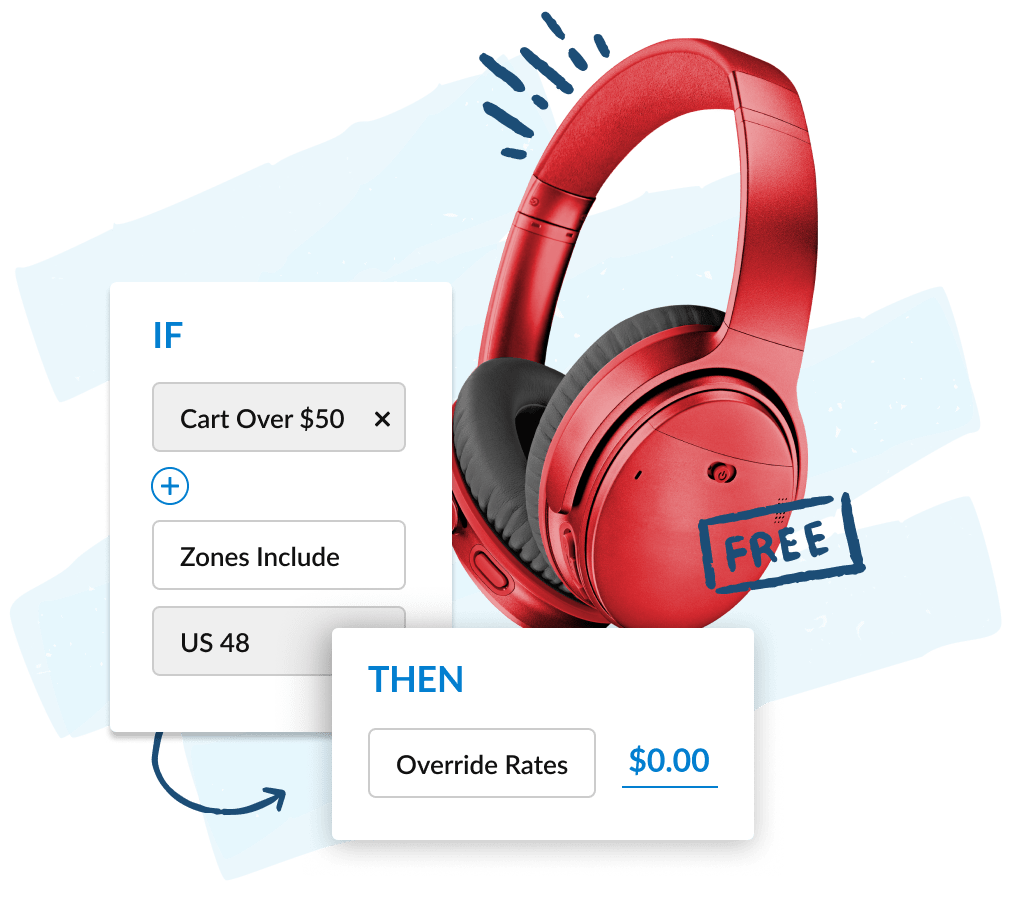
This is where shipping rules matter. Instead of offering free shipping everywhere or nowhere, you can create conditions that match your margin, fulfillment setup, and customer experience goals.
Free shipping gets risky when every order is treated the same. Heavy products, oversized items, rural delivery zones, split shipments, expedited delivery, and international orders can turn a good promotion into a margin leak fast.
That does not mean you should avoid free shipping. It means you need rules. Offer it where it makes sense, exclude the orders where it does not, and give shoppers paid upgrade options when speed or complexity changes the math.
At ShipperHQ, we understand the complexities of shipping and logistics in great depth. Our expertise and innovative solutions empower you to use shipping as a tool for cost reduction and revenue unlocking. Remember, effective shipping strategies can significantly impact your bottom line.
Free shipping is more than a short-term tactic; it’s a long-term growth strategy. Don’t let inadequate shipping options at checkout impede your revenue potential.
Start a 15-day free trial of ShipperHQ to transform your shipping into a profit center!